Pallet Racking

Pallet Shuttle Racking

Semi-automated deep-lane storage using shuttle carts inside pallet channels.

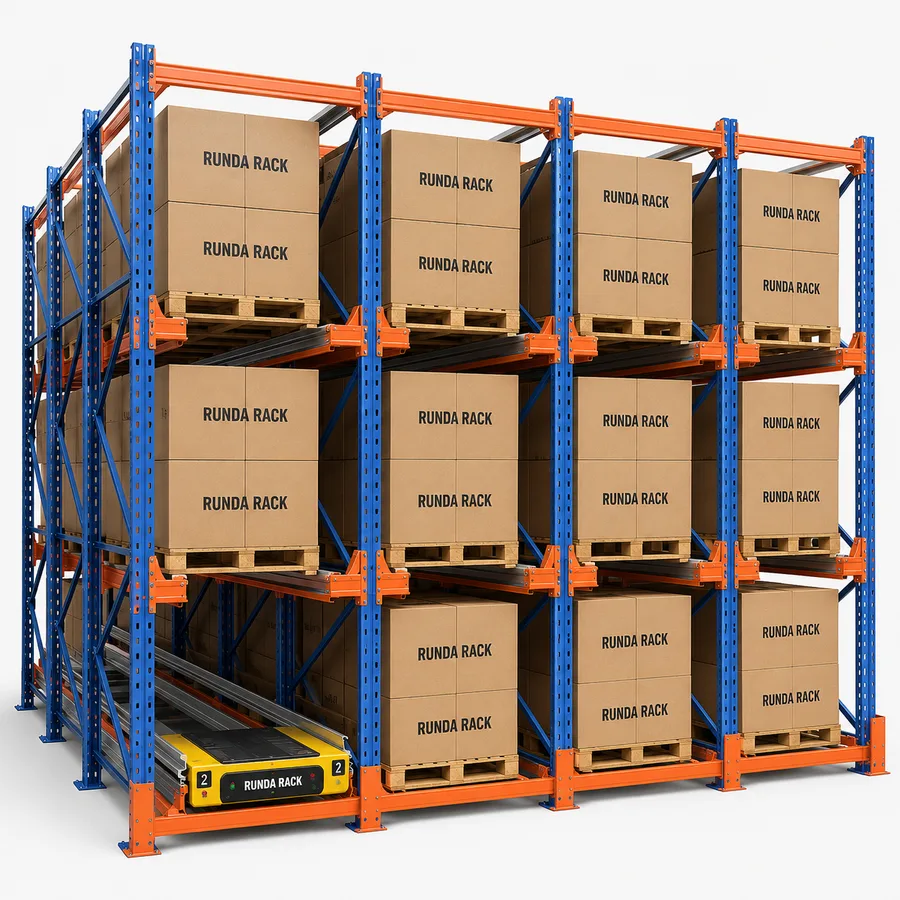
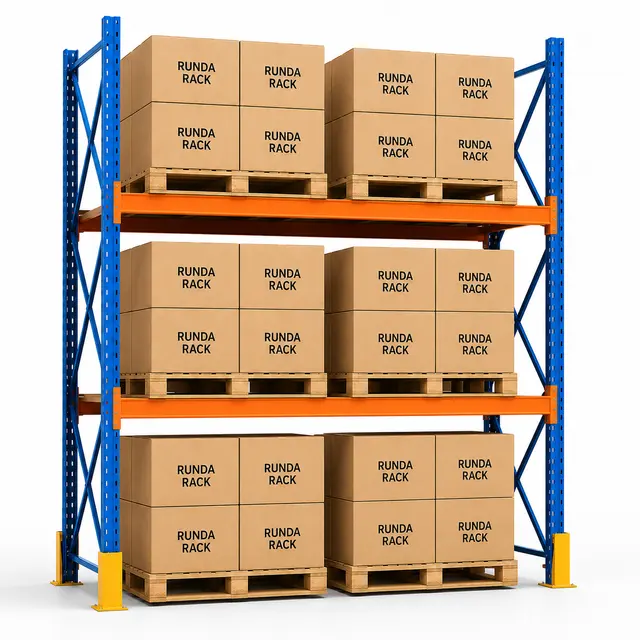
Illustrative configuration of Pallet Shuttle Racking.
Configuration illustration. Final design depends on the confirmed site, load and operating requirements.

Quick Answer

What is Pallet Shuttle Racking?

Pallet Shuttle Racking uses a shuttle cart to move pallets through deep storage channels, while the lift truck loads and retrieves at the lane face. It suits dense batch storage where reducing truck travel inside lanes is useful. The trade-off is dependence on shuttle availability, battery management, lane assignment and recovery procedures.

Last reviewed:

Typical applications

Where This System Fits

  • Dense batch storage where shuttle movement can reduce forklift lane travel.
  • Projects comparing density, selectivity and rotation discipline.
  • Warehouses with pallet profiles that can be checked before layout approval.
  • Teams able to align put-away and retrieval rules with the system principle.
  • Facilities that need product-specific planning before quotation.

Operating logic

How This Product Works

Review the operating principle, load movement and main configuration checkpoints before comparing a system for the application.

Shuttle lane storage

Pallet shuttle racking uses a motorised cart inside deep lanes to move pallets between the forklift face and storage positions.

Pallet channel interface

Pallet condition, load stability, channel depth and shuttle compatibility decide whether the cart can move reliably under daily operating conditions.

Semi automated flow

Forklifts place pallets at the lane face while the shuttle transports them internally, reducing the need for trucks to enter deep storage lanes.

Shuttle rack inputs

Confirm pallet data, lane depth, SKU grouping, FIFO or LIFO rule, shuttle quantity, charging method, safety zones and maintenance access.

Technical notes
  1. A pallet shuttle carries loads inside a deep channel while the forklift works mainly at the lane mouth. This reduces truck travel within the storage lane and can make dense batch storage easier to operate than manual drive-in lanes.
  2. The channel rule must be decided before layout: one-face and two-face arrangements create different rotation behaviour. Charging points, spare shuttles, recovery methods and pallet-quality checks should be included in the operating plan.
  3. Stock rotation uses LIFO or FIFO depending on one-face or two-face layout. The rack layout and warehouse procedure must match this rule before product groups are assigned to locations or lanes.
  4. Handling normally involves forklift at entrance plus shuttle and controls. Planning should review radio shuttle, channel rails, battery exchange and blocked-load recovery, plus pallet condition, protection, inspection access and emergency requirements.
  5. Channel assignment should reflect product batches and retrieval priority because the shuttle can only work efficiently when lane rules are clear.
  6. Battery charging, spare carrier policy and fault recovery are operational questions that belong in the initial quotation discussion.
  7. The forklift normally works at the channel face, so face congestion and carrier handover time affect real throughput.
  8. Pallet quality must be compatible with the shuttle rails and carrier deck; unstable loads can create stoppages inside the channel.
  9. Same-face and two-face arrangements should be discussed separately because they create different rotation behaviour.
  10. A shuttle system is not just dense rack steel; it includes carrier management, controls, maintenance and operator procedure.
  11. Shuttle channels need a carrier-management plan. Battery charging, spare unit availability, remote control ownership, blocked-channel recovery, lane priority and operator handover determine how well the dense storage works during a shift. The rack steel alone does not describe the system capacity.
  12. Before selection, confirm channel grouping, same-face or two-face movement, carrier travel path, interface with forklifts, pallet-base compatibility, cold-room battery behaviour, maintenance bay, WMS connection and procedure for retrieving loads during a shuttle fault. These inputs are specific to semi-automated deep channels.

System strengths

Advantages

  • Clear access behaviour: a powered shuttle moves pallets inside grouped channels.
  • Defined stock-rotation basis: LIFO or FIFO depending on one-face or two-face layout.
  • Handling interface is explicit: forklift at entrance plus shuttle and controls.
  • Helps compare storage density against operating selectivity.
  • Creates concrete confirmation points for layout review.

Conditions to check

Limitations and Trade-Offs

  • Shuttle availability, charging, recovery and pallet consistency drive reliability.
  • Unsuitable when the operation requires direct access to every pallet.
  • Project-specific load, fire and building details still need engineering confirmation.
  • Damaged pallets, unstable loads or uncontrolled traffic can undermine safe operation.

Configuration brief

Technical specifications available on request

Final specifications for Pallet Shuttle Racking are confirmed from the actual load, site and operating requirements.

  • Pallet footprint, loaded height, weight range and pallet condition.
  • Product count, pallet quantity per product and access frequency.
  • Required rotation rule: LIFO or FIFO depending on one-face or two-face layout.
  • Handling equipment confirmation, including forklift at entrance plus shuttle and controls.
  • Aisle, loading-face, floor, rail, guidance, control or structural interface requirements.
  • Rack protection, inspection access and maintenance responsibility.
  • Fire protection, emergency access and site-service constraints.

Standards and compliance

Applicable Standards and Project Requirements

RUNDA RACK products are designed, manufactured, supplied and installed in accordance with applicable international standards, project specifications and destination-market requirements. The engineering package aligns the product family, load data, site conditions, fire strategy, equipment interfaces and required documentation.

Review the standards framework →

Practical comparison

Compare Common Alternatives

Drive-In Racking
Drive-in uses forklift entry; shuttle racking uses a powered carrier inside the channel.
Pallet Flow Racking
Pallet flow is gravity FIFO; shuttle movement is powered and can be one-face or two-face.
Four-Way Shuttle Racking
Four-way shuttle is a grid automation system; pallet shuttle is normally channel based.

Configuration inputs

What to Confirm Before Selection

  • Pallet footprint, loaded height, weight range and pallet condition.
  • Product count, pallet quantity per product and access frequency.
  • Required rotation rule: LIFO or FIFO depending on one-face or two-face layout.
  • Handling equipment confirmation, including forklift at entrance plus shuttle and controls.
  • Aisle, loading-face, floor, rail, guidance, control or structural interface requirements.
  • Rack protection, inspection access and maintenance responsibility.
  • Fire protection, emergency access and site-service constraints.

Product questions

Frequently Asked Questions

How does Pallet Shuttle Racking work?
A shuttle cart moves pallets inside the channel while the forklift handles the pallet at the lane face. The exact flow depends on channel access and controls.
What stock rotation does Pallet Shuttle Racking support?
The intended rotation is LIFO or FIFO depending on one-face or two-face layout. If the operation needs a different movement rule, compare the alternatives before confirming the layout.
What is the main limitation of Pallet Shuttle Racking?
Shuttle availability, charging, recovery and pallet consistency drive reliability. This should be checked against access frequency, product grouping, equipment support and site constraints.
What must be confirmed before choosing Pallet Shuttle Racking?
Confirm pallet condition, load stability, product grouping, access frequency, forklift at entrance plus shuttle and controls, safety protection, fire requirements and maintenance access.

Planning resources

Continue Product Planning

Configuration

Discuss the Checked Application

Share the product, site and handling details needed for a suitable configuration.
WhatsAppEmail