Pallet Racking

VNA Racking

Guided very-narrow-aisle pallet storage for high-bay direct access under controlled operation.

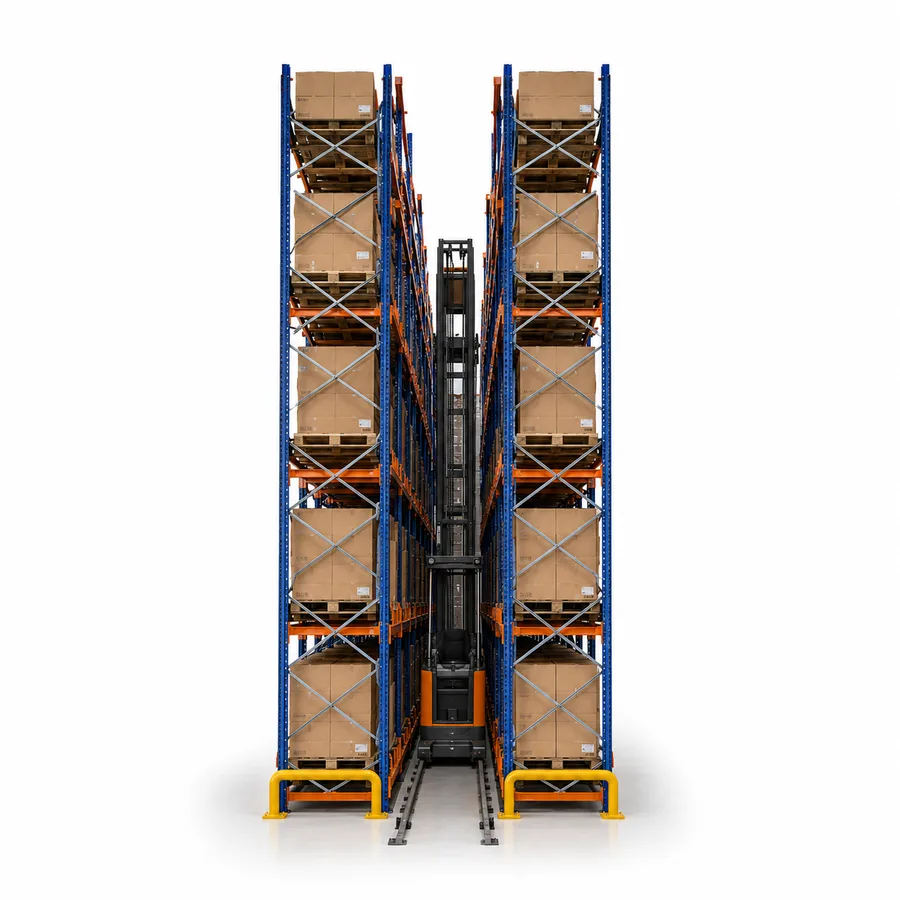
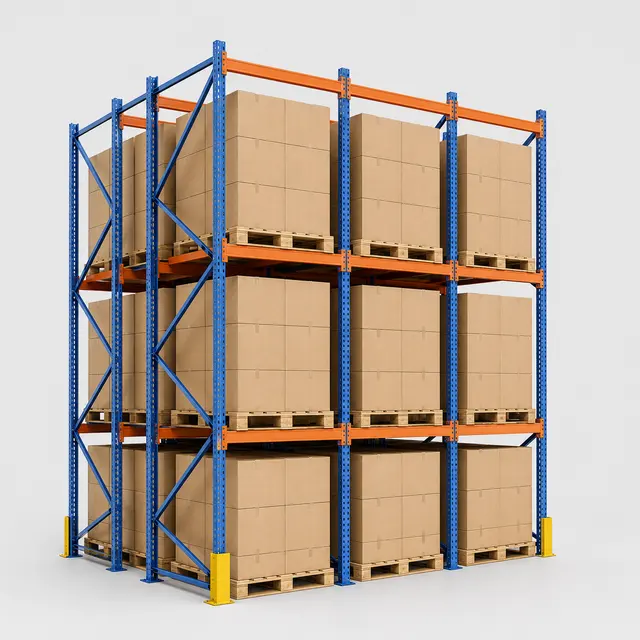
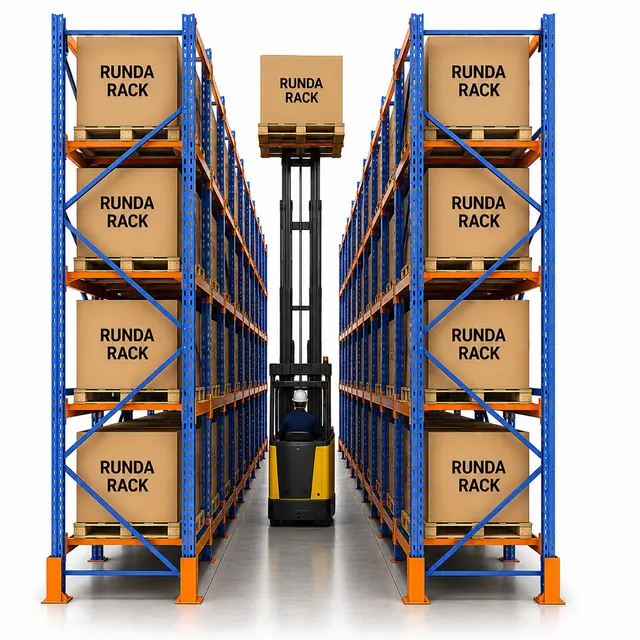
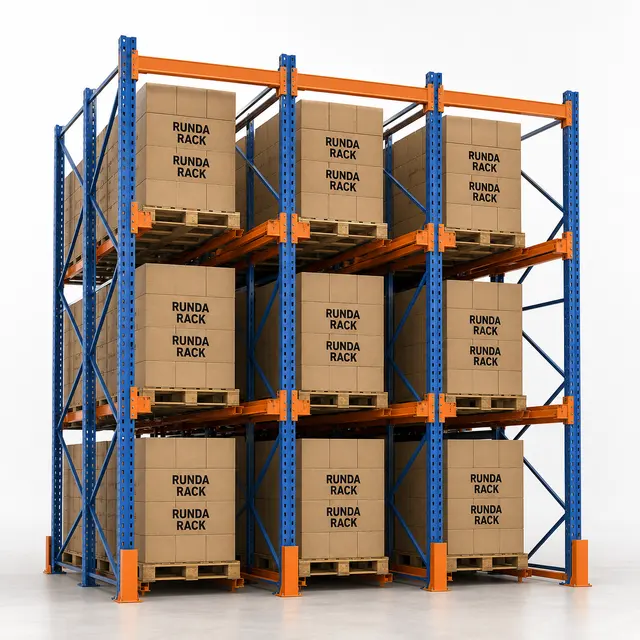
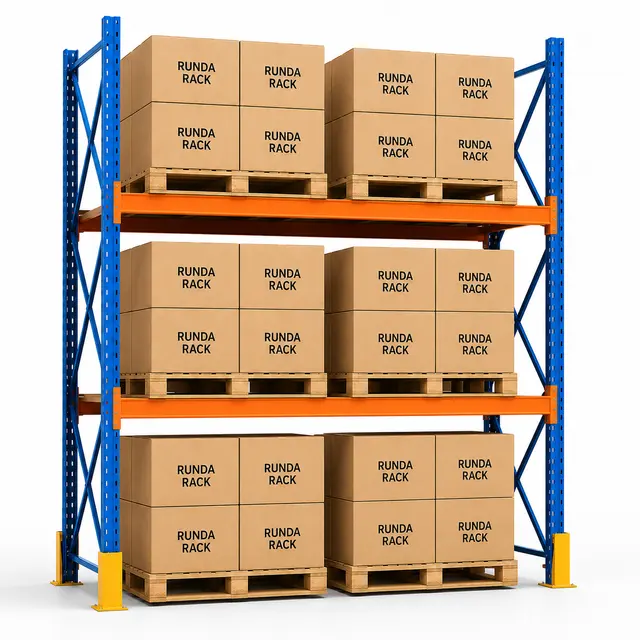
Illustrative configuration of VNA Racking.
Configuration illustration. Final design depends on the confirmed site, load and operating requirements.

Quick Answer

What is VNA Racking?

VNA Racking uses guided very-narrow-aisle trucks to reach pallet positions in tight, often taller storage aisles. It suits high-bay operations that need direct access but can accept controlled traffic and transfer points. The trade-off is dependence on specialist equipment and disciplined procedures, so guidance method, floor tolerance and rescue access must be confirmed.

Last reviewed:

Typical applications

Where This System Fits

  • High-bay mixed storage that can support guided specialist trucks.
  • Projects comparing density, selectivity and rotation discipline.
  • Warehouses with pallet profiles that can be checked before layout approval.
  • Teams able to align put-away and retrieval rules with the system principle.
  • Facilities that need product-specific planning before quotation.

Operating logic

How This Product Works

Review the operating principle, load movement and main configuration checkpoints before comparing a system for the application.

Very narrow aisles

VNA racking keeps direct pallet access in very narrow aisles, increasing pallet positions while requiring disciplined truck movement.

Guidance system interface

Truck guidance, floor flatness, aisle rail or wire systems and pallet dimensions must align because operating tolerance is tight.

High bay access

Operators use specialised VNA trucks to access pallet locations at height while following one-way movement, guidance and safety rules.

VNA rack inputs

Confirm VNA truck model, lift height, floor tolerance, guidance method, pallet data, aisle width, rack protection and emergency access.

Technical notes
  1. VNA storage uses a guided truck path so the aisle envelope can be much tighter than a normal reach-truck aisle. At sites with transfer positions, pallets are handed to the VNA truck there, so dock traffic and in-aisle storage work need separate planning.
  2. Floor accuracy, guidance method, rescue access and aisle exclusion rules are central to the layout. When pallet dimensions vary widely or urgent manual access is common, compare the operational burden of VNA with the expected capacity gain.
  3. Stock rotation uses warehouse-system rotation; no forced lane flow. The rack layout and warehouse procedure must match this rule before product groups are assigned to locations or lanes.
  4. Handling normally involves turret or trilateral VNA truck with guidance. Planning should review wire or rail guidance, transfer aisles, pick-up stations and rescue routes, plus pallet condition, protection, inspection access and emergency requirements.
  5. Guidance choice changes the project: rail guidance, wire guidance and free-ranging transfer areas each create different floor and maintenance requirements.
  6. Pick-up and deposit stations should be treated as working interfaces, not leftover spaces at the end of the rack run.
  7. The guided aisle structures VNA truck travel, but poorly located marshalling, charging or battery-exchange areas add handling time.
  8. Floor flatness and rack alignment should be verified before final layout approval because specialist trucks have fewer tolerance margins.
  9. Emergency retrieval and rescue procedures should be documented for high-bay aisles before the system goes live.
  10. VNA is a direct-access density solution for disciplined operations; it is not the same decision as automated shuttle storage.
  11. Very-narrow-aisle projects should document guidance technology, transfer aisle logic, pick-up-and-deposit points, high-bay operator visibility, floor survey status, rack tolerance and emergency retrieval. The truck is part of the storage method, so equipment procurement and rack planning should not be separated.
  12. Before approving a VNA proposal, confirm how pallets arrive at the aisle, where handover stations sit, how the vehicle exits for charging, how maintenance reaches upper positions, how guidance faults are handled and whether product data is accurate enough for directed put-away. These questions are more specific than a normal aisle-width comparison.

System strengths

Advantages

  • Clear access behaviour: specialist trucks handle direct rack faces from guided aisles.
  • Defined stock-rotation basis: warehouse-system rotation; no forced lane flow.
  • Handling interface is explicit: turret or trilateral VNA truck with guidance.
  • Helps compare storage density against operating selectivity.
  • Creates concrete confirmation points for layout review.

Conditions to check

Limitations and Trade-Offs

  • Specialist trucks, guidance and floor tolerance make the project more demanding.
  • Unsuitable when the operation requires mixed forklift fleets or poor floors.
  • Project-specific load, fire and building details still need engineering confirmation.
  • Damaged pallets, unstable loads or uncontrolled traffic can undermine safe operation.

Configuration brief

Technical specifications available on request

Final specifications for VNA Racking are confirmed from the actual load, site and operating requirements.

  • Pallet footprint, loaded height, weight range and pallet condition.
  • Product count, pallet quantity per product and access frequency.
  • Required rotation rule: warehouse-system rotation; no forced lane flow.
  • Handling equipment confirmation, including turret or trilateral VNA truck with guidance.
  • Aisle, loading-face, floor, rail, guidance, control or structural interface requirements.
  • Rack protection, inspection access and maintenance responsibility.
  • Fire protection, emergency access and site-service constraints.

Standards and compliance

Applicable Standards and Project Requirements

RUNDA RACK products are designed, manufactured, supplied and installed in accordance with applicable international standards, project specifications and destination-market requirements. The engineering package aligns the product family, load data, site conditions, fire strategy, equipment interfaces and required documentation.

Review the standards framework →

Practical comparison

Compare Common Alternatives

Narrow Aisle Racking
Narrow aisle is broader; VNA normally adds guided trucks, pick-up stations and tighter floor control.
Selective Pallet Racking
Selective is simpler and uses wider aisles; VNA increases cube use through specialist handling.
Four-Way Shuttle Racking
Four-way shuttle automates grid missions; VNA remains truck-operated direct access.

Configuration inputs

What to Confirm Before Selection

  • Pallet footprint, loaded height, weight range and pallet condition.
  • Product count, pallet quantity per product and access frequency.
  • Required rotation rule: warehouse-system rotation; no forced lane flow.
  • Handling equipment confirmation, including turret or trilateral VNA truck with guidance.
  • Aisle, loading-face, floor, rail, guidance, control or structural interface requirements.
  • Rack protection, inspection access and maintenance responsibility.
  • Fire protection, emergency access and site-service constraints.

Product questions

Frequently Asked Questions

What is the main operating difference with VNA Racking?
The truck is guided in a very narrow aisle and usually works through controlled transfer points. This changes traffic flow compared with ordinary reach-truck aisles.
What stock rotation does VNA Racking support?
The intended rotation is warehouse-system rotation; no forced lane flow. If the operation needs a different movement rule, compare the alternatives before confirming the layout.
What is the main limitation of VNA Racking?
Specialist trucks, guidance and floor tolerance make the project more demanding. This should be checked against access frequency, product grouping, equipment support and site constraints.
What must be confirmed before choosing VNA Racking?
Confirm pallet condition, load stability, product grouping, access frequency, turret or trilateral VNA truck with guidance, safety protection, fire requirements and maintenance access.

Planning resources

Continue Product Planning

Configuration

Discuss the Checked Application

Share the product, site and handling details needed for a suitable configuration.
WhatsAppEmail