Pallet Racking

Drive-In Racking

High-density lane storage loaded and retrieved from one face for compatible pallet batches.

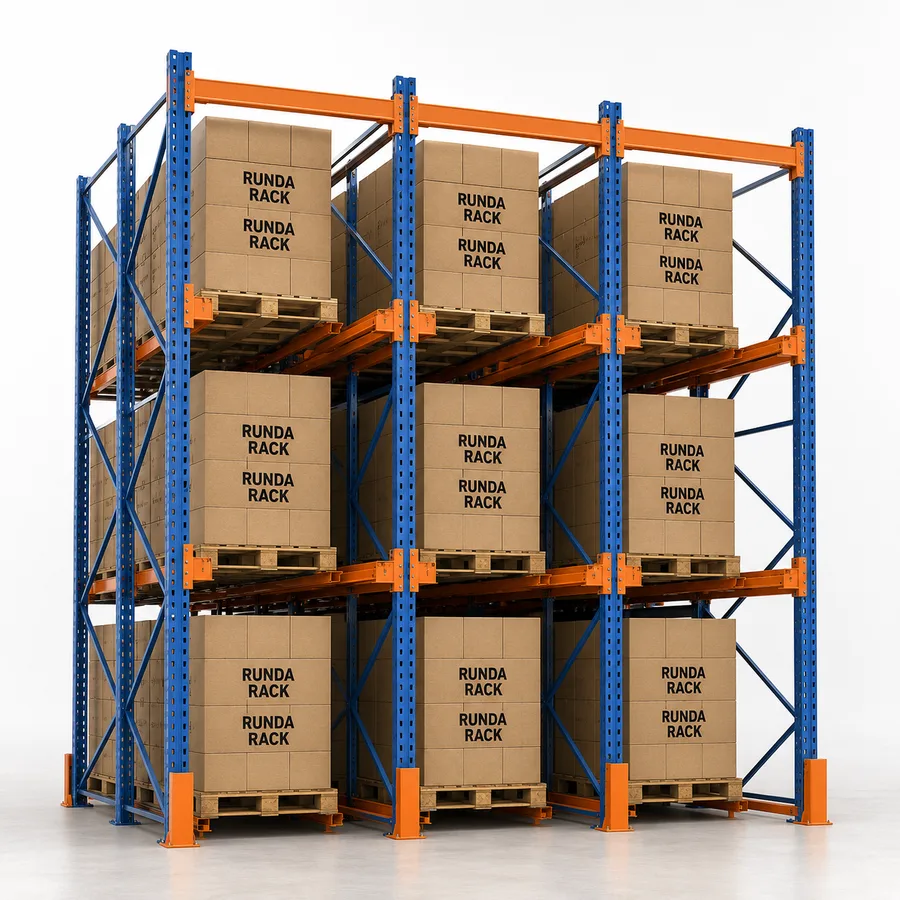
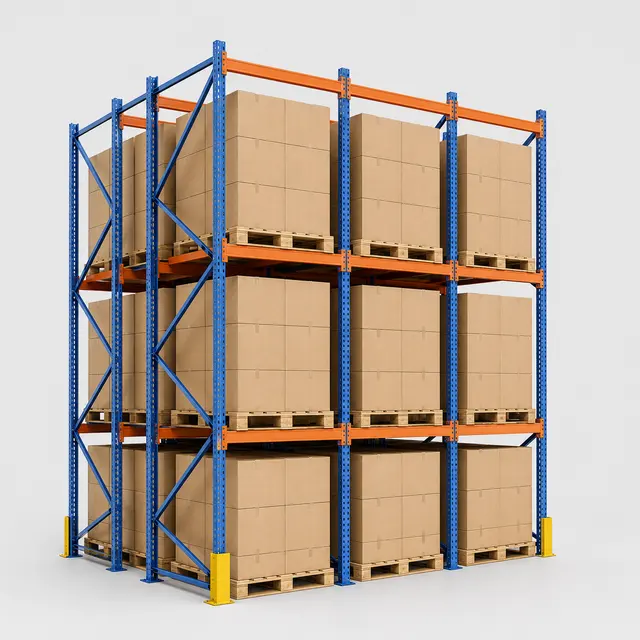
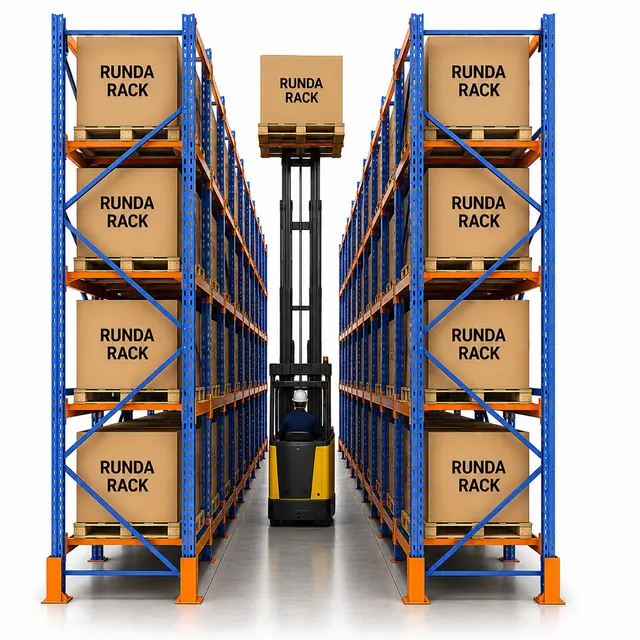
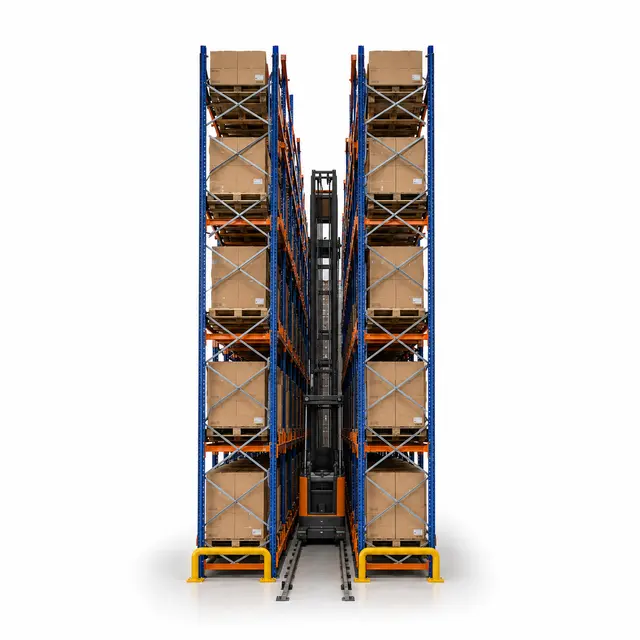
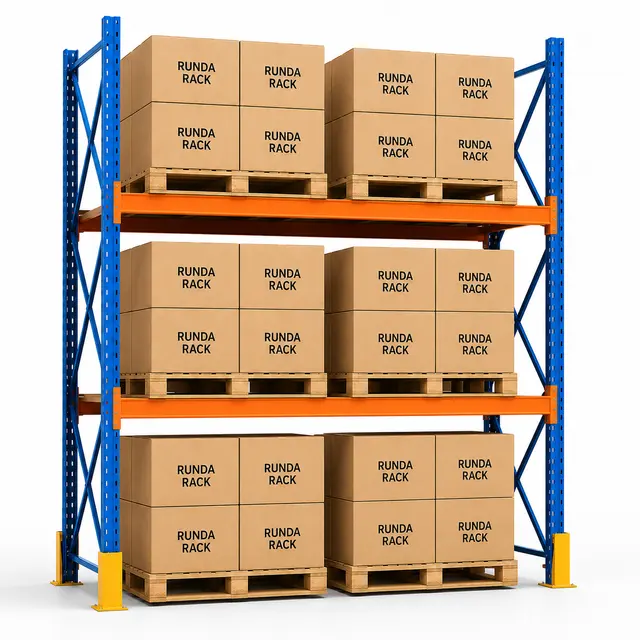
Illustrative configuration of Drive-In Racking.
Configuration illustration. Final design depends on the confirmed site, load and operating requirements.

Quick Answer

What is Drive-In Racking?

Drive-In Racking is a single-entry, high-density pallet system built as deep storage lanes. A forklift drives into each rack lane to place loads on side rails, then withdraws through the same opening. Because the most recently stored pallet blocks earlier loads, each lane normally follows LIFO rotation and should hold a compatible batch with consistent pallets and handling rules.

Last reviewed:

Typical applications

Where This System Fits

  • Large quantities of the same or compatible SKU assigned by lane.
  • Reserve stock that can operate on a last-in, first-out basis.
  • High-density zones where direct access to every pallet is not required.
  • Stable palletised loads suitable for rail support and in-lane handling.
  • Operations able to train drivers for controlled rack-lane entry.

Operating logic

How This Product Works

Review the operating principle, load movement and main configuration checkpoints before comparing a system for the application.

Single entry tunnels

Every lane is worked from one aisle opening. The lift truck travels inside the rack and places pallets progressively from the closed rear toward the front.

Side rail support

Loads bridge between lane rails, making pallet footprint, bottom-board condition, stability and placement accuracy essential throughout the full storage depth.

Back to front LIFO

The first pallet enters the deepest position and cannot be recovered until later pallets ahead of it have left through the same face.

In-rack truck clearance

Confirm truck envelope, mast and guard clearances, lane depth, entry protection, floor level, driver guidance and compatible batch quantities before approval.

Technical notes
  1. Each storage tunnel has one open aisle face and a closed rear end. The forklift enters beneath the upper pallet levels, travels along the lane and places each pallet on the supporting rails.
  2. Operators fill the deepest available position first and work back toward the entry. Retrieval reverses that sequence, which makes the lane last-in, first-out rather than individually selective.
  3. Lane depth should follow batch quantity and turnover. A lane that cannot be filled by one compatible stock family can trap older pallets behind newer receipts and leave unusable positions.
  4. Forklift geometry is a defining input. Mast height, truck width, overhead guard, turning approach and load clearance must suit travel between the frames rather than only the front aisle.
  5. Pallet bases need to sit correctly on both side rails. Damaged boards, excessive deflection, unstable wrapping or inconsistent footprints can create a problem where direct access is restricted.
  6. Entry guides, upright guards, floor condition and driver sight lines reduce exposure where the truck passes close to the steelwork. Inspection and impact-reporting procedures should cover the full lane.
  7. Bay signage should identify the assigned product family, permitted pallet condition, load direction and filling sequence so operators do not mix incompatible receipts in one tunnel.
  8. Drive-in suits reserve quantities and repeated pallet batches when compact storage has priority over immediate access to every load.
  9. Compare a two-ended drive-through lane when FIFO is required, or push-back when forklifts should remain outside the rack structure.

System strengths

Advantages

  • Uses deep lane volume for compact storage of repeated pallet batches.
  • Keeps the operating rule clear because all placement and retrieval occurs at one face.
  • Avoids a second operating aisle behind the lane.
  • Makes batch size, lane depth and LIFO acceptance explicit during layout review.

Conditions to check

Limitations and Trade-Offs

  • Rear pallets remain blocked until every load in front has been removed.
  • Forklift travel inside the structure raises the importance of guidance, protection and impact inspection.
  • Many small SKU quantities can leave partly filled lanes and reduce practical density.
  • Strict FIFO stock, mixed expiry dates or unsuitable pallets require another storage method.

Configuration brief

Technical specifications available on request

Final specifications for Drive-In Racking are confirmed from the actual load, site and operating requirements.

  • Pallet footprint, underside construction, loaded height, load stability and weight range.
  • Pallet quantity per compatible batch and the lane depth each family can use.
  • Acceptance of same-face LIFO rotation and rules for partial lanes.
  • Forklift width, mast, overhead guard, lift height and approach geometry.
  • Side-rail support, entry guides, floor tolerances and first-position clearance.
  • Upright protection, driver training, damage reporting and inspection access.
  • Fire protection, emergency routes and building-service clearances around deep lanes.

Standards and compliance

Applicable Standards and Project Requirements

RUNDA RACK products are designed, manufactured, supplied and installed in accordance with applicable international standards, project specifications and destination-market requirements. The engineering package aligns the product family, load data, site conditions, fire strategy, equipment interfaces and required documentation.

Review the standards framework →

Practical comparison

Compare Common Alternatives

Drive-Through Racking
Drive-through opens both faces for FIFO-capable flow; drive-in works from one face and is usually LIFO.
Push Back Racking
Push back keeps forklifts outside the lane; drive-in requires truck entry between rack frames.
Pallet Shuttle Racking
Shuttle racking moves loads with a carrier instead of sending the forklift deep into the lane.

Configuration inputs

What to Confirm Before Selection

  • Pallet footprint, underside construction, loaded height, load stability and weight range.
  • Pallet quantity per compatible batch and the lane depth each family can use.
  • Acceptance of same-face LIFO rotation and rules for partial lanes.
  • Forklift width, mast, overhead guard, lift height and approach geometry.
  • Side-rail support, entry guides, floor tolerances and first-position clearance.
  • Upright protection, driver training, damage reporting and inspection access.
  • Fire protection, emergency routes and building-service clearances around deep lanes.

Product questions

Frequently Asked Questions

Why is Drive-In Racking normally LIFO?
Loading and retrieval share one opening. The pallet nearest the aisle must leave before the forklift can reach loads stored farther back in the lane.
Does the forklift enter Drive-In Racking?
Yes. The truck travels inside the storage tunnel, so its full operating envelope, driver guidance, rack protection and inspection procedure must be considered.
Which pallets suit a Drive-In lane?
Use stable, compatible pallets with bases that can bridge the supporting rails. Damaged boards, inconsistent footprints or unstable loads should be rejected.
What should define the lane depth?
Depth should follow the number of compatible pallets in a batch, the LIFO rule and the time needed to clear a lane before another stock family uses it.

Planning resources

Continue Product Planning

Configuration

Discuss the Checked Application

Share the product, site and handling details needed for a suitable configuration.
WhatsAppEmail