Pallet Racking

Double Deep Racking

Two-deep pallet storage for repeated product groups that can tolerate front and rear positions.

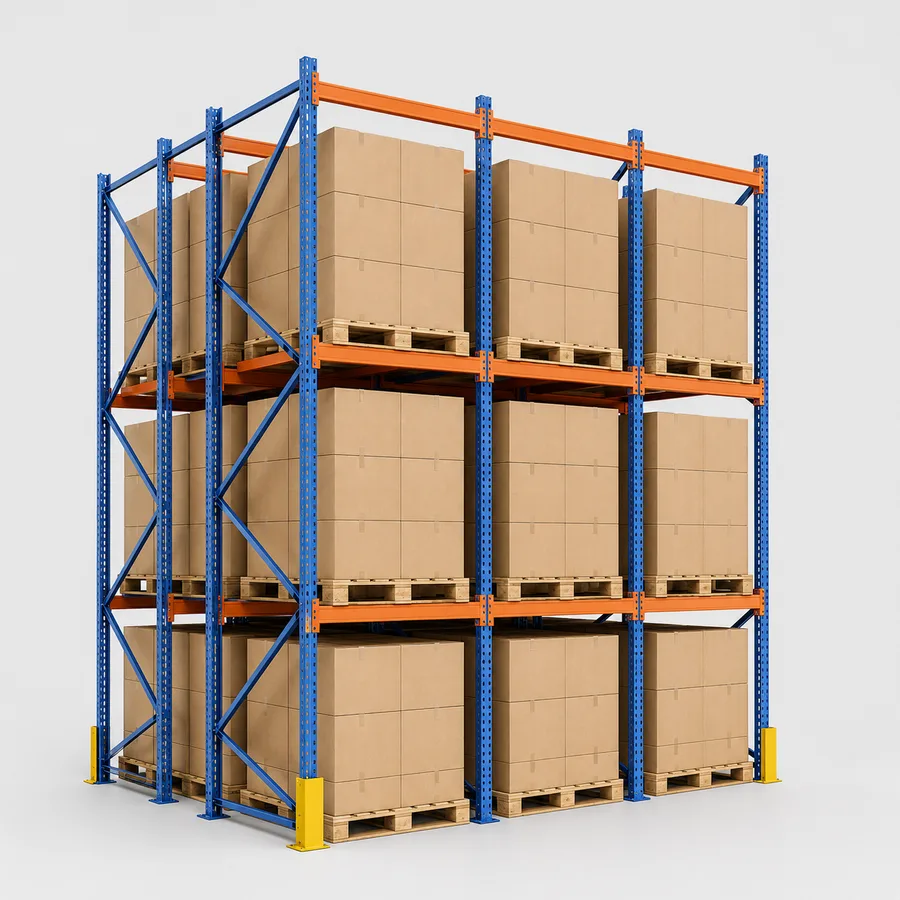
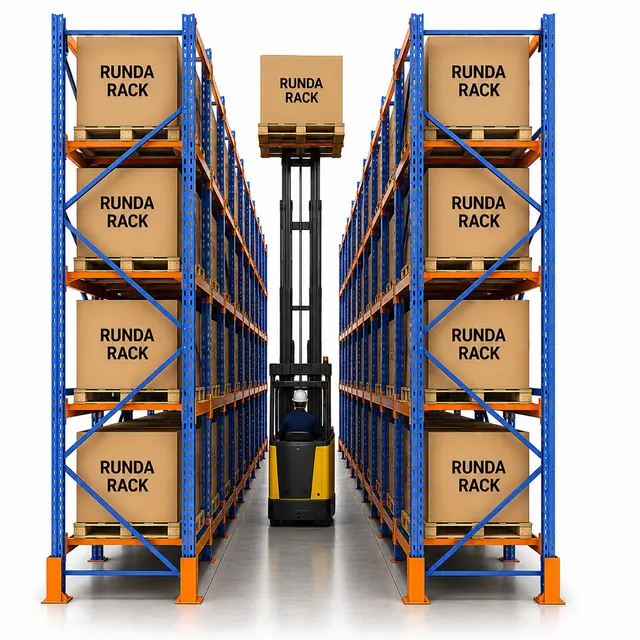
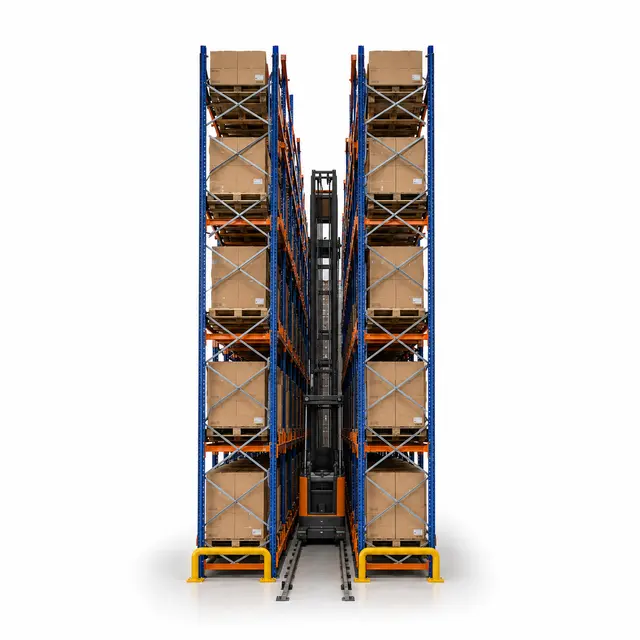
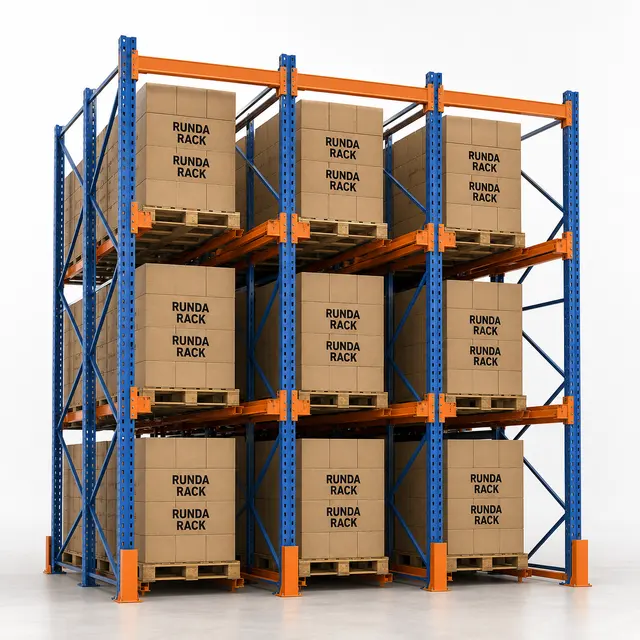
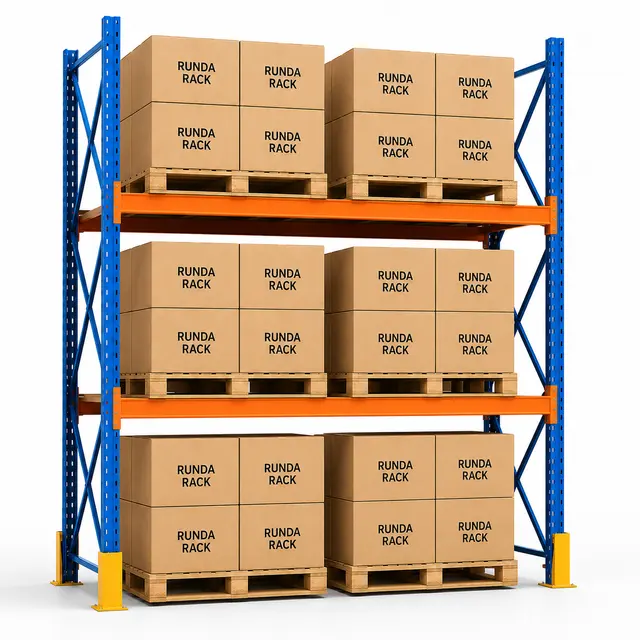
Illustrative configuration of Double Deep Racking.
Configuration illustration. Final design depends on the confirmed site, load and operating requirements.

Quick Answer

What is Double Deep Racking?

Double Deep Racking stores pallets in front and rear positions, with the rear load reached by suitable deep-reach equipment. It suits repeated product groups where paired positions do not create rotation problems. The trade-off is reduced selectivity compared with selective racking, so product grouping, rear-position visibility and retrieval rules need careful planning.

Last reviewed:

Typical applications

Where This System Fits

  • Reserve stock with repeated product groups and controlled rear-position access.
  • Projects comparing density, selectivity and rotation discipline.
  • Warehouses with pallet profiles that can be checked before layout approval.
  • Teams able to align put-away and retrieval rules with the system principle.
  • Facilities that need product-specific planning before quotation.

Operating logic

How This Product Works

Review the operating principle, load movement and main configuration checkpoints before comparing a system for the application.

Two pallet depth

Double deep racking places one pallet behind another, adding density while keeping lane depth shallower than drive-in or shuttle systems.

Paired pallet interface

The front and rear positions work best for repeated product groups where access to the rear pallet can wait until the front load moves.

Reach truck operation

A deep-reach truck handles rear pallet positions, so aisle width, pallet overhang and visibility must match the actual equipment.

Double deep inputs

Confirm pallet grouping, stock rotation tolerance, reach truck type, load dimensions, aisle geometry, beam levels, protection and replenishment rules.

Technical notes
  1. A double-deep bay creates a front location and a rear location behind the same aisle face. The rear pallet is useful when another pallet of the same product or compatible batch can sit behind the front load without causing urgent reshuffling.
  2. The layout should distinguish front and rear positions in labels, scan screens and counting procedure. Deep-reach equipment, operator sight lines, pallet overhang and floor flatness should be checked before the rear position is treated as reliable capacity.
  3. Stock rotation uses controlled pairing; rear loads are accessed after front loads. The rack layout and warehouse procedure must match this rule before product groups are assigned to locations or lanes.
  4. Handling normally involves deep-reach or reach truck. Planning should review front and rear address control, reach visibility and batch pairing, plus pallet condition, protection, inspection access and emergency requirements.
  5. Pair-location logic should be agreed before installation; front and rear positions work well when the same product or compatible reserve stock is assigned together.
  6. Driver visibility into the rear position is a real operating factor, so camera aids, mast height and load shape should be reviewed with the equipment supplier.
  7. Put-away rules should stop fast-moving random pallets from being buried behind unrelated front pallets.
  8. The layout should show how exception pallets are handled when only the rear position contains the requested load.
  9. Inventory software or manual location control must distinguish front and rear positions clearly enough for operators to avoid wasted moves.
  10. Double-deep is most useful as a reserve-storage compromise, not as a universal replacement for direct-access selective aisles.
  11. A double-depth area needs rules for twin-slot pairing, rear-position visibility, exception retrieval and reserve replenishment. The warehouse team should know whether front and rear locations represent the same product, the same batch family or a planned overflow relationship. Without that rule, operators can waste travel uncovering the rear slot for a pallet that should never have been buried.
  12. Quotation notes should include reach-truck capability, camera preference, fork extension limits, rear-beam clearance, pallet stop detail, lighting inside deeper openings, location-code convention for front versus rear and how cycle counting will verify the hidden position. These are different questions from ordinary selective rack pricing.

System strengths

Advantages

  • Clear access behaviour: front and rear pallet positions share the same aisle face.
  • Defined stock-rotation basis: controlled pairing; rear loads are accessed after front loads.
  • Handling interface is explicit: deep-reach or reach truck.
  • Helps compare storage density against operating selectivity.
  • Creates concrete confirmation points for layout review.

Conditions to check

Limitations and Trade-Offs

  • Rear pallets are less selective, so product pairing and retrieval rules must be controlled.
  • Unsuitable when the operation requires constantly changing single-pallet lines.
  • Project-specific load, fire and building details still need engineering confirmation.
  • Damaged pallets, unstable loads or uncontrolled traffic can undermine safe operation.

Configuration brief

Technical specifications available on request

Final specifications for Double Deep Racking are confirmed from the actual load, site and operating requirements.

  • Pallet footprint, loaded height, weight range and pallet condition.
  • Product count, pallet quantity per product and access frequency.
  • Required rotation rule: controlled pairing; rear loads are accessed after front loads.
  • Handling equipment confirmation, including deep-reach or reach truck.
  • Aisle, loading-face, floor, rail, guidance, control or structural interface requirements.
  • Rack protection, inspection access and maintenance responsibility.
  • Fire protection, emergency access and site-service constraints.

Standards and compliance

Applicable Standards and Project Requirements

RUNDA RACK products are designed, manufactured, supplied and installed in accordance with applicable international standards, project specifications and destination-market requirements. The engineering package aligns the product family, load data, site conditions, fire strategy, equipment interfaces and required documentation.

Review the standards framework →

Practical comparison

Compare Common Alternatives

Selective Pallet Racking
Selective has no blocked rear pallet; double deep adds rear storage and needs pairing rules.
Drive-In Racking
Drive-in stores much deeper lanes with forklift entry; double deep stays aisle based.
Pallet Shuttle Racking
Shuttle channels use powered carriers; double deep relies on truck reach.

Configuration inputs

What to Confirm Before Selection

  • Pallet footprint, loaded height, weight range and pallet condition.
  • Product count, pallet quantity per product and access frequency.
  • Required rotation rule: controlled pairing; rear loads are accessed after front loads.
  • Handling equipment confirmation, including deep-reach or reach truck.
  • Aisle, loading-face, floor, rail, guidance, control or structural interface requirements.
  • Rack protection, inspection access and maintenance responsibility.
  • Fire protection, emergency access and site-service constraints.

Product questions

Frequently Asked Questions

What makes Double Deep Racking different from selective storage?
Double deep adds a rear pallet behind the front position. This increases storage density, but the rear pallet is not directly available until the front position is clear.
What stock rotation does Double Deep Racking support?
The intended rotation is controlled pairing; rear loads are accessed after front loads. If the operation needs a different movement rule, compare the alternatives before confirming the layout.
What is the main limitation of Double Deep Racking?
Rear pallets are less selective, so product pairing and retrieval rules must be controlled. This should be checked against access frequency, product grouping, equipment support and site constraints.
What must be confirmed before choosing Double Deep Racking?
Confirm pallet condition, load stability, product grouping, access frequency, deep-reach or reach truck, safety protection, fire requirements and maintenance access.

Planning resources

Continue Product Planning

Configuration

Discuss the Checked Application

Share the product, site and handling details needed for a suitable configuration.
WhatsAppEmail