Pallet Racking

Selective Pallet Racking

Direct pallet access for mixed stock that changes by product code, order profile or replenishment need.

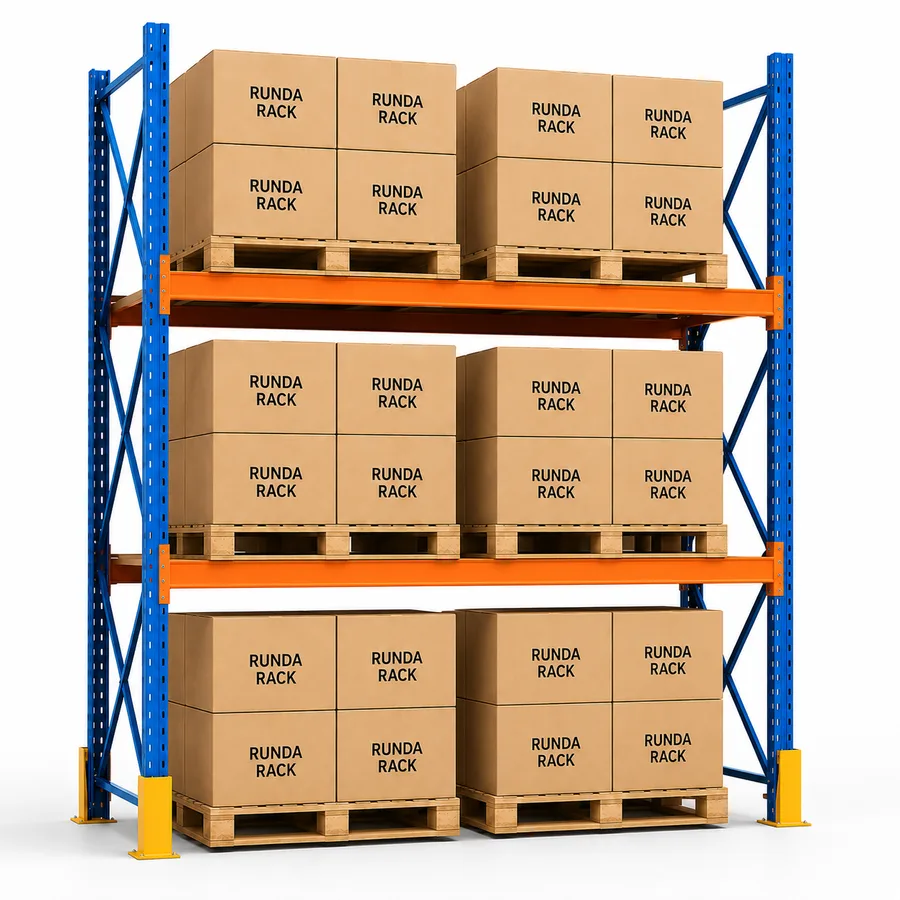
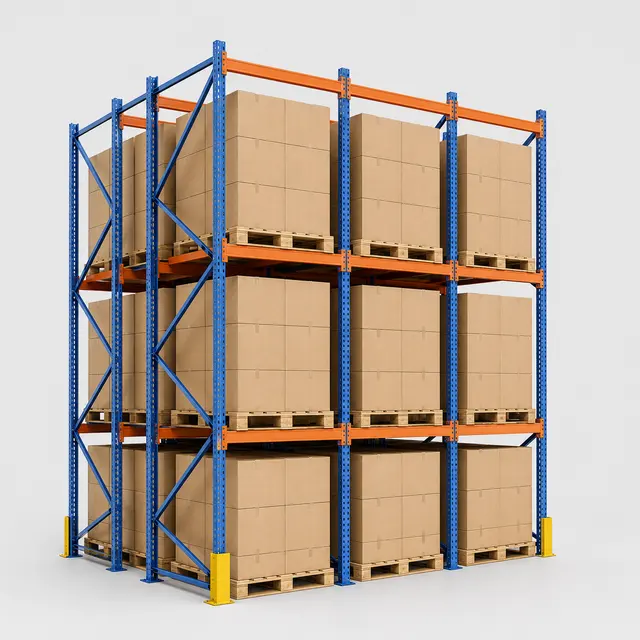
Illustrative configuration of Selective Pallet Racking.
Configuration illustration. Final design depends on the confirmed site, load and operating requirements.

Quick Answer

What is Selective Pallet Racking?

Selective Pallet Racking gives direct access to each stored pallet, so operators can pick, replenish and relocate stock without moving another load first. It suits mixed product ranges, changing product code profiles and warehouses that value simple inspection. The trade-off is lower storage density than deep-lane systems, so aisle width, truck type and beam levels should be confirmed early.

Last reviewed:

Typical applications

Where This System Fits

  • Mixed pallet inventories with frequent individual access.
  • Projects comparing density, selectivity and rotation discipline.
  • Warehouses with pallet profiles that can be checked before layout approval.
  • Teams able to align put-away and retrieval rules with the system principle.
  • Facilities that need product-specific planning before quotation.

Operating logic

How This Product Works

Review the operating principle, load movement and main configuration checkpoints before comparing a system for the application.

Direct pallet access

Selective pallet racking gives each pallet an aisle-facing position, making it easy to pick, inspect, relocate and count mixed stock.

Pallet position interface

Pallet size, overhang, loaded height, weight range and condition determine beam levels, frame depth and safe access geometry.

Aisle based operation

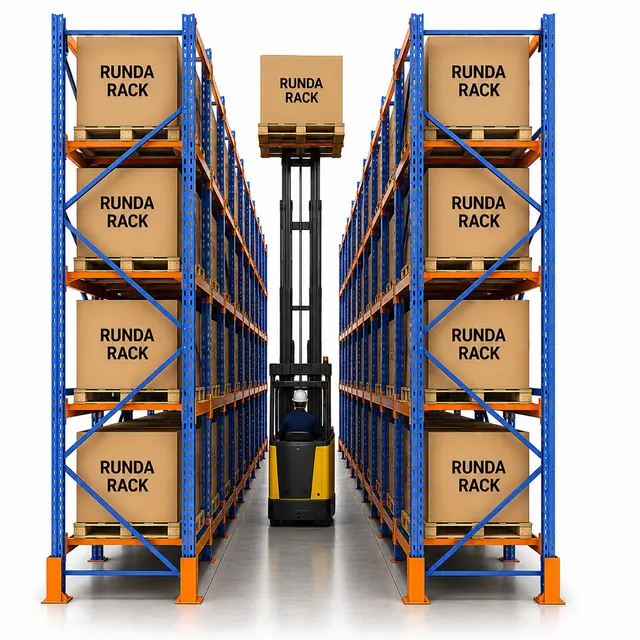
Forklift operators work from clear aisles, so truck type, turning space, labels and rack-end protection affect daily usability.

Selective rack inputs

Confirm SKU mix, pallet quantity, rotation rule, truck type, aisle width, beam levels, protection, floor condition and fire constraints.

Technical notes
  1. Selective bays are planned around visible aisle faces, beam levels and clear lift-off space. Location labels, barcode scans and cycle counts can follow each pallet position without asking operators to clear another load first. This makes the system practical for reserve stock, quarantine positions and pick-face replenishment where the product mix changes during the year.
  2. A useful layout discussion should test aisle width against the actual truck, not just a catalogue diagram. Pallet overhang, column positions, end-of-aisle turning and sprinkler clearances decide whether the rack remains easy to operate after installation.
  3. Stock rotation uses procedure-led FIFO, FEFO or batch priority. The rack layout and warehouse procedure must match this rule before product groups are assigned to locations or lanes.
  4. Handling normally involves counterbalance forklift or reach truck. Planning should review visual labels, beam levels, rack-end guards and future re-slotting, plus pallet condition, protection, inspection access and emergency requirements.
  5. Start with the actual picking pattern: reserve pallets, replenishment pallets and slow movers often need different bay positions even when they share the same rack type.
  6. Keep staging away from rack ends; blocked aisle mouths can remove the access benefit that makes selective racking attractive.
  7. Label strategy matters because the system can hold many small product groups; location codes should be readable from the forklift route.
  8. Beam-level changes should be planned around future product variation, not only the pallet sample available during the first site visit.
  9. End-frame guards, upright protection and clear inspection routes are part of the practical specification for busy mixed-SKU aisles.
  10. If capacity is the main pressure, compare the selective baseline against narrow aisle, double-deep and mobile options before accepting the first layout.
  11. Slotting review should separate full-pallet reserve, broken-pallet replenishment, quarantine positions, returned goods and dock overflow. A selective layout can show these zones clearly because every face remains visible to supervisors, inventory counters and lift-truck drivers. Useful layout drawings often mark pick-face replenishment routes, marshalling boundaries, label height, beam adjustability, frame protection and inspection walkways rather than only counting bays.
  12. For quotation, provide sample load photos, actual pallet footprints, unusual overhang, damaged pallet percentage, beam-level change expectations, aisle sharing with order pickers, rack-end traffic, barcode label orientation and whether stock counts are performed from the aisle. These details allow the rack layout and load assumptions to be checked for the application.

System strengths

Advantages

  • Clear access behaviour: one pallet deep at each aisle-facing opening.
  • Defined stock-rotation basis: procedure-led FIFO, FEFO or batch priority.
  • Handling interface is explicit: counterbalance forklift or reach truck.
  • Helps compare storage density against operating selectivity.
  • Creates concrete confirmation points for layout review.

Conditions to check

Limitations and Trade-Offs

  • Density is lower than deep-lane systems, but access and inspection stay simple.
  • Unsuitable when the operation requires low-variety storage where density matters most.
  • Project-specific load, fire and building details still need engineering confirmation.
  • Damaged pallets, unstable loads or uncontrolled traffic can undermine safe operation.

Configuration brief

Technical specifications available on request

Final specifications for Selective Pallet Racking are confirmed from the actual load, site and operating requirements.

  • Pallet footprint, loaded height, weight range and pallet condition.
  • Product count, pallet quantity per product and access frequency.
  • Required rotation rule: procedure-led FIFO, FEFO or batch priority.
  • Handling equipment confirmation, including counterbalance forklift or reach truck.
  • Aisle, loading-face, floor, rail, guidance, control or structural interface requirements.
  • Rack protection, inspection access and maintenance responsibility.
  • Fire protection, emergency access and site-service constraints.

Standards and compliance

Applicable Standards and Project Requirements

RUNDA RACK products are designed, manufactured, supplied and installed in accordance with applicable international standards, project specifications and destination-market requirements. The engineering package aligns the product family, load data, site conditions, fire strategy, equipment interfaces and required documentation.

Review the standards framework →

Practical comparison

Compare Common Alternatives

Double Deep Racking
Selective keeps every pallet directly reachable; double deep adds a rear pallet behind a front pallet and trades access for density.
Narrow Aisle Racking
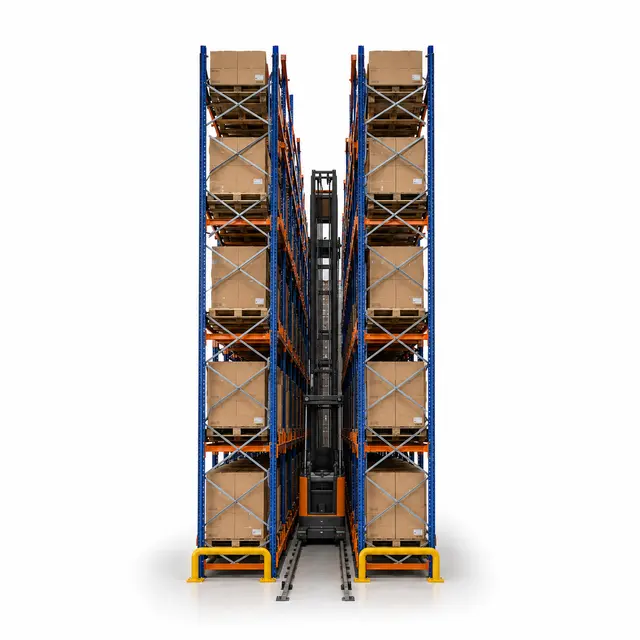
Both are selective, but narrow aisle needs tighter truck, floor and traffic planning.
Drive-In Racking
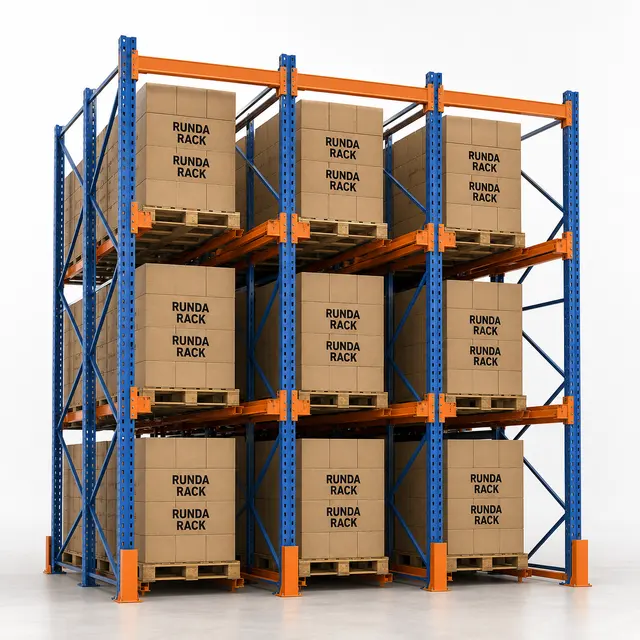
Drive-in uses deep LIFO lanes for batches; selective keeps aisle-facing pallet addresses.

Configuration inputs

What to Confirm Before Selection

  • Pallet footprint, loaded height, weight range and pallet condition.
  • Product count, pallet quantity per product and access frequency.
  • Required rotation rule: procedure-led FIFO, FEFO or batch priority.
  • Handling equipment confirmation, including counterbalance forklift or reach truck.
  • Aisle, loading-face, floor, rail, guidance, control or structural interface requirements.
  • Rack protection, inspection access and maintenance responsibility.
  • Fire protection, emergency access and site-service constraints.

Product questions

Frequently Asked Questions

When should Selective Pallet Racking be chosen?
Choose it when many products need independent access, frequent stock checks or regular re-slotting. It is usually easier to operate than deep-lane storage, but it uses more aisle space.
What stock rotation does Selective Pallet Racking support?
The intended rotation is procedure-led FIFO, FEFO or batch priority. If the operation needs a different movement rule, compare the alternatives before confirming the layout.
What is the main limitation of Selective Pallet Racking?
Density is lower than deep-lane systems, but access and inspection stay simple. This should be checked against access frequency, product grouping, equipment support and site constraints.
What must be confirmed before choosing Selective Pallet Racking?
Confirm pallet condition, load stability, product grouping, access frequency, counterbalance forklift or reach truck, safety protection, fire requirements and maintenance access.

Planning resources

Continue Product Planning

Configuration

Discuss the Checked Application

Share the product, site and handling details needed for a suitable configuration.
WhatsAppEmail