Pallet Racking

Drive-Through Racking

Deep lane storage with separate entry and retrieval faces for batch flow control.

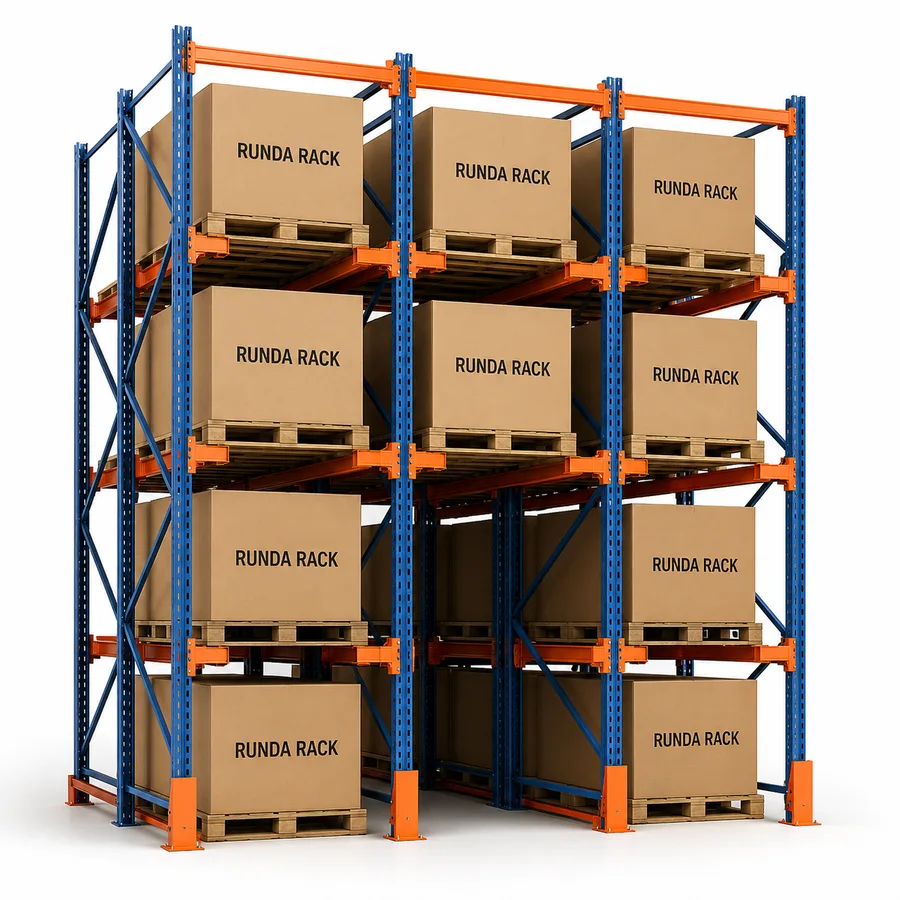
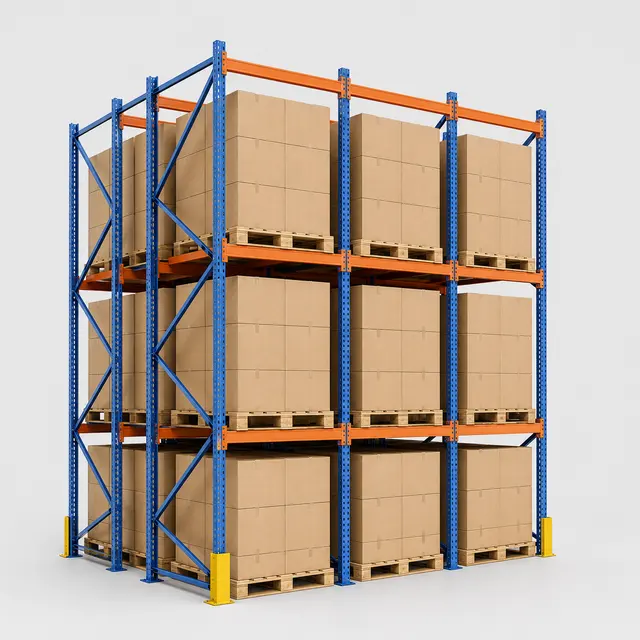
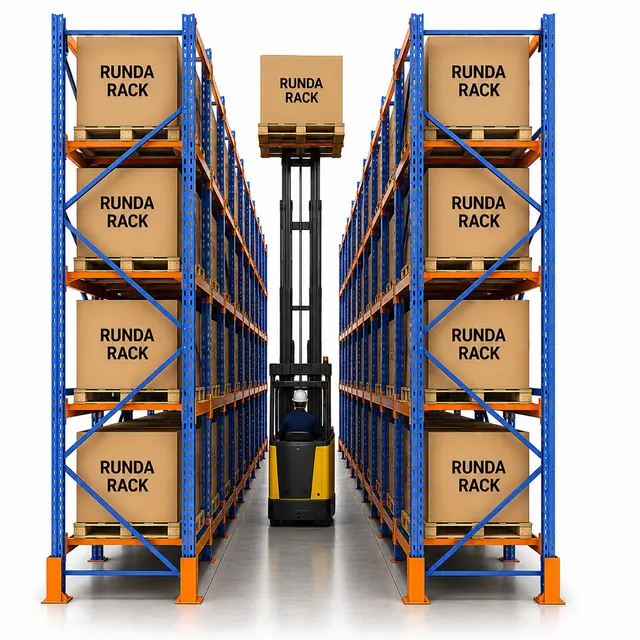
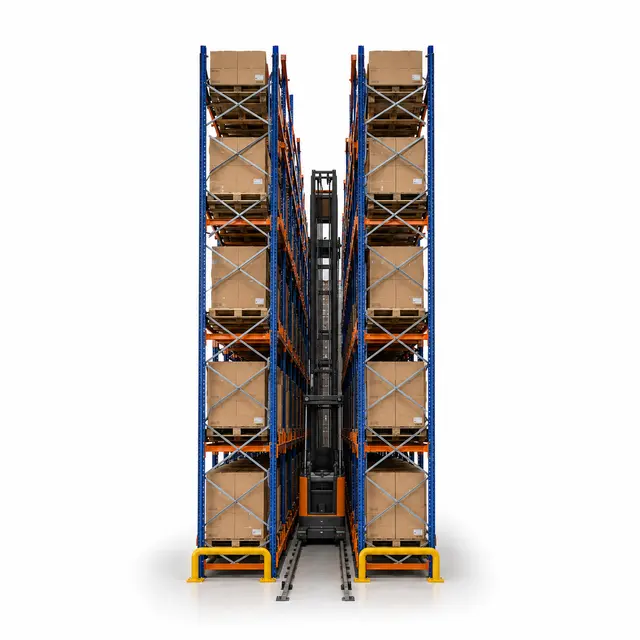
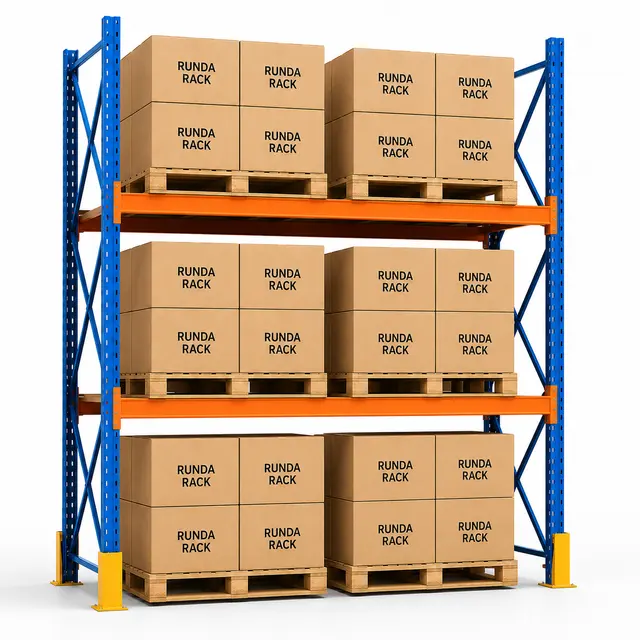
Illustrative configuration of Drive-Through Racking.
Configuration illustration. Final design depends on the confirmed site, load and operating requirements.

Quick Answer

What is Drive-Through Racking?

Drive-Through Racking is a deep-lane pallet system with an operating aisle at each end. Forklifts can replenish from one face and retrieve from the opposite face, creating a FIFO-capable route when direction is enforced. The layout therefore depends on two clear staging areas, coordinated inbound and outbound traffic, compatible pallet batches and procedures that prevent either end from being used against the intended flow.

Last reviewed:

Typical applications

Where This System Fits

  • Batch inventory needing FIFO-capable movement through a deep lane.
  • Facilities with receiving and dispatch or production routes on opposite sides.
  • Pallet groups that can remain dedicated to one controlled channel.
  • Operations able to assign separate replenishment and withdrawal responsibilities.
  • Buildings with safe forklift access and staging space at both rack faces.

Operating logic

How This Product Works

Review the operating principle, load movement and main configuration checkpoints before comparing a system for the application.

Two operating faces

One aisle can serve replenishment and the opposite aisle can serve withdrawal, provided both lane mouths remain open, protected and clearly assigned.

Directional pallet route

Inventory is loaded by forklift from one end and retrieved by forklift from the other, creating a FIFO-capable route when teams preserve the nominated direction.

Separated traffic zones

Inbound staging, outbound staging, forklift turning and pedestrian routes must be coordinated at both sides instead of concentrated at one rack face.

Flow control inputs

Confirm batch release rules, face ownership, aisle capacity, truck clearance, pallet condition, signage, guarding and emergency access at each end.

Technical notes
  1. A drive-through lane remains open at both ends. The replenishment truck enters from the nominated loading side, while retrieval is organised at the opposite side.
  2. When the first pallet placed into the lane is also the first removed from the other end, the process is FIFO-capable. That outcome depends on enforced direction rather than the rack alone.
  3. The warehouse plan should connect the two faces to a real material-flow path, such as receiving on one side and dispatch or production withdrawal on the other.
  4. Both ends need turning space, staging boundaries, lane-mouth protection, signage and pedestrian separation. Blocking either operating aisle removes the intended flow advantage.
  5. Forklifts still travel within the structure, but they approach from different zones. Truck envelopes and driver rules must be checked for each face and for any one-way or crossing traffic nearby.
  6. Product assignment should prevent operators from searching through mixed stock or reversing direction to reach an unrelated pallet. One controlled batch per lane supports a clear release sequence.
  7. Supervisors should define which team owns replenishment, which team owns withdrawal, how empty lanes are released and how exceptions are communicated between the two ends.
  8. Drive-through fits buildings where inbound and outbound routes can remain physically separated. For a site with only one practical aisle, compare drive-in and push-back storage for tighter process control.
  9. Fire access, emergency routes and services must be reviewed at both faces because the rack cannot be planned as a single-ended block.

System strengths

Advantages

  • Supports directional batch movement between two operating zones.
  • Can make the oldest pallet available first when lane direction is maintained.
  • Separates replenishment work from retrieval work instead of sharing one aisle face.
  • Uses deep pallet lanes while keeping the stock-flow objective visible.

Conditions to check

Limitations and Trade-Offs

  • Requires an operating aisle, protection and staging control at each end.
  • Random access from both sides can break FIFO and confuse batch ownership.
  • Forklift travel inside the lanes still creates guidance and impact-management needs.
  • In buildings without a practical through-flow route, drive-through storage sacrifices space without adding process control.

Configuration brief

Technical specifications available on request

Final specifications for Drive-Through Racking are confirmed from the actual load, site and operating requirements.

  • Pallet footprint, underside, loaded height, stability and weight range.
  • Batch quantity, replenishment frequency and required release sequence.
  • Nominated loading face, nominated retrieval face and FIFO control procedure.
  • Forklift types, turning envelopes and aisle demand at both ends.
  • Receiving, production or dispatch staging connected to each operating side.
  • Lane-mouth guarding, directional signage, traffic separation and inspection responsibility.
  • Fire access, emergency routes and service clearances around both faces.

Standards and compliance

Applicable Standards and Project Requirements

RUNDA RACK products are designed, manufactured, supplied and installed in accordance with applicable international standards, project specifications and destination-market requirements. The engineering package aligns the product family, load data, site conditions, fire strategy, equipment interfaces and required documentation.

Review the standards framework →

Practical comparison

Compare Common Alternatives

Drive-In Racking
Drive-in is same-face LIFO; drive-through separates loading and retrieval faces.
Pallet Flow Racking
Pallet flow uses gravity rollers for FIFO; drive-through relies on forklifts through the lane.
Pallet Shuttle Racking
Shuttle channels reduce forklift lane travel and can be arranged for FIFO or LIFO.

Configuration inputs

What to Confirm Before Selection

  • Pallet footprint, underside, loaded height, stability and weight range.
  • Batch quantity, replenishment frequency and required release sequence.
  • Nominated loading face, nominated retrieval face and FIFO control procedure.
  • Forklift types, turning envelopes and aisle demand at both ends.
  • Receiving, production or dispatch staging connected to each operating side.
  • Lane-mouth guarding, directional signage, traffic separation and inspection responsibility.
  • Fire access, emergency routes and service clearances around both faces.

Product questions

Frequently Asked Questions

How is Drive-Through Racking different from Drive-In Racking?
Drive-through keeps both lane ends open, allowing loading and retrieval to be assigned to opposite sides. Drive-in has one operating opening and normally follows LIFO.
Is Drive-Through Racking automatically FIFO?
It is FIFO-capable, but only if procedures preserve one loading direction and the opposite retrieval direction for each assigned batch.
Why are two aisles important?
Each end needs forklift approach, turning and staging space. The second face adds value only when both operating zones remain available and safely controlled.
What traffic rules should be defined?
Define face ownership, one-way lane direction, batch release, signage, pedestrian separation, exception handling and communication between replenishment and withdrawal teams.

Planning resources

Continue Product Planning

Configuration

Discuss the Checked Application

Share the product, site and handling details needed for a suitable configuration.
WhatsAppEmail