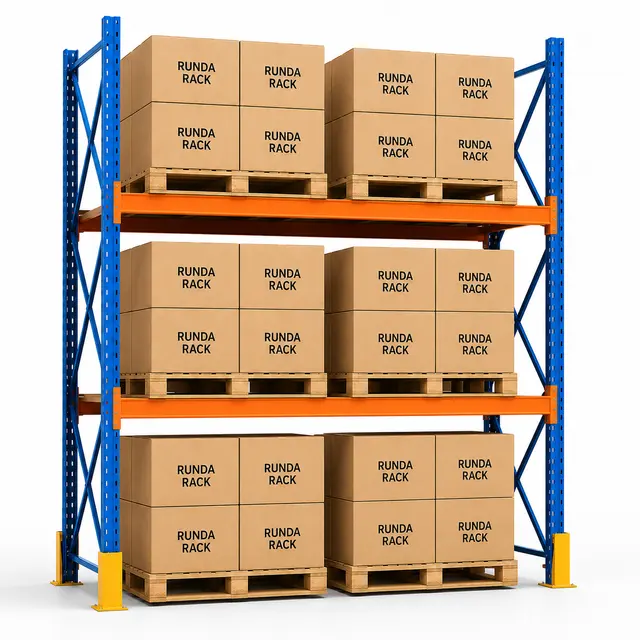
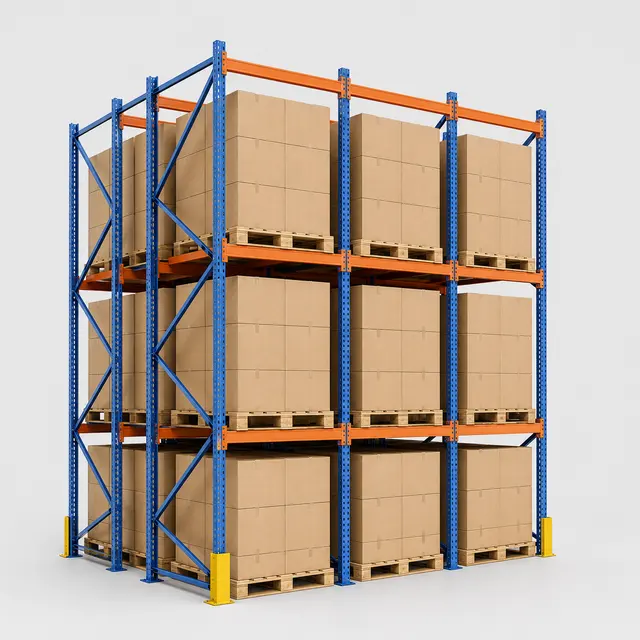
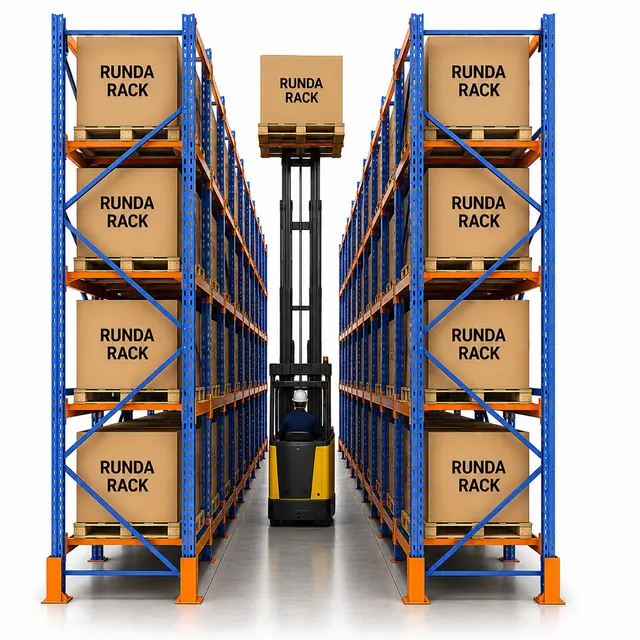
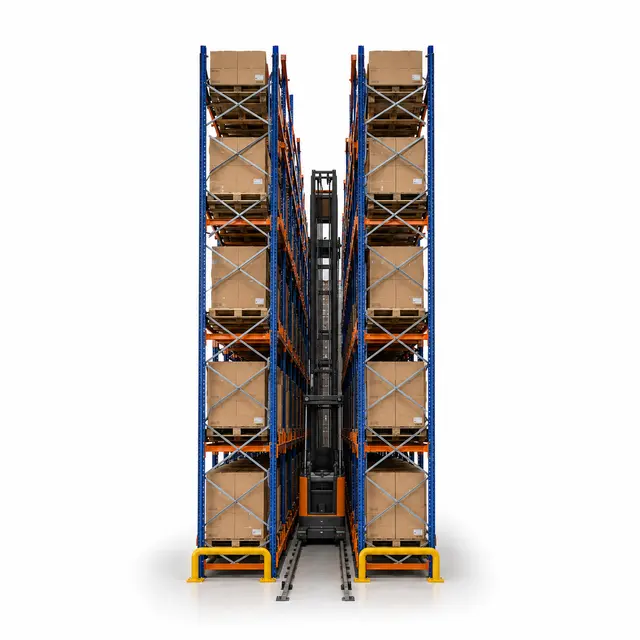
Gravity pallet lanes
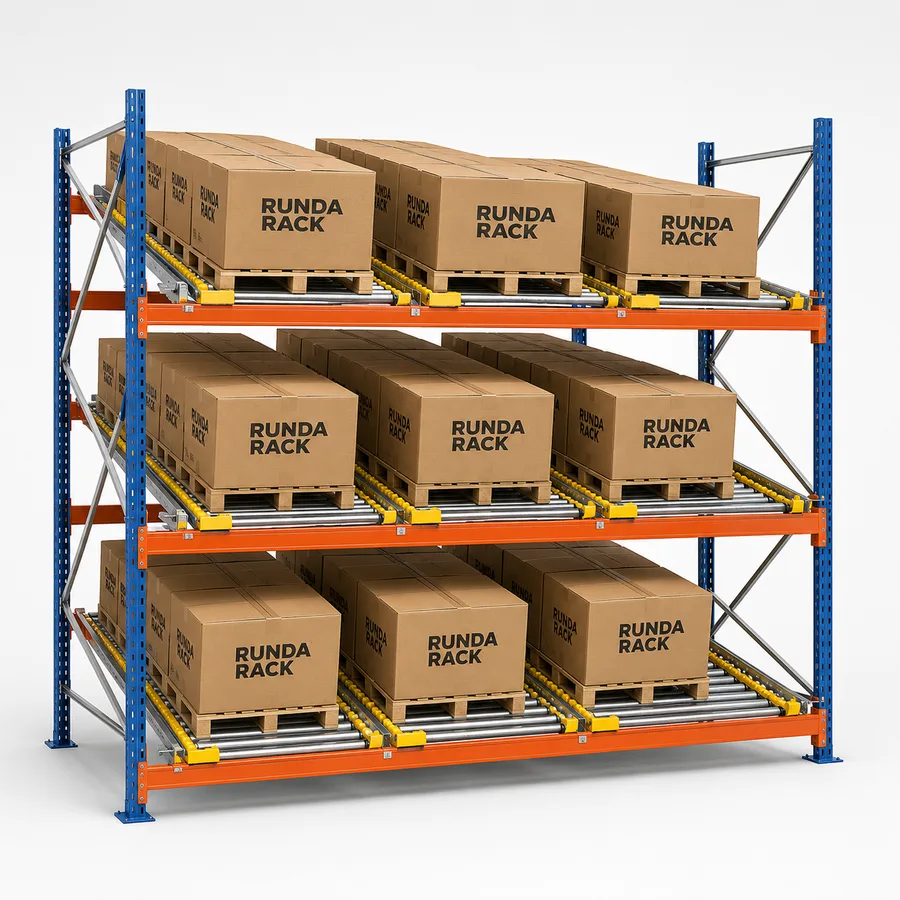
Pallet flow racking uses inclined roller lanes to move pallets from loading side to picking side under controlled speed.
Pallet Racking
Gravity-fed pallet lanes for date-sensitive or fast-moving stock with controlled FIFO movement.
Malaysia-based manufacturer and installation team supporting warehouse and retail projects.
Quick Answer
Pallet Flow Racking uses inclined roller lanes, brakes and separators so pallets loaded at one face move toward a retrieval face. It suits fast-moving or date-sensitive stock where physical first-in, first-out movement is required. The trade-off is greater mechanical design and pallet-quality sensitivity, so roller type, braking, lane pitch and traffic separation must be confirmed.
Typical applications
Operating logic
Review the operating principle, load movement and main configuration checkpoints before comparing a system for the application.
Pallet flow racking uses inclined roller lanes to move pallets from loading side to picking side under controlled speed.
Pallet base quality, loaded weight, runner direction and stop performance must be tested because gravity movement depends on consistent pallet contact.
Replenishment and retrieval happen at opposite faces, making the system suitable for date-sensitive or fast-moving pallet batches needing first-in flow.
Confirm pallet footprint, weight range, lane depth, roller type, brake requirement, flow direction, safety stops and fire access.
System strengths
Conditions to check
Configuration brief
Final specifications for Pallet Flow Racking are confirmed from the actual load, site and operating requirements.
Standards and compliance
RUNDA RACK products are designed, manufactured, supplied and installed in accordance with applicable international standards, project specifications and destination-market requirements. The engineering package aligns the product family, load data, site conditions, fire strategy, equipment interfaces and required documentation.
Review the standards framework →ANSI MH16.1
EN 15629
EN 15635
NFPA 13
Practical comparison
Configuration inputs
Product questions
Planning resources
Configuration
Share the product, site and handling details needed for a suitable configuration.