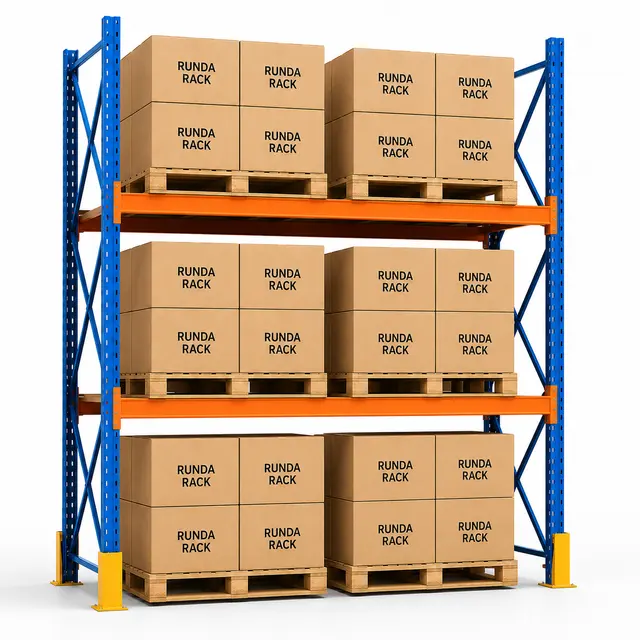
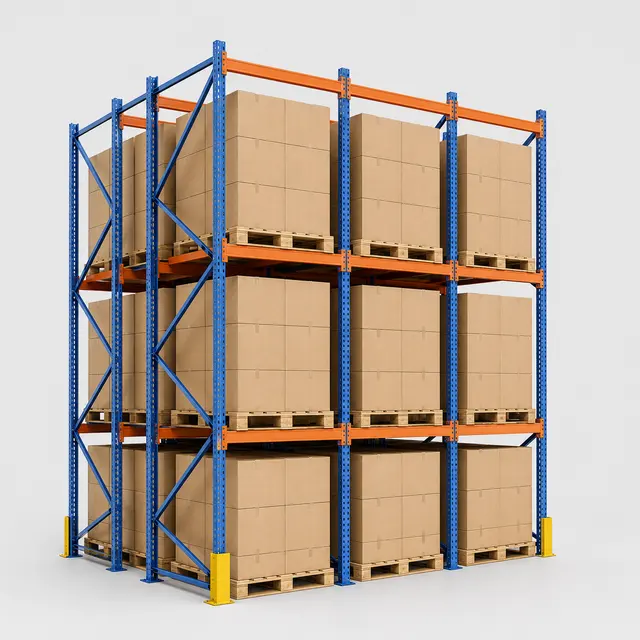
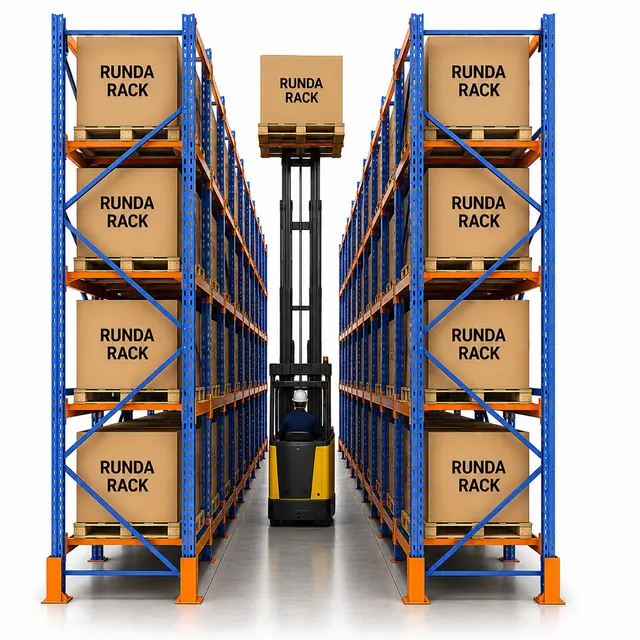
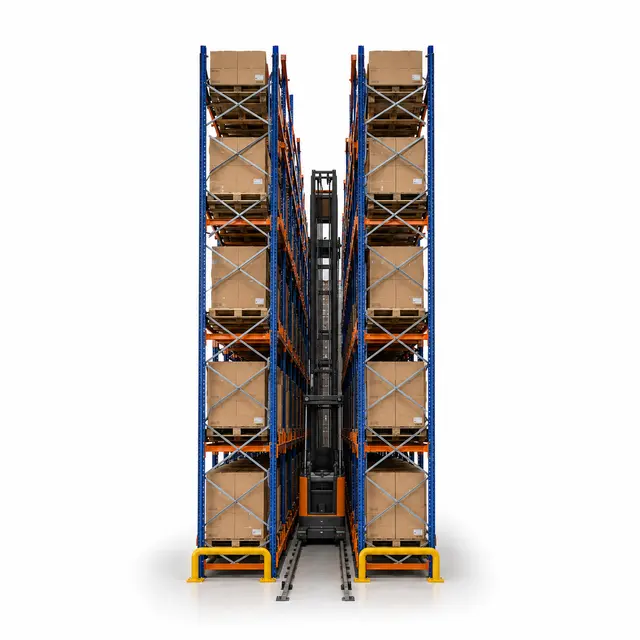
Automated pallet grid
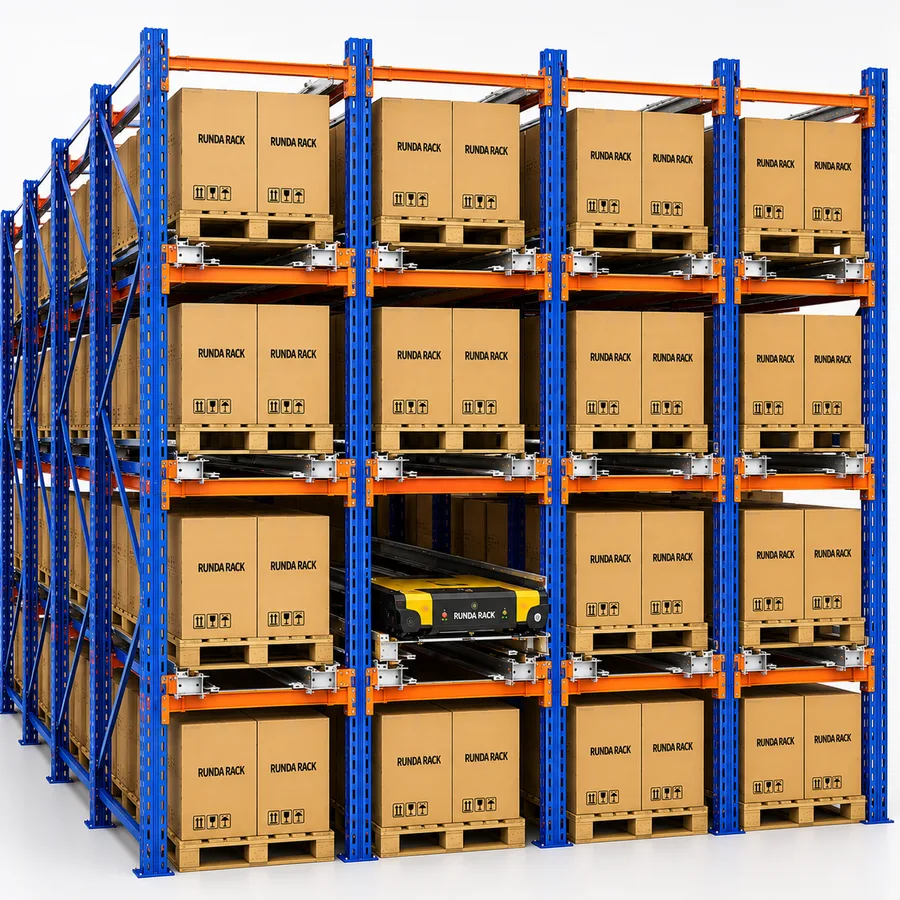
Four-way shuttles move pallets through storage channels and transfer paths, creating a dense grid managed by lifts and control software.
Pallet Racking
Automated pallet grid storage for consistent loads moving through shuttle, lift and control interfaces.
Malaysia-based manufacturer and installation team supporting warehouse and retail projects.
Quick Answer
Four-Way Shuttle Racking is an automated pallet storage system where shuttles move lengthwise and crosswise through a rack grid. It suits dense facilities with consistent unit loads, defined pallet data and control-system support. The trade-off is higher integration complexity than manual racking, so WMS or WCS rules, lifts, buffers, charging areas, safety cells and maintenance access must be planned together.
Typical applications
Operating logic
Review the operating principle, load movement and main configuration checkpoints before comparing a system for the application.
Four-way shuttles move pallets through storage channels and transfer paths, creating a dense grid managed by lifts and control software.
The system needs predictable pallets, load dimensions and base quality because automated shuttle movement depends on stable carrier behaviour.
Pallets enter controlled stations, transfer to shuttle routes, move vertically by lift when required and return through defined outfeed positions.
Confirm pallet standard, throughput, storage depth, lift quantity, battery strategy, fire interfaces, maintenance access and warehouse control integration.
System strengths
Conditions to check
Configuration brief
Final specifications for Four-Way Shuttle Racking are confirmed from the actual load, site and operating requirements.
Standards and compliance
RUNDA RACK products are designed, manufactured, supplied and installed in accordance with applicable international standards, project specifications and destination-market requirements. The engineering package aligns the product family, load data, site conditions, fire strategy, equipment interfaces and required documentation.
Review the standards framework →FEM 10.2.19
ISO 12100
ISO 13849-1
IEC 60204-1
Practical comparison
Configuration inputs
Product questions
Planning resources
Configuration
Share the product, site and handling details needed for a suitable configuration.