AS/RS Systems

Carousel Storage System

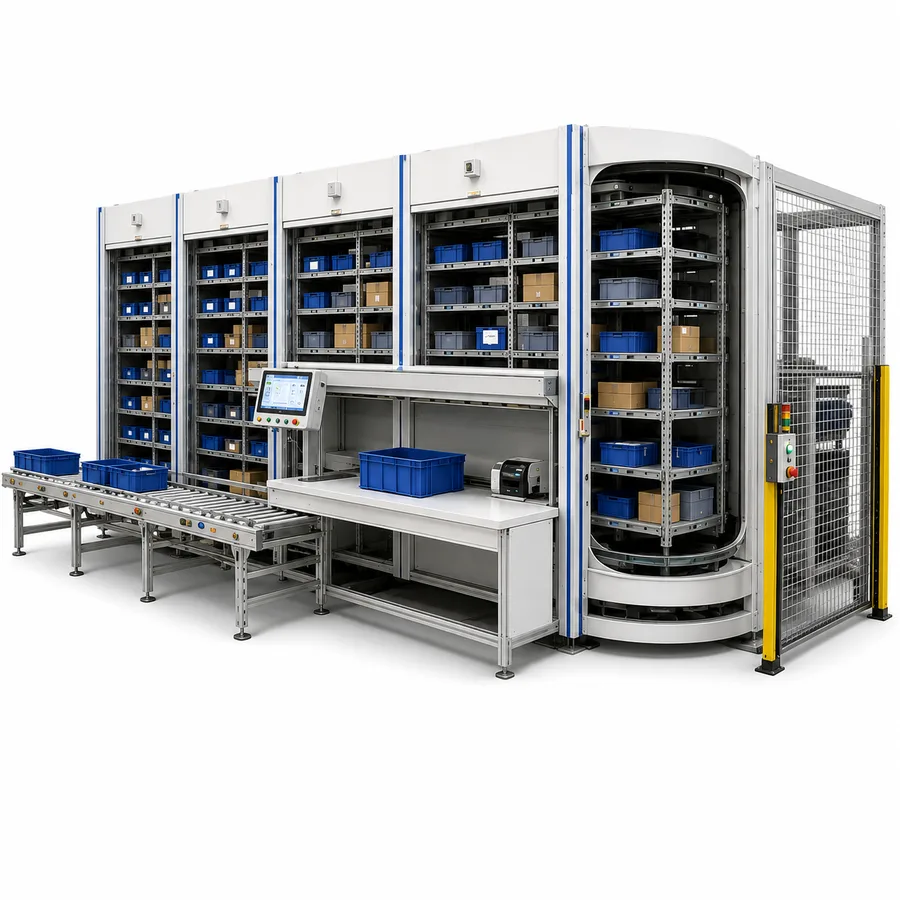
Rotating carrier storage for small parts, documents or components delivered to an operator access point.

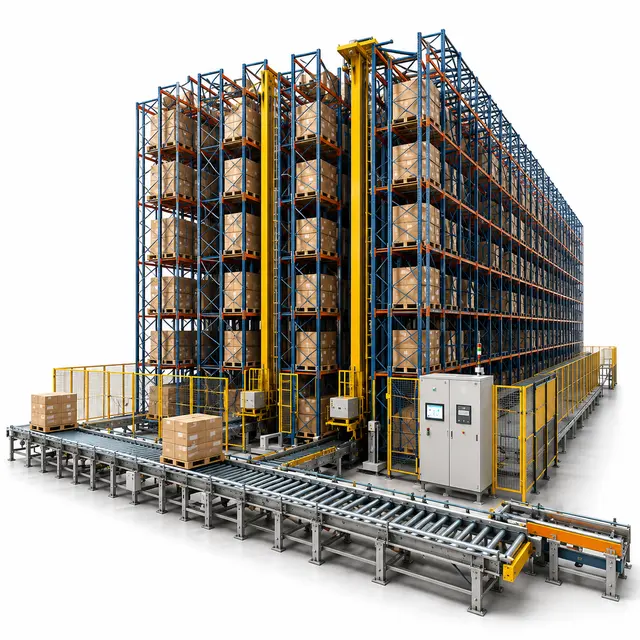
Illustrative configuration of Carousel Storage System.
Configuration illustration. Final design depends on the confirmed site, load and operating requirements.

Quick Answer

What is Carousel Storage System?

A Carousel Storage System stores items on carriers that rotate to bring the required location to an operator access point. Choose a horizontal or vertical carousel according to the product and layout, and confirm orientation from the selected model rather than assuming it. It suits small parts, documents or components where rotating carrier presentation fits the picking workflow.

Last reviewed:

Typical applications

Where This System Fits

  • Small parts and component picking.
  • Document or sample storage.
  • Production kitting areas.
  • Controlled inventory with a defined access point.
  • Operations comparing carousel, VLM and mini-load alternatives.

Operating logic

How This Product Works

Review the operating principle, load movement and main configuration checkpoints before comparing a system for the application.

Rotating carrier access

Carriers rotate stored items to an operator opening, reducing walking for small parts, documents or components that must be retrieved from one station.

Item tray interface

Carrier size, item height, weight and picking frequency determine whether carousel storage fits better than static shelving or tray-based vertical lift storage.

Operator station flow

The user requests an item, the carousel presents the carrier, and the operator picks or replenishes without searching multiple manual shelf aisles.

Carousel planning inputs

Confirm item dimensions, carrier quantity, access opening, picking method, software interface, safety guarding, maintenance access and whether batching is required.

Technical notes
  1. Carousel storage is defined by rotating carriers. A horizontal carousel moves bins or shelves around an oval path, while a vertical carousel moves carriers around a vertical loop. A Vertical Lift Module instead uses an extractor to retrieve trays from vertical columns.
  2. The access point is central to the design. Operators pick or replenish from a defined opening while the system rotates the requested carrier into position. This can reduce walking and searching when the item mix suits carrier storage, but the actual result depends on SKU profile, batching logic and operator process.
  3. Carrier orientation must be confirmed before specification. Some carousel applications suit documents or small parts; others suit production kitting, spares or controlled inventory. Item size, bin layout, carrier pitch, weight distribution and access ergonomics should be checked before choosing a carousel concept.
  4. A horizontal carousel can support batch picking and work-zone planning, while a vertical carousel can use building height for similarly sized items. Confirm the carrier orientation before planning floor space, access openings and replenishment routes.
  5. Control options include pick lights, scan confirmation, inventory records, user permissions and batch release. A carousel is not just a rotating cabinet; it still needs software, safety doors or access controls, replenishment rules and maintenance access.
  6. Carousel storage is an automated option for repeatedly presenting small items, documents or parts at a controlled access point. It should be compared with vertical lift modules, shelving and tote-based automation using the actual item and order profile.

System strengths

Advantages

  • Explains rotating carrier movement clearly.
  • Separates carousel intent from VLM tray extraction.
  • Can support local operator access and batch-oriented picking workflows.
  • Keeps horizontal versus vertical orientation as a confirmation item.
  • Works as a lower-complexity automation discussion than large AS/RS projects.

Conditions to check

Limitations and Trade-Offs

  • Carrier size and orientation limit what can be stored.
  • Not designed for palletised unit loads.
  • For multiple users or very high conveyor-fed flow, compare another automation type.
  • Final productivity claims depend on batching, software and operator workflow.

Configuration brief

Technical specifications available on request

Final specifications for Carousel Storage System are confirmed from the actual load, site and operating requirements.

  • Horizontal or vertical carousel orientation.
  • Item size, weight range, bin or carrier layout.
  • Access point, operator count and picking process.
  • Batch picking, scan, light or inventory software requirements.
  • Replenishment route, exception handling and user permissions.
  • Electrical, safety-door and maintenance access requirements.

Standards and compliance

Applicable Standards and Project Requirements

RUNDA RACK products are designed, manufactured, supplied and installed in accordance with applicable international standards, project specifications and destination-market requirements. The engineering package aligns the product family, load data, site conditions, fire strategy, equipment interfaces and required documentation.

Review the standards framework →

Practical comparison

Compare Common Alternatives

Vertical Lift Module
Carousel systems rotate carriers; VLMs extract trays from vertical storage columns.
Goods-to-Person AS/RS
A carousel can present goods at an operator station, while a complete goods-to-person workflow spans the selected storage engines, stations and packing processes.
Mini Load AS/RS
Mini-load uses automated cranes for totes or cases; carousel uses rotating carriers at an access point.

Configuration inputs

What to Confirm Before Selection

  • Horizontal or vertical carousel orientation.
  • Item size, weight range, bin or carrier layout.
  • Access point, operator count and picking process.
  • Batch picking, scan, light or inventory software requirements.
  • Replenishment route, exception handling and user permissions.
  • Electrical, safety-door and maintenance access requirements.

Product questions

Frequently Asked Questions

What is a carousel storage system?
It is automated storage where carriers rotate to bring the required stored location to an operator access point.
Is it horizontal or vertical?
It can be either, so orientation should be confirmed from the selected model and layout.
How is it different from a VLM?
A carousel rotates carriers around a path; a Vertical Lift Module retrieves trays with an extractor.

Planning resources

Continue Product Planning

Configuration

Discuss the Checked Application

Share the product, site and handling details needed for a suitable configuration.
WhatsAppEmail