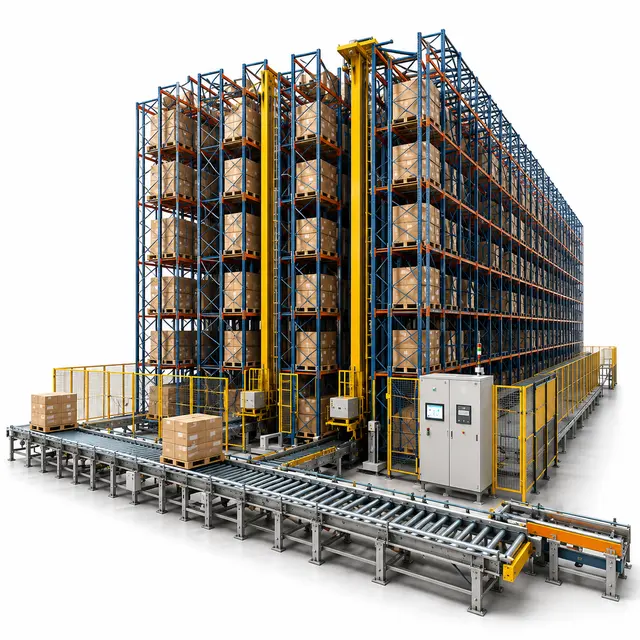
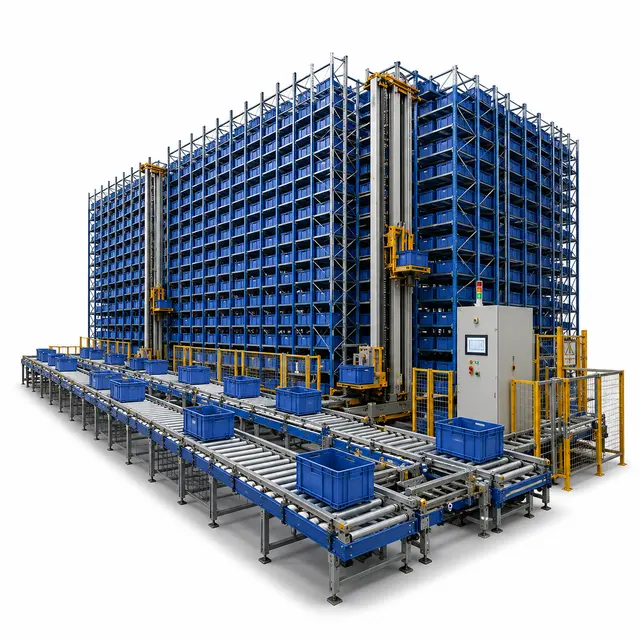
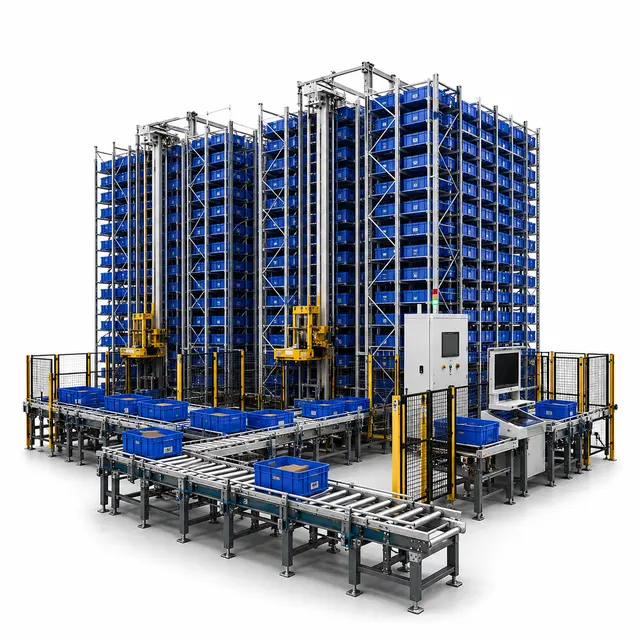
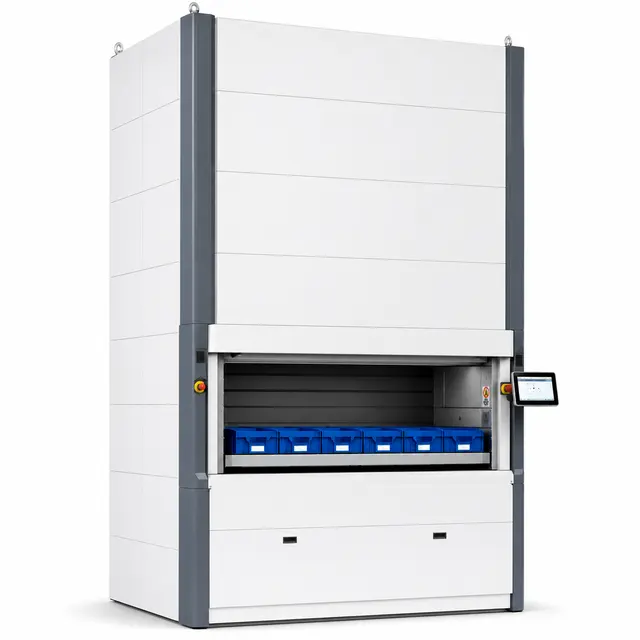
Parallel shuttle movement
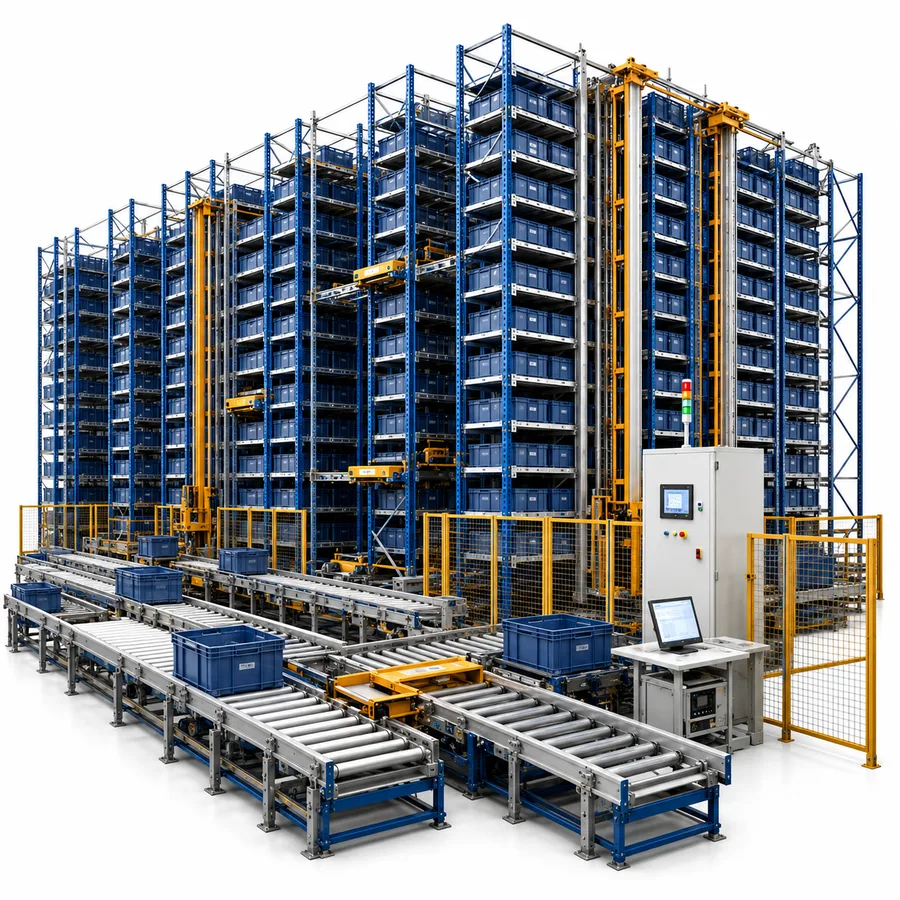
Multi-shuttle AS/RS uses multiple vehicles to move totes or cartons across levels, supporting buffering, sequencing and high-parallel retrieval.
AS/RS Systems
Vehicle-based tote and carton automation for buffering, sequencing and high-parallel movement.
Malaysia-based manufacturer and installation team supporting warehouse and retail projects.
Quick Answer
Multi-Shuttle AS/RS is vehicle-based automation for totes, cartons or trays where many shuttle missions, lifts and control rules work together. It is typically reviewed for buffering, sequencing, order fulfilment or workstation supply rather than simple static storage. The essential inputs are carrier quality, SKU and order profile, shuttle-level concept, lift interface, safety zones and controls logic.
Typical applications
Operating logic
Review the operating principle, load movement and main configuration checkpoints before comparing a system for the application.
Multi-shuttle AS/RS uses multiple vehicles to move totes or cartons across levels, supporting buffering, sequencing and high-parallel retrieval.
Container size, SKU mix, order lines and peak demand determine whether the system should prioritise storage density, sequencing or station feed.
Shuttles retrieve carriers from storage and feed lifts, conveyors or workstations so orders can be assembled with less walking.
Confirm carrier dimensions, throughput profile, sequencing rules, station count, conveyor interface, software integration, safety access and maintenance strategy.
System strengths
Conditions to check
Configuration brief
Final specifications for Multi-Shuttle AS/RS are confirmed from the actual load, site and operating requirements.
Standards and compliance
RUNDA RACK products are designed, manufactured, supplied and installed in accordance with applicable international standards, project specifications and destination-market requirements. The engineering package aligns the product family, load data, site conditions, fire strategy, equipment interfaces and required documentation.
Review the standards framework →ISO 12100
ISO 13849-1
IEC 60204-1
ISO 14119
Practical comparison
Configuration inputs
Product questions
Planning resources
Configuration
Share the product, site and handling details needed for a suitable configuration.