AS/RS Systems

Goods-to-Person AS/RS

Workflow-led automation that brings inventory carriers to picking or replenishment stations.

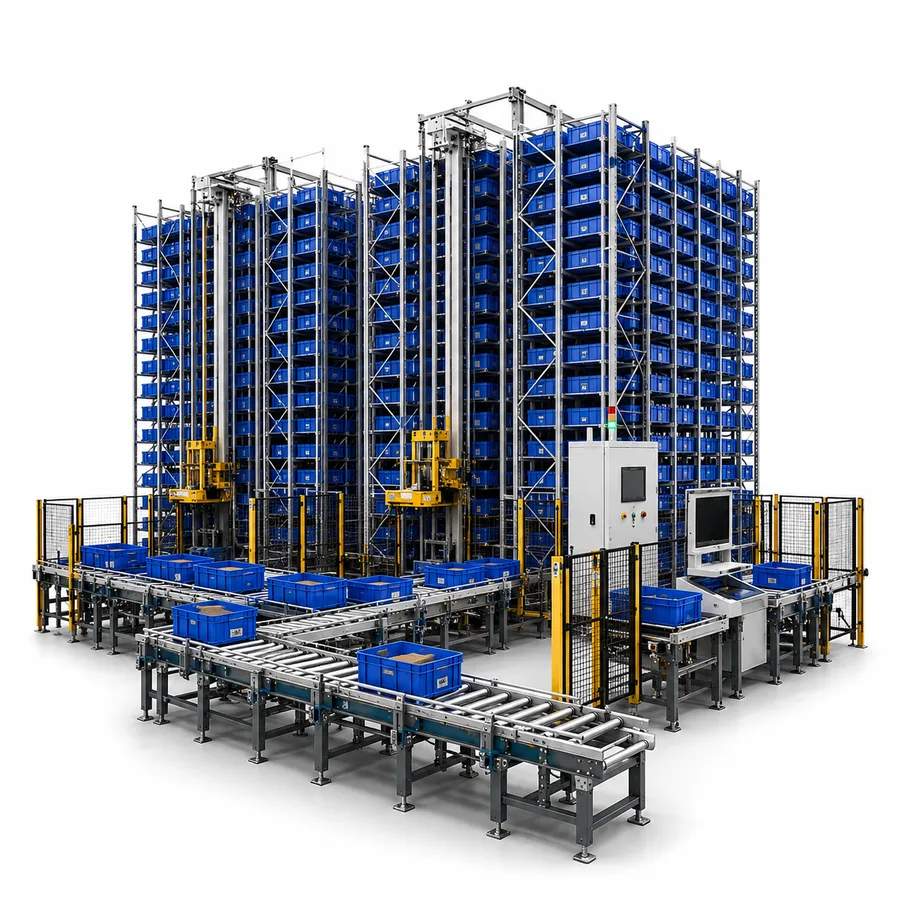
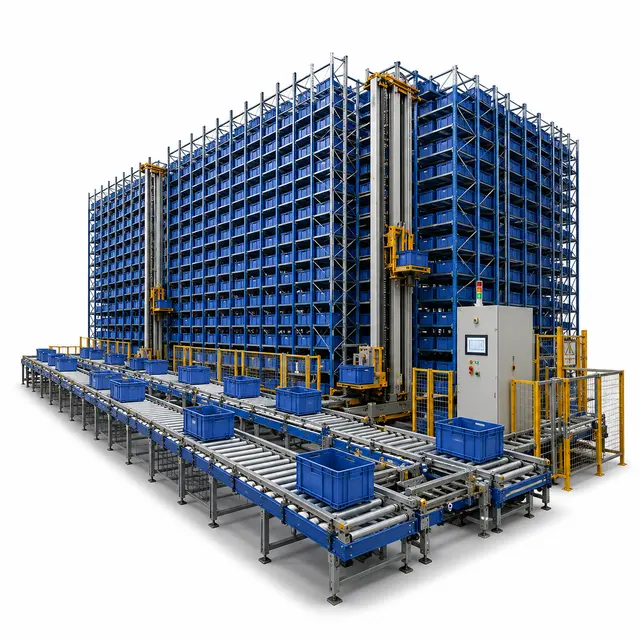
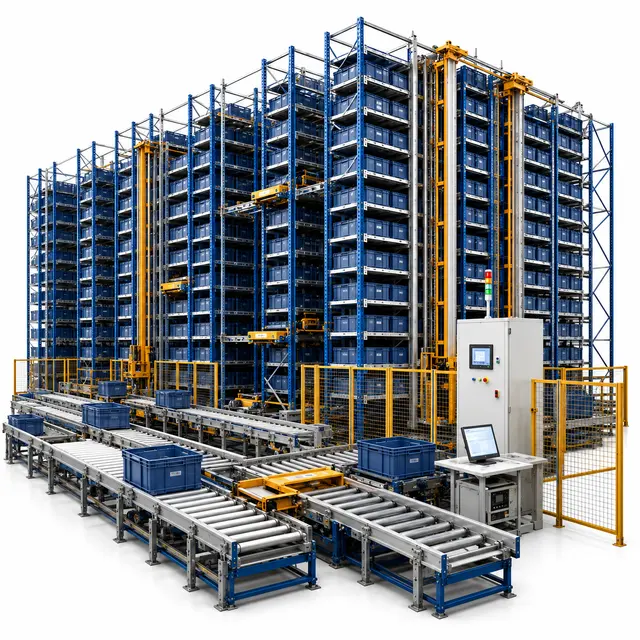
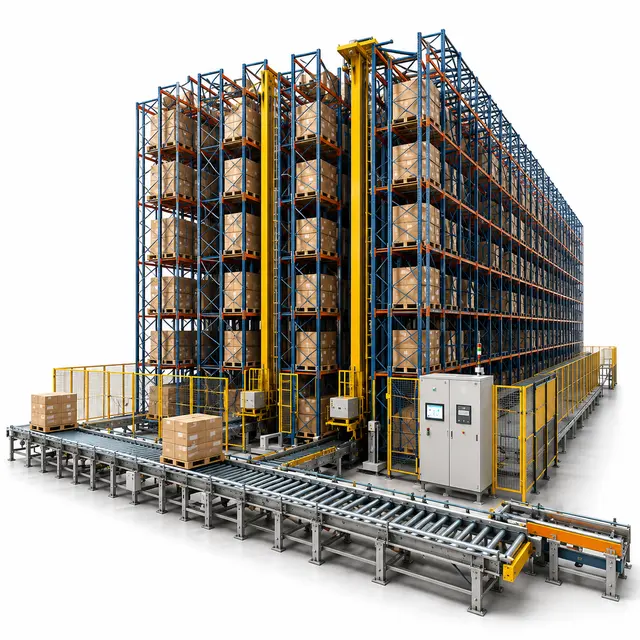
Illustrative configuration of Goods-to-Person AS/RS.
Configuration illustration. Final design depends on the confirmed site, load and operating requirements.

Quick Answer

What is Goods-to-Person AS/RS?

Goods-to-Person AS/RS is not one single rack type; it is a picking workflow where automated storage and controls bring inventory carriers to operators at workstations. The selected automation engine can be a shuttle, mini-load, VLM or another system. The buying decision should start with order profile, workstation design, carrier type, replenishment flow, pick accuracy process and software integration.

Last reviewed:

Typical applications

Where This System Fits

  • High-SKU picking operations.
  • E-commerce, spare parts or component picking.
  • Workflows where operator walking is a major issue.
  • Operations needing workstation prompts and scan confirmation.
  • Buyers ready to map orders, replenishment and software logic.

Operating logic

How This Product Works

Review the operating principle, load movement and main configuration checkpoints before comparing a system for the application.

Inventory to workstation

Goods-to-person AS/RS brings totes, trays or bins to operators instead of sending people through storage aisles to search for items.

Carrier process interface

Carrier dimensions, SKU profile, order lines and replenishment method decide whether the system supports picking, put-away, consolidation or buffering.

Station based picking

Automation presents the required carrier at a workstation, where operators pick, confirm and return inventory through controlled software steps.

GTP planning inputs

Confirm order profile, carrier size, pick rate target, station layout, exception handling, replenishment flow, software integration and ergonomic requirements.

Technical notes
  1. In a goods-to-person workflow, operators remain at a station while totes, trays, bins or other carriers are delivered to them. Select a shuttle system, mini-load AS/RS, vertical lift module or another controlled automation layer as the storage engine; not every project uses the same machine.
  2. The first design question is order profile. Lines per order, SKU count, item size, batch logic, put-wall or packing process, replenishment route and exception handling shape the workstation concept. Labour and productivity effects must be measured from the actual operation.
  3. Workstation ergonomics and presentation matter. Operators need the right carrier height, screen prompts, scan confirmation, light indication, reject handling, empty tote management and packing connection. The storage system can bring goods forward, but the station process determines whether the work is accurate and maintainable.
  4. Goods-to-person describes the end-to-end workflow from storage to operator to completed pick. Multi-shuttle equipment is one storage and transport option within that workflow, but workstation design, replenishment and order control remain separate decisions.
  5. Software integration is essential. WMS, WCS, warehouse control rules, barcode logic and order release determine which carrier appears at which station and in what order. The project should define how inventory is replenished, counted, picked, packed and reconciled after exceptions.
  6. AS/RS means automated storage and retrieval system. In a goods-to-person application, the storage equipment, carrier transport, workstation and control logic must operate as one connected process.

System strengths

Advantages

  • Frames the decision around the complete workflow, not only the storage machine.
  • Can integrate different storage engines behind the workstation concept.
  • Makes pick accuracy, replenishment and exception handling part of the sales discussion.
  • Clarifies the difference between storage equipment, carrier movement and workstation picking.
  • Avoids unsupported productivity claims while still explaining operational value.

Conditions to check

Limitations and Trade-Offs

  • Requires detailed order and workstation process data.
  • Software integration and exception handling are critical.
  • A weak packing or replenishment process can limit benefits.
  • Final station count and performance must be calculated from live workflow assumptions.

Configuration brief

Technical specifications available on request

Final specifications for Goods-to-Person AS/RS are confirmed from the actual load, site and operating requirements.

  • Order profile, SKU count and line frequency.
  • Carrier type, item dimensions and pick method.
  • Workstation count, packing connection and operator process.
  • Replenishment route, empty carrier handling and exception workflow.
  • WMS/WCS integration, scan confirmation and inventory rules.
  • Ergonomic, safety, maintenance and training requirements.

Standards and compliance

Applicable Standards and Project Requirements

RUNDA RACK products are designed, manufactured, supplied and installed in accordance with applicable international standards, project specifications and destination-market requirements. The engineering package aligns the product family, load data, site conditions, fire strategy, equipment interfaces and required documentation.

Review the standards framework →

Practical comparison

Compare Common Alternatives

Multi-Shuttle AS/RS
Multi-shuttle is a carrier-movement engine; goods-to-person is the workstation workflow it is selected to feed.
Mini Load AS/RS
Mini-load stores and retrieves containers; goods-to-person defines how those containers are presented and picked.
Vertical Lift Module
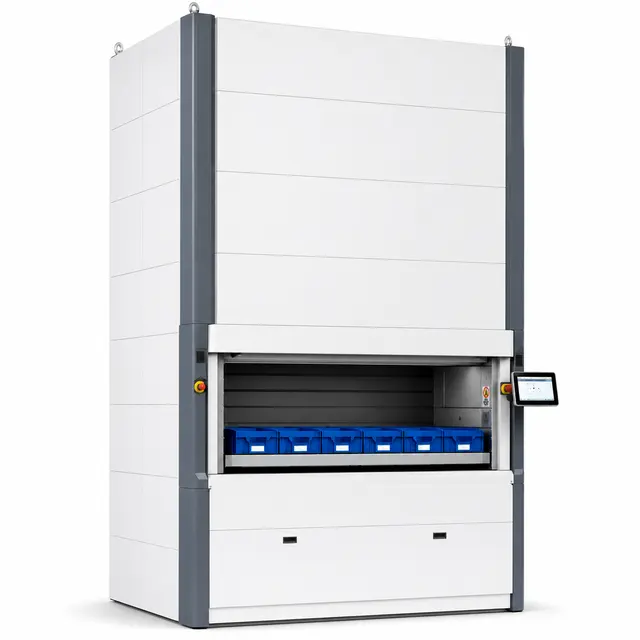
A VLM can serve local goods-to-person picking, while a complete goods-to-person system also covers carrier flow, stations, replenishment and controls.

Configuration inputs

What to Confirm Before Selection

  • Order profile, SKU count and line frequency.
  • Carrier type, item dimensions and pick method.
  • Workstation count, packing connection and operator process.
  • Replenishment route, empty carrier handling and exception workflow.
  • WMS/WCS integration, scan confirmation and inventory rules.
  • Ergonomic, safety, maintenance and training requirements.

Product questions

Frequently Asked Questions

Is Goods-to-Person AS/RS a single machine?
No. It is a workflow that can use different automated storage engines to bring carriers to operators.
What should be analysed first?
Start with order profile, SKU count, carrier type, workstation process and software integration.
Can it use Multi-Shuttle AS/RS?
Yes. A multi-shuttle system can feed goods-to-person stations when sequencing and carrier movement are needed.

Planning resources

Continue Product Planning

Configuration

Discuss the Checked Application

Share the product, site and handling details needed for a suitable configuration.
WhatsAppEmail