Pallet Racking

Mobile Pallet Racking

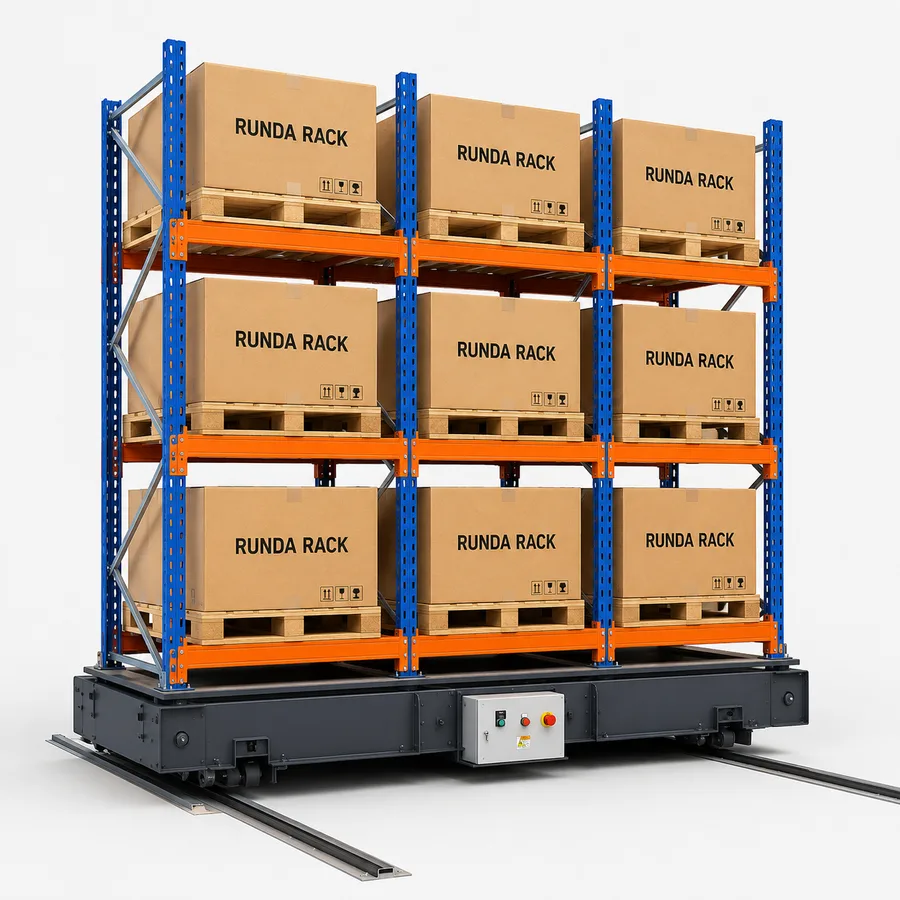
Movable rack bases that open one operating aisle at a time for space-constrained storage.

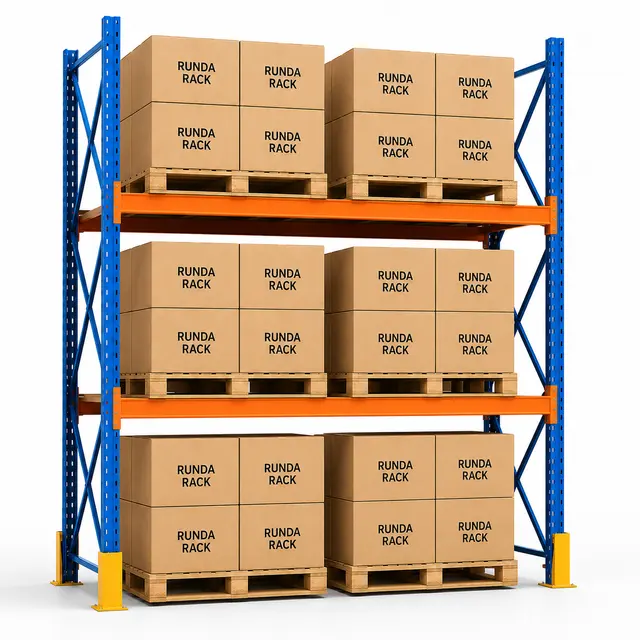
Illustrative configuration of Mobile Pallet Racking.
Configuration illustration. Final design depends on the confirmed site, load and operating requirements.

Quick Answer

What is Mobile Pallet Racking?

Mobile Pallet Racking mounts pallet racks on powered bases so the warehouse opens an aisle only where access is needed. It suits cold, high-value or space-constrained storage where capacity matters and access can be scheduled. The trade-off is slower simultaneous access and greater reliance on rails, controls and safety devices, so operating procedures must be planned carefully.

Last reviewed:

Typical applications

Where This System Fits

  • Cold, high-value or space-constrained storage with scheduled aisle access.
  • Projects comparing density, selectivity and rotation discipline.
  • Warehouses with pallet profiles that can be checked before layout approval.
  • Teams able to align put-away and retrieval rules with the system principle.
  • Facilities that need product-specific planning before quotation.

Operating logic

How This Product Works

Review the operating principle, load movement and main configuration checkpoints before comparing a system for the application.

Movable pallet bases

Mobile pallet racking places pallet racks on powered or guided bases that open one operating aisle only where access is needed.

Pallet rack interface

Standard pallet rack frames and beams still need confirmed pallet dimensions, weights and lift-truck access before they are mounted on mobile bases.

Single aisle operation

Users open the required aisle, retrieve or store pallets, then close the run to release floor space for compact storage.

Mobile rack inputs

Confirm pallet data, aisle opening method, floor flatness, rail or base details, safety sensors, access frequency and emergency requirements.

Technical notes
  1. Mobile racking puts rack runs on powered bases so only the requested aisle opens for access. It can preserve selective pallet handling while reducing the number of permanent aisles in expensive or enclosed rooms.
  2. The floor, rail path, power supply and safety devices are core design inputs. Access scheduling, emergency release, cleaning around rails and maintenance of sensors should be agreed before comparing the system with fixed selective aisles.
  3. Stock rotation uses location-managed rotation after aisle opening. The rack layout and warehouse procedure must match this rule before product groups are assigned to locations or lanes.
  4. Handling normally involves forklift plus powered bases, rails and sensors. Planning should review aisle requests, safety sweeps, rail cleaning and power-loss procedures, plus pallet condition, protection, inspection access and emergency requirements.
  5. The rail interface should be reviewed with the floor detail, drainage, door threshold and cleaning procedure before rack dimensions are finalized.
  6. Access is sequential; the team should agree who can request an aisle and how priorities are handled during busy periods.
  7. Sensors, warning signals, emergency release and manual movement procedures should be explained to operators before the first use.
  8. Cold-room projects should consider ice, condensation, rail cleaning and power reliability as practical operating constraints.
  9. Mobile bases preserve direct rack faces, but they do not support multiple independent users in different aisles at the same moment.
  10. Maintenance space around motors, wheels and control cabinets should be kept accessible even when the storage zone is full.
  11. Mobile-base projects should start from the room interface. Rail groove, floor tolerance, door threshold, condensation, drainage, power feed, control cabinet, safety sweep, light curtain and emergency release can determine whether the system is practical before the rack count is discussed.
  12. Operational planning should describe aisle-request priority, simultaneous-user limits, cleaning route, power-loss behaviour, manual movement, sensor inspection, cold-room housekeeping, maintenance access and whether security or temperature control is the main reason for choosing mobile bases.

System strengths

Advantages

  • Clear access behaviour: powered bases move rack rows to open the requested aisle.
  • Defined stock-rotation basis: location-managed rotation after aisle opening.
  • Handling interface is explicit: forklift plus powered bases, rails and sensors.
  • Helps compare storage density against operating selectivity.
  • Creates concrete confirmation points for layout review.

Conditions to check

Limitations and Trade-Offs

  • Access is sequential and the rails, controls and bases require maintenance.
  • Unsuitable when the operation requires many simultaneous aisle picks.
  • Project-specific load, fire and building details still need engineering confirmation.
  • Damaged pallets, unstable loads or uncontrolled traffic can undermine safe operation.

Configuration brief

Technical specifications available on request

Final specifications for Mobile Pallet Racking are confirmed from the actual load, site and operating requirements.

  • Pallet footprint, loaded height, weight range and pallet condition.
  • Product count, pallet quantity per product and access frequency.
  • Required rotation rule: location-managed rotation after aisle opening.
  • Handling equipment confirmation, including forklift plus powered bases, rails and sensors.
  • Aisle, loading-face, floor, rail, guidance, control or structural interface requirements.
  • Rack protection, inspection access and maintenance responsibility.
  • Fire protection, emergency access and site-service constraints.

Standards and compliance

Applicable Standards and Project Requirements

RUNDA RACK products are designed, manufactured, supplied and installed in accordance with applicable international standards, project specifications and destination-market requirements. The engineering package aligns the product family, load data, site conditions, fire strategy, equipment interfaces and required documentation.

Review the standards framework →

Practical comparison

Compare Common Alternatives

Selective Pallet Racking
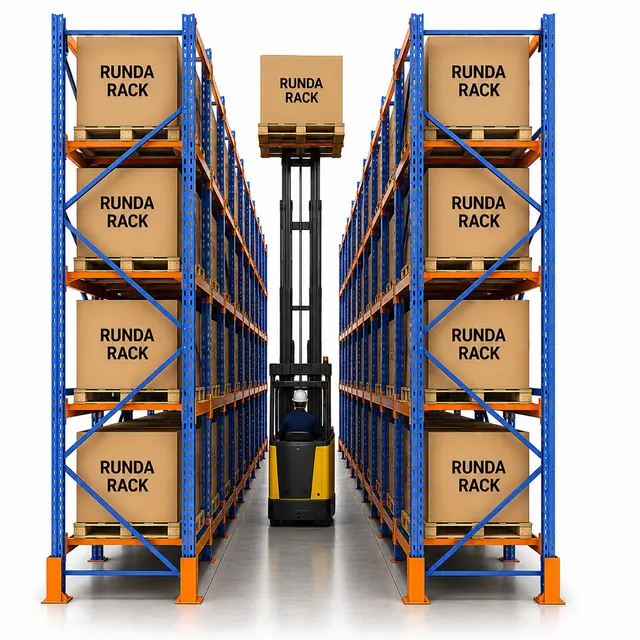
Selective keeps all aisles open; mobile keeps selective access but opens only the requested aisle.
Narrow Aisle Racking
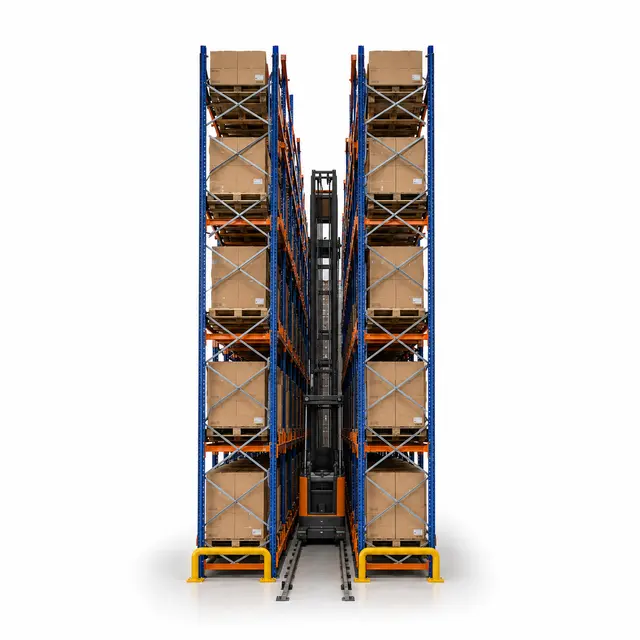
Narrow aisle reduces aisle width; mobile removes fixed aisles through moving rack bases.
Drive-In Racking
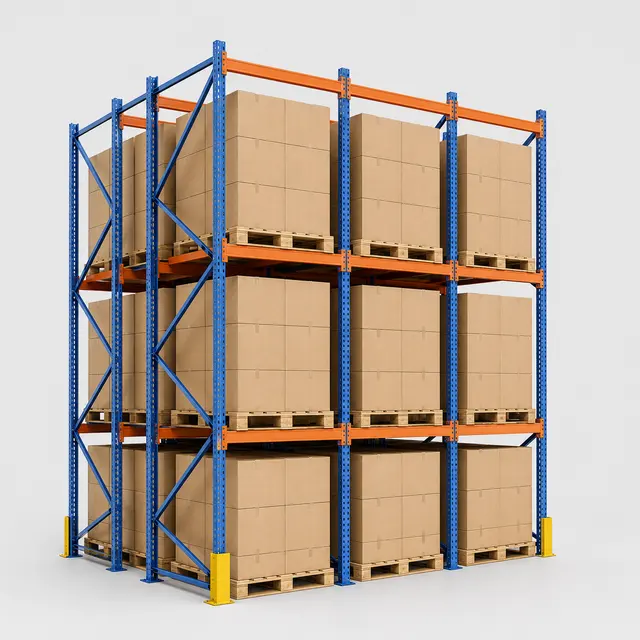
Drive-in gains density through deep LIFO lanes; mobile keeps direct faces on movable bases.

Configuration inputs

What to Confirm Before Selection

  • Pallet footprint, loaded height, weight range and pallet condition.
  • Product count, pallet quantity per product and access frequency.
  • Required rotation rule: location-managed rotation after aisle opening.
  • Handling equipment confirmation, including forklift plus powered bases, rails and sensors.
  • Aisle, loading-face, floor, rail, guidance, control or structural interface requirements.
  • Rack protection, inspection access and maintenance responsibility.
  • Fire protection, emergency access and site-service constraints.

Product questions

Frequently Asked Questions

How does Mobile Pallet Racking save space?
Rack runs move on powered bases, so the room does not need a permanent aisle beside every run. An aisle opens only where access is requested.
What stock rotation does Mobile Pallet Racking support?
The intended rotation is location-managed rotation after aisle opening. If the operation needs a different movement rule, compare the alternatives before confirming the layout.
What is the main limitation of Mobile Pallet Racking?
Access is sequential and the rails, controls and bases require maintenance. This should be checked against access frequency, product grouping, equipment support and site constraints.
What must be confirmed before choosing Mobile Pallet Racking?
Confirm pallet condition, load stability, product grouping, access frequency, forklift plus powered bases, rails and sensors, safety protection, fire requirements and maintenance access.

Planning resources

Continue Product Planning

Configuration

Discuss the Checked Application

Share the product, site and handling details needed for a suitable configuration.
WhatsAppEmail