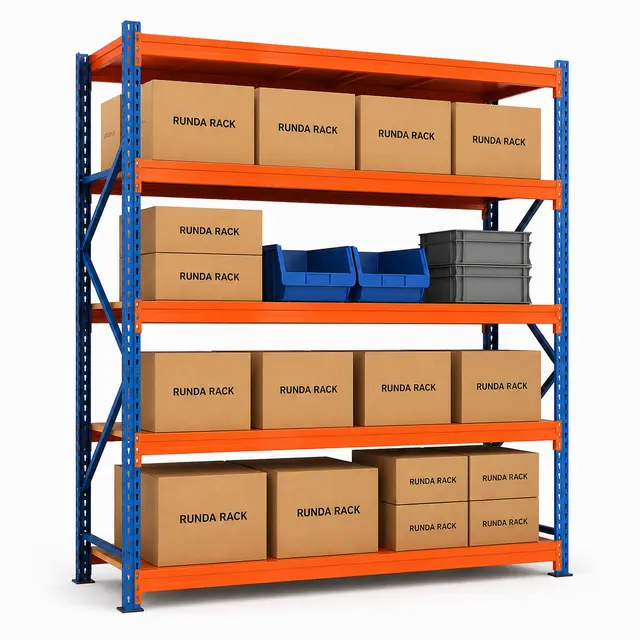
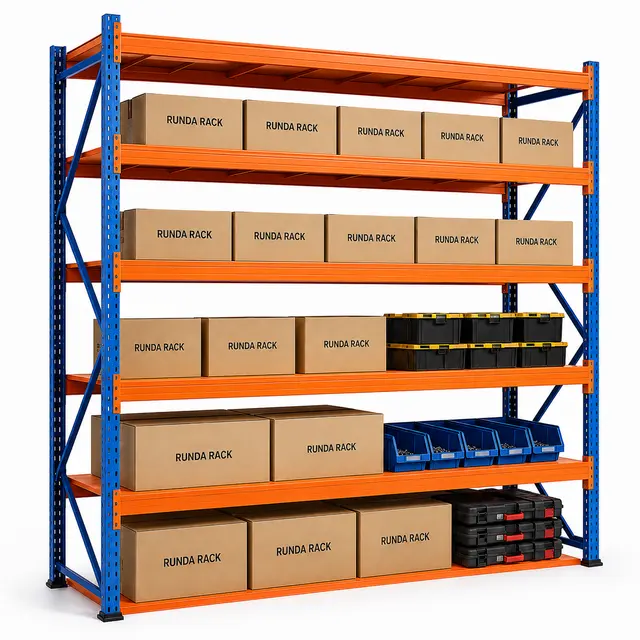
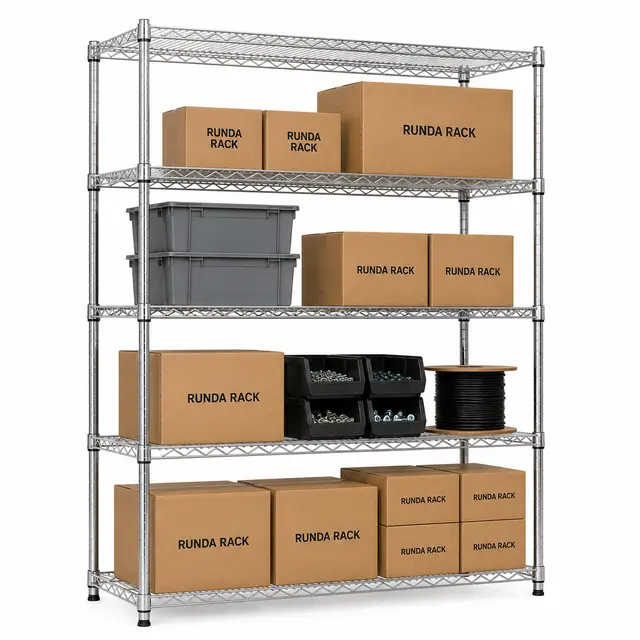
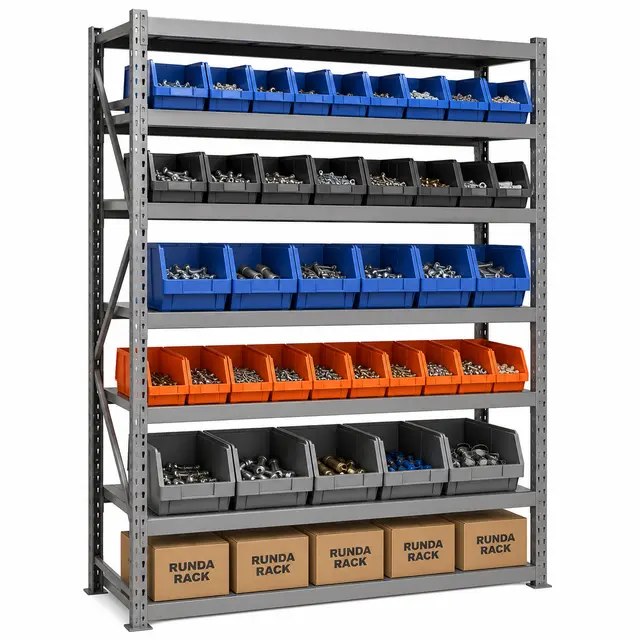
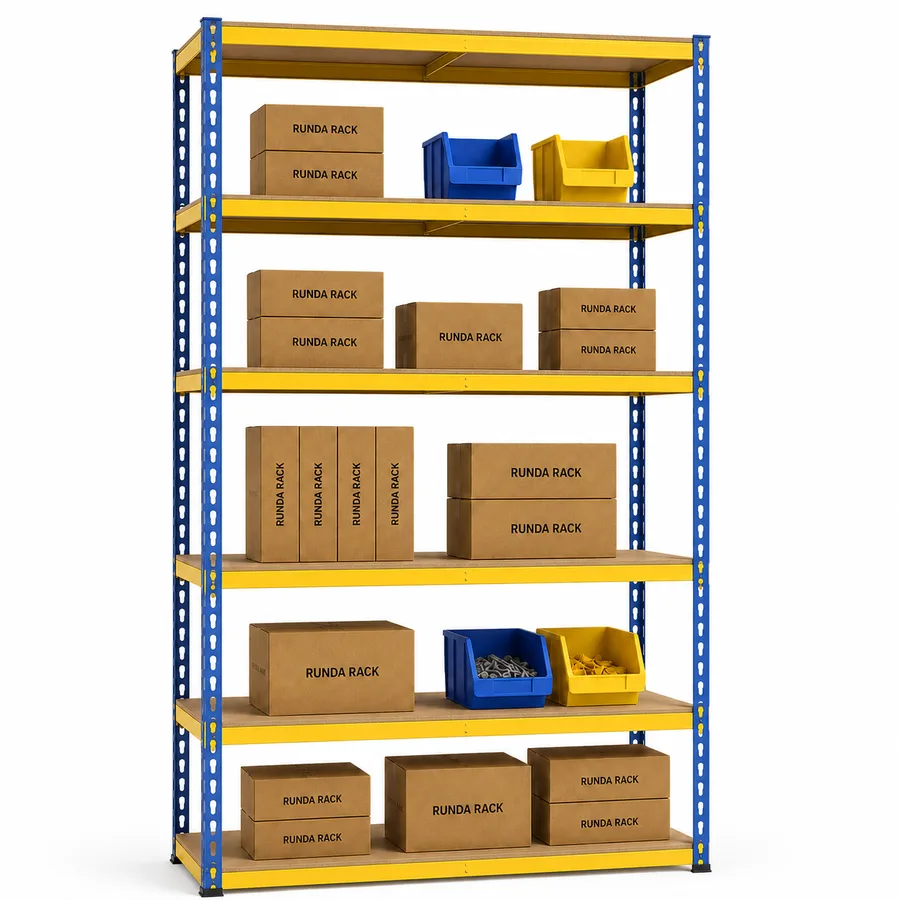
Boltless bay assembly
Shelves lock into upright frames without conventional bolted beam connections, making the bay practical for stockrooms that change shelf levels over time.
Warehouse Shelving
Tool-light modular shelving for hand-loaded stores where bay assembly, adjustment and reconfiguration matter.
Malaysia-based manufacturer and installation team supporting warehouse and retail projects.
Quick Answer
Boltless Shelving is a modular hand-loaded storage bay assembled with interlocking posts, beams and decks rather than conventional shelf-by-shelf bolting. It suits project stores, workshops and back rooms where shelving layouts are relocated or reconfigured over time. Deck type, bay stability, shelf span and load per level must still match the stored goods, handling method and operating environment.
Typical applications
Operating logic
Review the operating principle, load movement and main configuration checkpoints before comparing a system for the application.
Shelves lock into upright frames without conventional bolted beam connections, making the bay practical for stockrooms that change shelf levels over time.
The system suits cartons, tools and small inventory handled by people, so shelf depth and level spacing should match actual reach and item size.
Teams can adjust shelf levels when product dimensions change, provided the original layout leaves enough upright height, access clearance and aisle space.
Confirm shelf load, carton dimensions, number of levels, finish preference, floor condition and whether back panels, side panels or dividers are required.
System strengths
Conditions to check
Configuration brief
Final specifications for Boltless Shelving are confirmed from the actual load, site and operating requirements.
Standards and compliance
RUNDA RACK products are designed, manufactured, supplied and installed in accordance with applicable international standards, project specifications and destination-market requirements. The engineering package aligns the product family, load data, site conditions, fire strategy, equipment interfaces and required documentation.
Review the standards framework →FEM 10.2.06
EN 15629
EN 15635
Practical comparison
Configuration inputs
Product questions
Planning resources
Configuration
Share the product, site and handling details needed for a suitable configuration.