Flow Racking

Bin Flow Rack

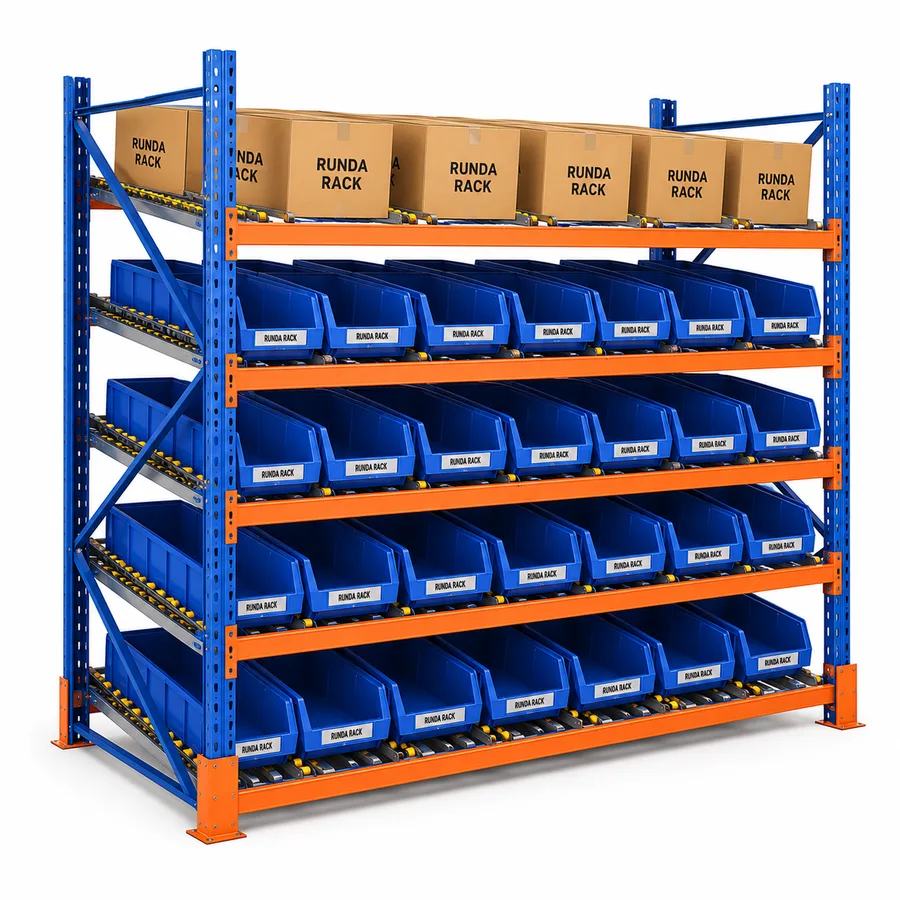
Gravity lanes for totes and bins that present small parts at a defined picking face after sample-container validation.

Illustrative configuration of Bin Flow Rack.
Configuration illustration. Final design depends on the confirmed site, load and operating requirements.

Quick Answer

What is Bin Flow Rack?

Bin Flow Rack uses inclined lanes to present totes, bins or returnable containers at the picking face while replenishment feeds from the rear or supply side. It suits component supermarkets and small-parts areas using standard containers. Sample totes must be validated for base ribs, handles, loaded weight, stopping and empty-bin return.

Last reviewed:

Typical applications

Where This System Fits

  • Component supermarkets and tote picking with known load units.
  • Projects where container base, return path and lane assignment can be checked before layout approval.
  • Teams needing a clearer alternative to generic storage for plastic totes, bins and returnable containers.
  • Operations that can maintain labels, replenishment rules and housekeeping.

Operating logic

How This Product Works

Review the operating principle, load movement and main configuration checkpoints before comparing a system for the application.

Bin lane presentation

Inclined tracks guide totes or bins toward a pick face, so small parts stay visible while replenishment is loaded from the opposite side.

Container base check

The bin base, ribs, weight and stopper contact decide whether gravity flow is smooth; sample containers should be tested before lane count is confirmed.

Front pick replenishment

Operators pick from the front while replenishment happens behind the rack, reducing travel and helping parts-room or line-side locations maintain first-in movement.

Flow rack inputs

Confirm bin size, loaded weight, lane pitch, label position, divider layout, return containers and whether the rack connects to workstations or kitting carts.

Technical notes
  1. Bin Flow Rack is designed around reusable-container geometry. Molded runners, ribbed bases, handles, nesting lips, labels and loaded weight affect wheel spacing, guides, stops and whether a tote advances reliably.
  2. The handled unit is plastic totes, bins and returnable containers. That unit should be reviewed with photos or samples because footprint, base shape, edge condition, packaging strength and loaded weight change the rack selection more than a generic product name.
  3. Access is specific to the application: the operating face, replenishment side, aisle width, reach height and handling equipment have to match the real workflow. Bin Flow Rack should therefore be quoted from a site and load brief, not from an unsupported capacity claim.
  4. Rotation is process-led unless the selected mechanism physically advances the load. Labels, batch rules, min-max triggers, kanban cards or job paperwork must be aligned with the rack so operators know what to pick and what to refill.
  5. Molded feet, kanban tote, ribbed base, exchange point are useful terms for internal selection because they describe the practical interface. They should not be turned into unsupported performance claims, published capacities or promises about availability.
  6. Sample-tote validation and empty-container handling are the main conditions to check. Ignoring these points leaves the drawing apparently correct but fails to address awkward picking, replenishment, load protection and safe daily handling.
  7. Bin Flow Rack should be compared with carton flow rack and parts bin shelving because buyers often group these systems together. The difference is the load unit, access face and confirmation input, not only the visible steelwork.
  8. For quotation, Runda Rack should receive load photos, sample dimensions, access constraints, expected stock rotation, environmental conditions and future change expectations. Those details allow a product-specific configuration without adding unsupported dimensions or engineering statements.
  9. Tote-flow planning should inspect the underside of the container. Molded ribs, drain holes, feet, nesting lips and worn corners can make one plastic bin roll smoothly while another stalls on the same wheel bed.
  10. Select either full-container exchange or part picking from an open tote for the front interface. Those two behaviours need different stops, label positions, empty-bin return space and replenishment signals, so they should be separated in the selection brief.
  11. Kanban supermarkets often rely on standard container discipline. If purchasing changes tote sizes or suppliers, retest the flow lane because a different base geometry can alter pitch, guide clearance and braking behaviour.
  12. Tote lanes should be tested for rib tracking, molded-foot clearance, label protection, handle orientation and whether the operator removes a whole container or only picks parts from it. These details are unique to reusable bins.
  13. Select a lower return lane, nesting cart, exchange shelf or colour-coded empties area for the empty-container plan. Without that return path, bins can pile up at the operator face and hide replenishment signals.
  14. Reusable containers often circulate between stores, line, wash area and supplier loop. That circulation should be reflected in lane labels and container standards before the rack is released.
  15. Bin-flow examples include KLT totes, Euro containers, plastic Kanban bins, returnable trays, lidded totes and component boxes. The test should record rib tracking, handle orientation, label rub and empty-container nesting.
  16. Tote-lane options include container exchange, lower return shelves, molded runners, bin nose stops, colour routes, kanban squares, supermarket loops and container wash cycles.
  17. Reusable-tote flow can reference KLT footprints, Eurobox runners, nesting damage, molded handles, tote wash loops, empty-bin stack carts, supermarket cards and exchange shelves. These details are different from line-side takt design.

System strengths

Advantages

  • Matches the storage interface to plastic totes, bins and returnable containers rather than forcing a generic bay.
  • Makes access method, replenishment side and operator contact points explicit.
  • Creates concrete confirmation points for quotation and layout review.
  • Helps separate this product from similar storage systems during selection.

Conditions to check

Limitations and Trade-Offs

  • Sample tote validation and empty-container handling must be resolved before final configuration.
  • Unsuitable when the load unit varies beyond the selected support or lane arrangement.
  • Stock rotation and traceability still need operating procedures and labels.
  • Project-specific safety, floor, fire and handling constraints require confirmation.

Configuration brief

Technical specifications available on request

Final specifications for Bin Flow Rack are confirmed from the actual load, site and operating requirements.

  • Container base, return path and lane assignment.
  • Actual samples or photos of plastic totes, bins and returnable containers.
  • Operating face, replenishment route, aisle width and reach height.
  • Label, batch, FIFO, kanban or job-control rule.
  • Handling equipment, trolley, crane, lift truck or manual process.
  • Floor, anchoring, fire, inspection and environmental constraints.

Standards and compliance

Applicable Standards and Project Requirements

RUNDA RACK products are designed, manufactured, supplied and installed in accordance with applicable international standards, project specifications and destination-market requirements. The engineering package aligns the product family, load data, site conditions, fire strategy, equipment interfaces and required documentation.

Review the standards framework →

Practical comparison

Compare Common Alternatives

Carton Flow Rack
Bin Flow Rack is selected for plastic totes, bins and returnable containers; carton flow rack should be reviewed when its load unit or access method is a closer match.
Parts Bin Shelving
Compare parts bin shelving when sample tote validation and empty-container handling cannot be resolved within the Bin Flow Rack arrangement.

Configuration inputs

What to Confirm Before Selection

  • Container base, return path and lane assignment.
  • Actual samples or photos of plastic totes, bins and returnable containers.
  • Operating face, replenishment route, aisle width and reach height.
  • Label, batch, FIFO, kanban or job-control rule.
  • Handling equipment, trolley, crane, lift truck or manual process.
  • Floor, anchoring, fire, inspection and environmental constraints.

Product questions

Frequently Asked Questions

When should Bin Flow Rack be considered?
Consider it for component supermarkets and tote picking when the load unit is plastic totes, bins and returnable containers and the access method can be confirmed before quotation.
What is the main limitation of Bin Flow Rack?
The main limitation is sample tote validation and empty-container handling. This should be checked with samples, site details and the intended handling process.
What information is needed before configuration?
Provide container base, return path and lane assignment, sample dimensions, access route, handling equipment, rotation rule, environment and any safety or inspection constraints.

Planning resources

Continue Product Planning

Configuration

Discuss the Checked Application

Share the product, site and handling details needed for a suitable configuration.
WhatsAppEmail