Flow Racking

Line-Side Flow Rack

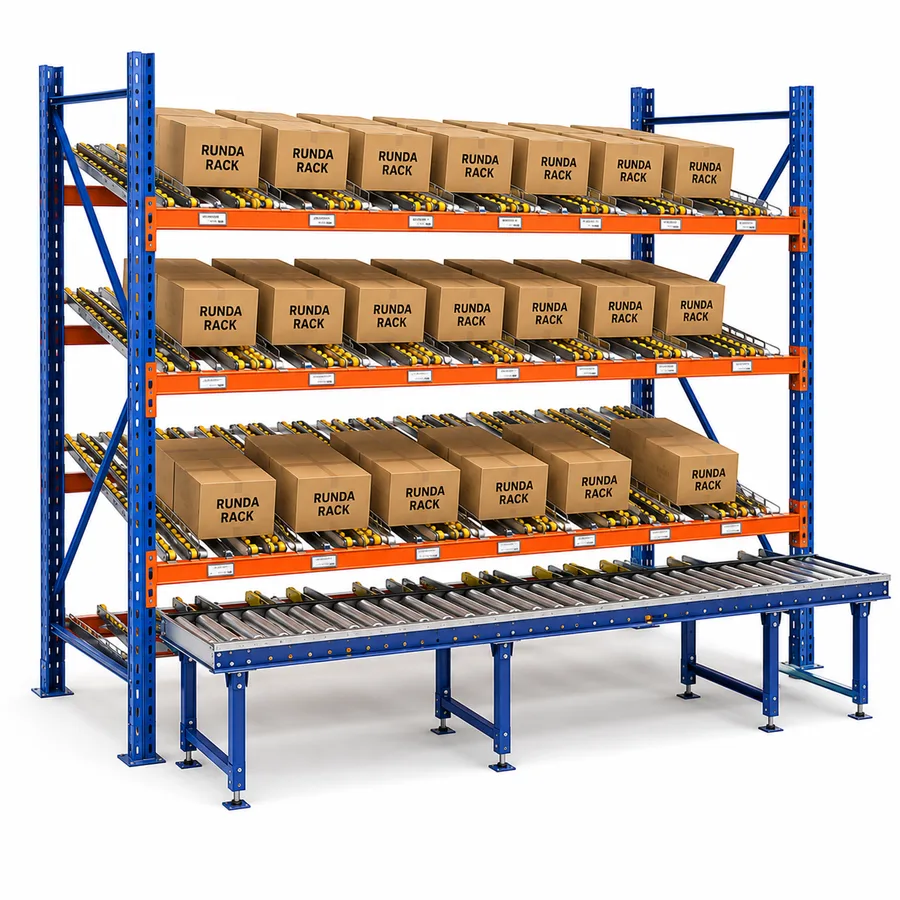
Workstation-adjacent flow lanes that present bins, totes or cartons to operators while replenishment is kept out of the work zone.

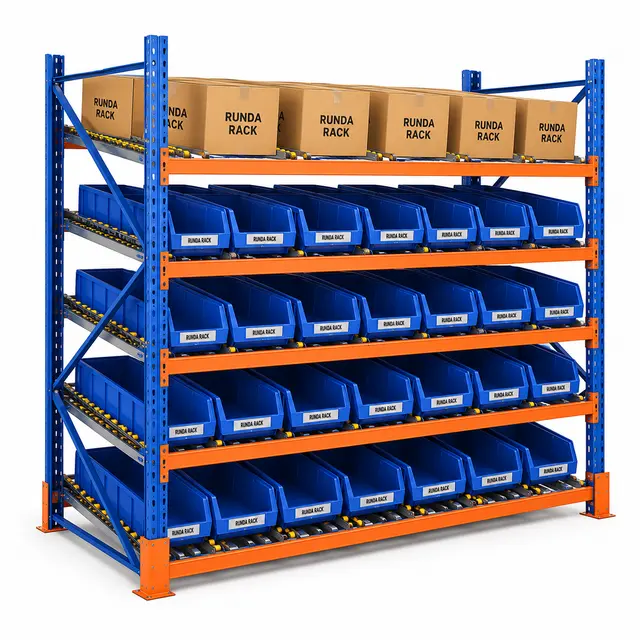
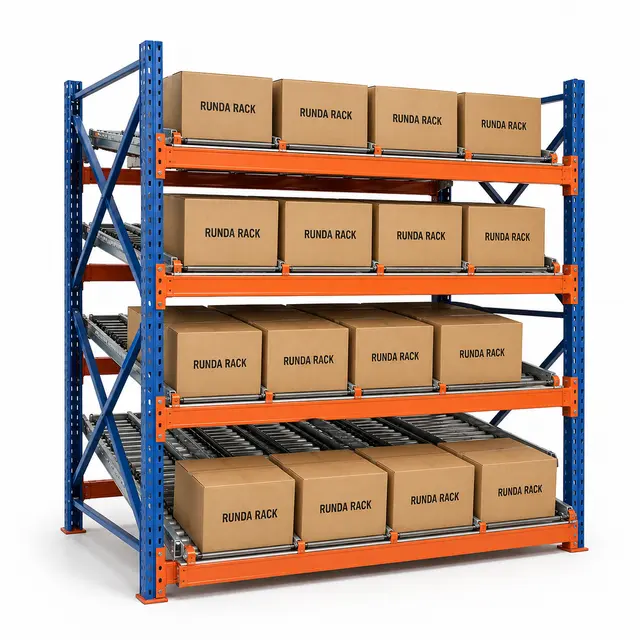
Illustrative configuration of Line-Side Flow Rack.
Configuration illustration. Final design depends on the confirmed site, load and operating requirements.

Quick Answer

What is Line-Side Flow Rack?

Line-Side Flow Rack presents bins, totes, cartons or kits beside an assembly cell, packing bench or production station. The front face is planned for operator reach while the supply side supports replenishment without disrupting work or blocking standard work. Validate sample containers, pick angle, takt demand, empty-bin return and milk-run access.

Last reviewed:

Typical applications

Where This System Fits

  • Assembly cells, packing benches and repair stations that need point-of-use parts presentation.
  • Projects where sample container, takt demand, operator reach and empty-bin return can be checked before layout approval.
  • Teams separating line-side supply from warehouse carton flow or general bin storage.
  • Operations using milk-run delivery, kanban withdrawal, sequence boards or model-change routines.

Operating logic

How This Product Works

Review the operating principle, load movement and main configuration checkpoints before comparing a system for the application.

Line side presentation

Line-side flow rack presents bins, totes or cartons beside a workstation so operators can pick components without leaving the work area.

Container lane interface

Lane hardware must match the actual container base, weight, stop point and ergonomic pick angle used by the production team.

Replenishment separation

Material handlers refill lanes from the rear or side while operators pick from the front, reducing interference at the workstation.

Line side inputs

Confirm workstation width, container size, replenishment route, empty return method, pick height, label position and any FIFO requirement.

Technical notes
  1. Line-Side Flow Rack is planned from the operator posture outward. Golden-zone reach, work-instruction position, part sequence, empty-bin return and supply-route timing matter more than the total number of containers stored.
  2. Depending on the defined work step, the handled unit is a kit tray, open pick box, fastener bin or carton. Sample review should record hand clearance, part orientation, label visibility, container removal direction and whether the operator picks a part or exchanges the full container.
  3. Access is planned around the workstation boundary. The operator face, rear supply route, tugger stop, bench height, tool position and aisle sharing must support the standard work sequence instead of forcing staff to step away from the cell.
  4. Replenishment follows production-control signals such as kanban cards, min-max triggers, andon calls, sequence boards or milk-run cycles. These rules decide where full containers arrive, where empties return and how shortages are made visible.
  5. Lineside supermarket, ergonomic reach, tugger route, workstation face are useful terms for internal selection because they describe the practical interface. They should not be turned into unsupported performance claims, published capacities or promises about availability.
  6. Operator reach and the replenishment route are the main conditions to check. If these points are ignored, a correct-looking drawing does not prevent awkward picking, poor replenishment, load damage or unsafe handling during daily work.
  7. Line-Side Flow Rack should be compared with bin flow rack and carton flow rack because buyers often group these systems together. The difference is the load unit, access face and confirmation input, not only the visible steelwork.
  8. For quotation, share the cell sketch, operator side, replenishment side, container samples, takt demand, empty-container path, workbench interference and any model-change sequence. These details keep the layout focused on point-of-use supply rather than warehouse storage density.
  9. Line-side racks should be drawn from the operator posture outward. Shoulder reach, hand clearance, sight line to labels, workbench interference and part presentation angle affect assembly rhythm more than the total number of containers in the structure.
  10. The replenishment route must avoid disturbing the cell. Tugger stops, milk-run timing, rear loading height, empty-container collection and changeover signals decide whether the rack supports lean flow or simply moves congestion closer to production.
  11. Where a workstation uses different container flows, configure the required presentation mix—for example, full bins on upper lanes, open pick boxes at waist height, return lanes below or kitted parts beside tools. This workstation-specific planning distinguishes line-side flow rack from ordinary carton flow.
  12. Configure line-side presentation around takt time, model mix, kit sequence, tool position and standard work. The rack is successful only if the operator can pick the right part without stepping away from the value-added work area.
  13. A workstation rack can combine angled presentation shelves, flat document ledges, empty-tote returns, light-duty tool holders and small display boards. This mixed cell interface is different from warehouse carton flow.
  14. Replenishment should align with milk-run timing, supermarket withdrawal, changeover windows and andon or kanban signals. The lane arrangement should follow the actual production-control method.
  15. Line-side examples include fastener feed beside an assembly jig, trim parts beside automotive cells, packing inserts beside benches and kitted hardware beside repair stations. The rack must match standard work and takt rhythm.
  16. Relevant workstation details include, as applicable, milk-run carts, andon triggers, changeover carts, sequence boards, work-instruction sleeves, ergonomic pick zones, empty-bin chutes and supermarket withdrawal routes.
  17. Line-side racks can reference takt boards, model-change cards, sequenced kits, tool balancers, work-instruction sleeves, golden-zone ergonomics, andon calls, milk-run stops and operator standard work. These details are different from tote supermarket lanes.

System strengths

Advantages

  • Keeps high-use components close to the operator without turning the workstation into a storage aisle.
  • Separates the picking face from the replenishment route so supply work can happen behind or beside the cell.
  • Makes takt demand, empty-bin return, label position and container orientation visible during quotation.
  • Helps distinguish point-of-use production supply from generic carton flow or tote supermarket storage.

Conditions to check

Limitations and Trade-Offs

  • Operator reach and replenishment route must be resolved before final configuration.
  • Unsuitable when production frequently changes container size without retesting the presentation face.
  • Standard work, shortage signals and replenishment timing still need operating discipline.
  • Cell safety, aisle sharing, ergonomics and floor interfaces require site confirmation.

Configuration brief

Technical specifications available on request

Final specifications for Line-Side Flow Rack are confirmed from the actual load, site and operating requirements.

  • Cell sketch, operator side, supply side and workbench position.
  • Actual kit trays, fastener bins, cartons or return totes used at the station.
  • Takt demand, model mix, pick sequence and empty-container return path.
  • Kanban, andon, sequence-board or milk-run replenishment rule.
  • Tugger, trolley or manual replenishment route and stopping point.
  • Aisle sharing, ergonomic reach, floor, anchoring and inspection constraints.

Standards and compliance

Applicable Standards and Project Requirements

RUNDA RACK products are designed, manufactured, supplied and installed in accordance with applicable international standards, project specifications and destination-market requirements. The engineering package aligns the product family, load data, site conditions, fire strategy, equipment interfaces and required documentation.

Review the standards framework →

Practical comparison

Compare Common Alternatives

Bin Flow Rack
Line-Side Flow Rack is selected around the operator station and replenishment route; bin flow rack is selected around reusable-container lane behaviour.
Carton Flow Rack
Compare carton flow rack when the main need is case-pick flow from cartons rather than point-of-use presentation beside a workstation.

Configuration inputs

What to Confirm Before Selection

  • Cell sketch, operator side, supply side and workbench position.
  • Actual kit trays, fastener bins, cartons or return totes used at the station.
  • Takt demand, model mix, pick sequence and empty-container return path.
  • Kanban, andon, sequence-board or milk-run replenishment rule.
  • Tugger, trolley or manual replenishment route and stopping point.
  • Aisle sharing, ergonomic reach, floor, anchoring and inspection constraints.

Product questions

Frequently Asked Questions

When should Line-Side Flow Rack be considered?
Consider it for assembly cells and packing benches when the load unit is bins, totes, cartons and kits and the access method can be confirmed before quotation.
What is the main limitation of Line-Side Flow Rack?
The main limitation is operator reach and replenishment route. This should be checked with samples, site details and the intended handling process.
What information is needed before configuration?
Provide sample container, takt demand and empty-bin return, sample dimensions, access route, handling equipment, rotation rule, environment and any safety or inspection constraints.

Planning resources

Continue Product Planning

Configuration

Discuss the Checked Application

Share the product, site and handling details needed for a suitable configuration.
WhatsAppEmail