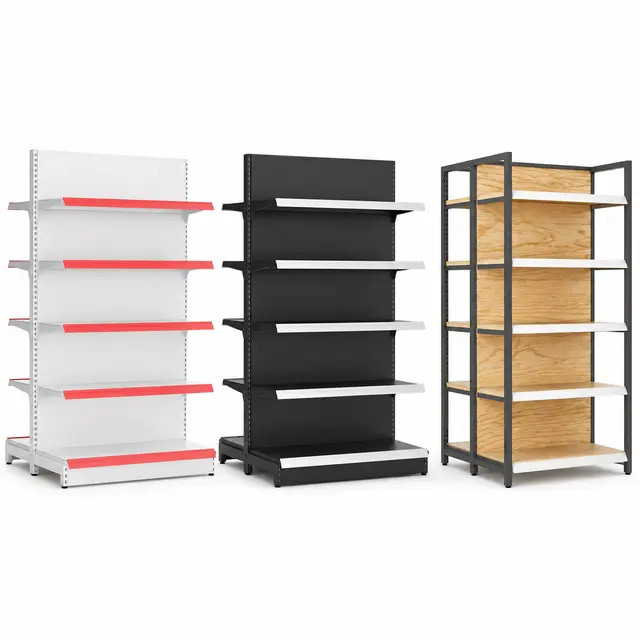
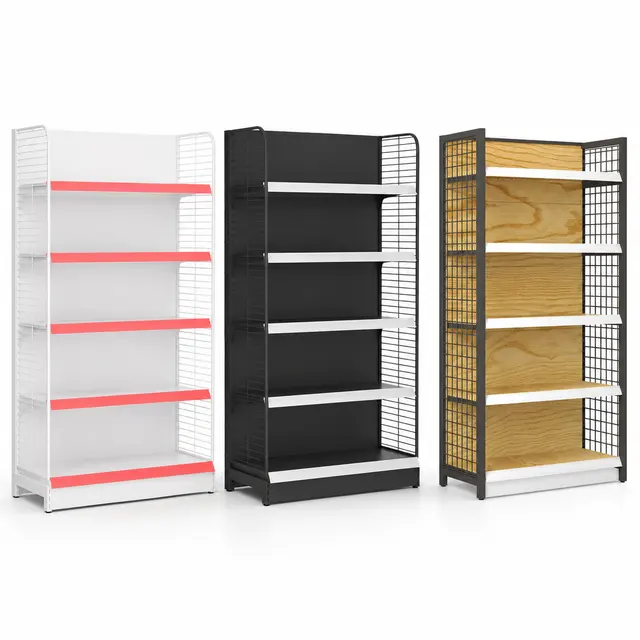
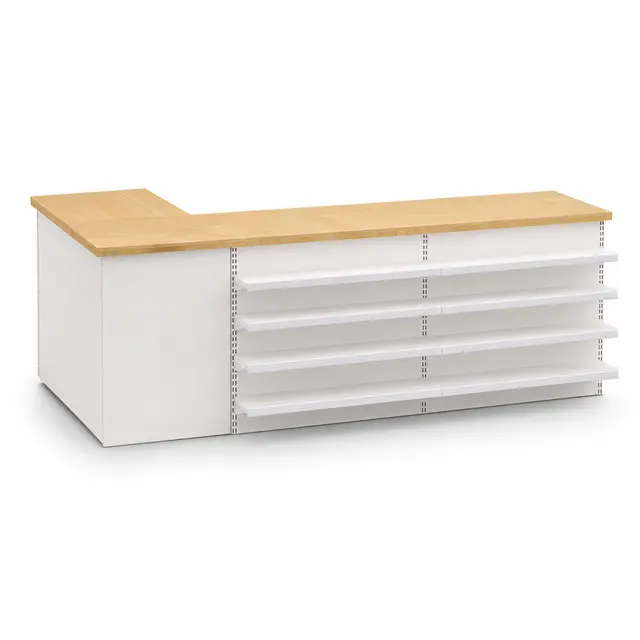
Single sided wall runs
Wall gondola shelving builds perimeter merchandise displays with one shopping face against store walls or back-wall positions in retail layouts.
Retail Shelving
Single-sided perimeter shelving for retail wall runs, store back walls and one-sided merchandise displays.
Malaysia-based manufacturer and installation team supporting warehouse and retail projects.
Quick Answer
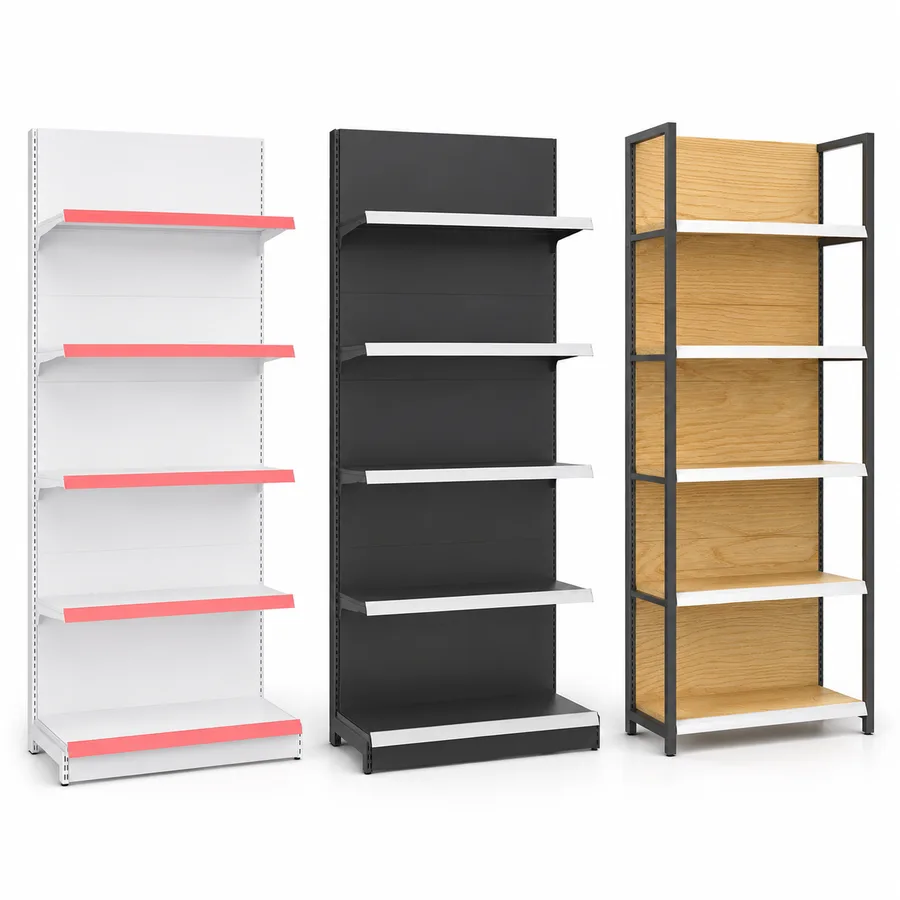
Wall Gondola Shelving is a single-sided retail shelving system for perimeter walls, back-wall categories and one-sided merchandise runs. It keeps the display face toward the customer aisle while shelves, hooks and price strips are planned around the product range. The main limitation is that it does not create a double-sided central aisle, so wall length, available height and replenishment clearance must be checked first.
Typical applications
Operating logic
Review the operating principle, load movement and main configuration checkpoints before comparing a system for the application.
Wall gondola shelving builds perimeter merchandise displays with one shopping face against store walls or back-wall positions in retail layouts.
Shelf depth, bay length, hooks, price strips, back panels and colour finish should match merchandise size and visual display needs.
The wall run supports browsing, replenishment and category zoning without using central floor space needed for island gondolas or queue paths.
Confirm wall length, bay height, shelf depth, number of levels, accessory needs, colour finish and nearby aisle clearance.
System strengths
Conditions to check
Available configurations
Dimensions are configuration options. Final quantities, layout and accessories are confirmed for the order.
Standards and compliance
RUNDA RACK products are designed, manufactured, supplied and installed in accordance with applicable international standards, project specifications and destination-market requirements. The engineering package aligns the product family, load data, site conditions, fire strategy, equipment interfaces and required documentation.
Review the standards framework →FEM 10.2.06
EN 15629
Practical comparison
Configuration inputs
Product questions
Planning resources
Configuration
Share the product, site and handling details needed for a suitable configuration.