Runda Rack Logo
View 3D Model
Storage Racking

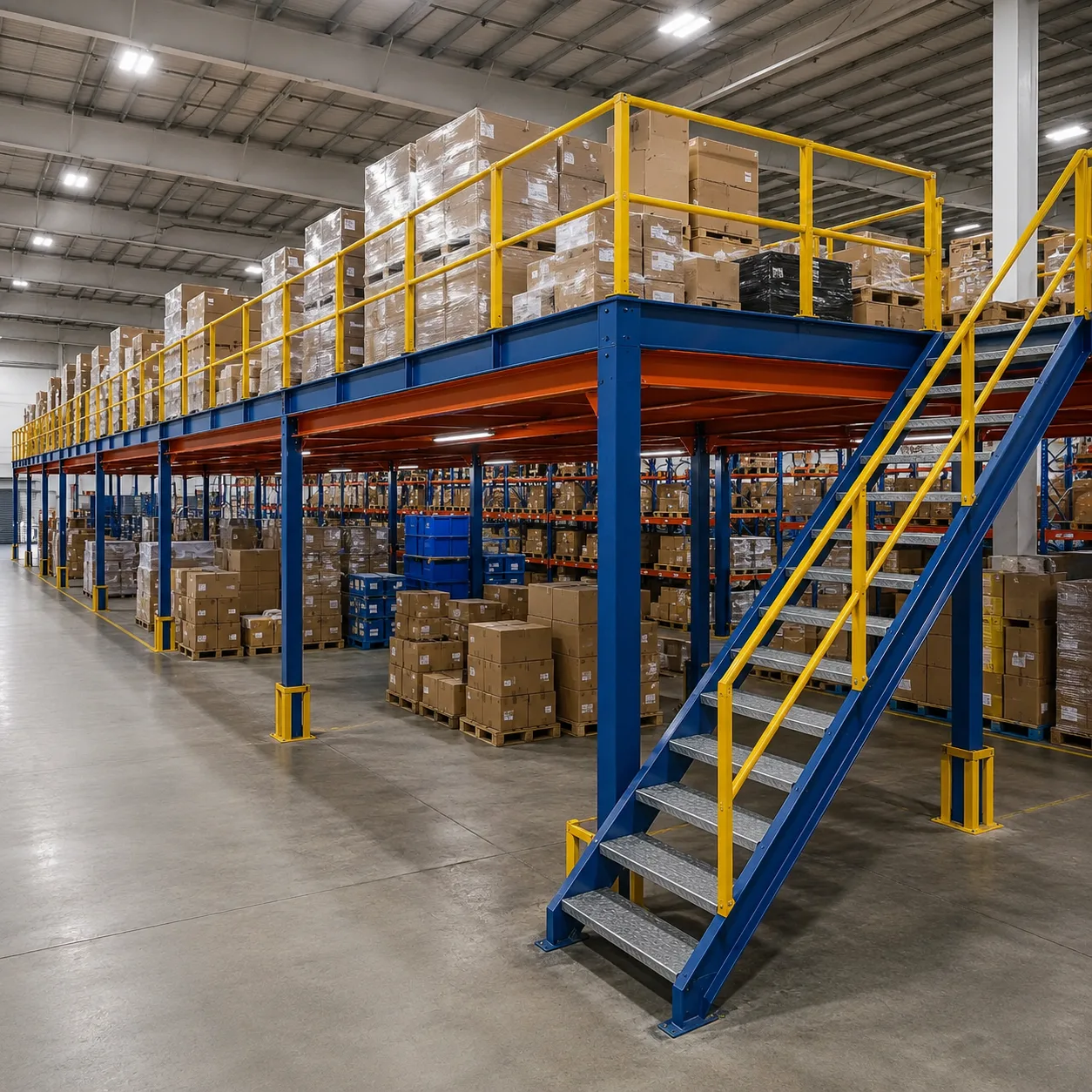
Heavy-Duty Steel Structure Platform

Large-span structural steel floor systems designed for vertical space doubling, supporting heavy machinery, sorting lines, and integrated office environments.


Technical Specifications

Structural System Wide-Span H-Beam / I-Beam Framework
Column Span Up to 8 Meters between support pillars
Loading Capacity 500kg - 1500kg per Square Meter (Uniformly Distributed Load)
Floor Material High-Strength Chequered Steel Plate / Open Mesh Grating
Connection Type 100% High-Tensile Bolted Construction (No On-Site Welding)
Safety Standard OSHA & AS4084 Compliant Guardrail Systems
Request Project Quote

Global Shipping & Installation Available

Why This Solution?

  • Optimized for high-traffic environments
  • Premium finishes that enhance product value
  • Rapid 24/7 global technical support

Core Technology & Applications

Doubling Your Capacity: The Heavy-Duty Steel Structure Platform

In the world of industrial real estate, the most expensive asset is the floor. When a warehouse or factory reaches 80% capacity, operational efficiency begins to plummet. Traditionally, this meant the high cost and disruption of relocating to a larger facility. Runda Rack offers a more intelligent solution: vertical expansion. Our Heavy-Duty Steel Structure Platforms allow you to double your usable floor space without changing your physical address.

1. Context: Solving the Footprint Crisis

The modern warehouse is no longer just a box for storage; it is a complex hub of picking, packing, and value-added services. These activities require floor space. As businesses grow, the conflict between storage volume and operational floor space intensifies.

The Steel Structure Platform (often called a ‘Work Platform’) solves this by creating a second or even third ‘ground floor.’ By utilizing the vertical ‘air rights’ within your building, you can move non-core activities—like offices, sorting lines, or spare parts storage—overhead, leaving the primary ground floor dedicated to high-velocity shipping and receiving.

2. Structural Engineering: Wide-Span H-Beam Technology

At the heart of the Runda platform is the use of structural H-beams, the same technology used in skyscrapers and bridge construction. This distinguishes our platforms from standard racking-based mezzanines.

Column Spacing and Operational Freedom

Standard mezzanines often require support columns every 3 to 4 meters, creating a ‘forest of posts’ that obstructs forklift movement. By using high-depth H-beams, Runda can achieve column spans of 6 to 8 meters. This open-plan ground floor is essential for facilities that utilize AGVs (Automated Guided Vehicles), large forklifts, or long production lines.

Precision Load Modeling

Every platform is a unique engineering project. We use 3D structural analysis software to calculate not just static weight, but dynamic loads. If you plan to install a vibrating machine or a moving conveyor on the platform, our engineers calculate the harmonic resonance to ensure the structure remains rigid and quiet, preventing the ‘bouncy’ feel of inferior platforms.

3. Material Science: Industrial Structural Integrity

We use only certified structural steel (typically Q235B or Q355B) that meets international standards for yield strength and ductility.

Flooring Systems

The choice of flooring is critical to the platform’s performance. Our heavy-duty chequered plates are made from thickened steel with a raised pattern for slip resistance. For environments where air circulation or light penetration is a priority, we utilize open-mesh steel grating. This grating is electro-forged for maximum strength and provides a high strength-to-weight ratio.

Advanced Fastening Systems

We eliminate the risks associated with on-site welding, such as fire hazards and inconsistent weld quality. Instead, we use high-tensile Grade 8.8 or 10.9 structural bolts. These fasteners provide predictable, repeatable strength and allow the platform to be easily inspected and maintained.

4. ROI: The Financial Logic of Vertical Expansion

When compared to the costs of moving to a new warehouse, a Runda Steel Platform pays for itself almost immediately.

Relocation vs. Platform

A relocation involves lease termination fees, move-in costs, downtime in production, and potential loss of staff who cannot commute to the new location. A steel platform, by contrast, can be installed in a matter of weeks with minimal disruption to your current operations. The cost per square meter of ‘new’ space created by a platform is typically 30% to 50% lower than the cost of acquiring equivalent ground-floor space.

Tax Benefits and Asset Value

In many regions, an interior steel platform is treated as ‘tangible personal property’ or ‘equipment’ rather than ‘real property.’ This often allows for accelerated depreciation, providing significant tax advantages compared to building a permanent concrete mezzanine or a building extension.

5. Safety and Compliance: The Non-Negotiable Foundation

Working at height requires a comprehensive approach to safety. Every Runda platform is designed as a complete ‘Safety Ecosystem.‘

Guardrail and Kickplate Engineering

Our guardrail systems are 1.2 meters high, featuring a top rail, a mid-rail, and a 150mm kickplate (toe-board) at the bottom. This kickplate is vital; it prevents small tools or loose inventory from being kicked off the edge and injuring someone on the ground floor.

Loading Gates

To facilitate the safe movement of pallets, we offer ‘Pivot Gates’ or ‘Swing-Over Gates.’ These gates ensure that there is always a protective barrier between the operator and the edge of the platform, even during the loading and unloading process.

6. Installation: Bolt-Together Precision

The hallmark of a Runda project is the speed and cleanliness of the installation.

Factory Prefabrication

Every component of your platform is laser-cut, drilled, and powder-coated in our factory. This means that when the components arrive at your site, they fit together like a precision machine. There is no cutting, grinding, or painting required on-site, which is essential for facilities that must maintain high cleanliness standards.

Professional Project Management

Our installation teams are specialized in structural steel. We coordinate with your warehouse manager to schedule work during off-peak hours or in phases, ensuring that your business continues to function while your new floor is being built overhead.

Conclusion

A Runda Heavy-Duty Steel Structure Platform is more than a piece of equipment; it is a strategic asset that unlocks the hidden potential of your existing building. By combining architectural-grade engineering with industrial flexibility, we provide a vertical solution that is as stable as a concrete floor but as flexible as a modular rack.

Contact the Runda structural engineering team today to start your space-doubling project. Let us show you how to look up and find the space you need.

Core Technology Excellence

Wide-Span Open Workspace

Leverages the superior bending resistance of H-beams to achieve up to 8-meter column spans, leaving the ground floor completely free for production lines or vehicle access.

Building-Grade Structural Strength

Engineered to full industrial building standards using structural-grade steel, allowing for the direct installation of heavy machinery or automated sorting systems overhead.

Integrated Safety Ecosystem

Equipped with 1.2 meter high-standard guardrails, 150mm kickplates, and heavy-duty loading gates to protect personnel and prevent inventory from falling to the lower level.

Elastic Expansion Capability

Designed for future growth, our systems support multi-platform splicing and additional levels, allowing your facility to scale in-place as your business expands.

Industry Applications

Industrial Equipment Mezzanines

Creating secondary floors for air compressors, power cabinets, or small CNC centers above existing operations to save valuable floor space.

E-commerce Sorting Hubs

Developing spacious upper-level sorting areas while the ground floor remains dedicated to rapid inbound and outbound transit and forklift movement.

Integrated Warehouse Offices

Building quiet, elevated digital management centers or staff breakrooms directly above the busy warehouse floor for better oversight.

Project FAQ

Q: What is the primary difference between a Steel Structure Platform and a Mezzanine Floor?

A: A Mezzanine floor is typically supported by upright racking posts and is often integrated with shelving below. A Steel Structure Platform (also known as a Work Platform) utilizes heavy-duty structural H-beams and large-diameter columns. This allows for much wider spans between columns (up to 8 meters), creating an open, unobstructed ground floor suitable for forklift traffic and large machinery.

Q: Does installing a steel platform require a new building permit?

A: In most jurisdictions, a steel platform is classified as 'industrial equipment' or a 'removable structure' rather than a permanent building addition. However, because it significantly increases the floor area, we provide full structural calculation reports signed by certified engineers to assist with your local fire safety and building code compliance.

Q: Can we install heavy automated machinery or vibrating equipment on the upper floor?

A: Yes. During the design phase, Runda engineers perform dynamic load analysis. We can reinforce specific zones of the platform with thickened beams and vibration-dampening floor mounts to support CNC machines, automated sorters, or air compressors without compromising the structural integrity of the system.

Q: How does the system handle fire safety and sprinkler requirements?

A: For platforms with large surface areas, we recommend using open-mesh steel grating for the flooring. This allows light, air, and sprinkler water to pass through to the ground level, often satisfying fire department requirements without needing to install a secondary sprinkler system below the platform.

Q: Is the platform truly portable if we decide to relocate our warehouse?

A: One of the greatest advantages of the Runda platform is its 100% bolt-together design. There is no on-site welding required. This means the entire structure can be disassembled, transported, and reconfigured at a new facility, protecting your capital investment long-term.

Q: What are the common floor finishes available for the platform?

A: We offer three primary finishes: 1) Chequered steel plate for maximum grip and durability in heavy industrial zones; 2) Plywood with a specialized anti-wear coating for quiet office or sorting environments; and 3) Open steel grating for superior ventilation and fire safety.

Q: How do we get goods up to the platform level?

A: We offer several integrated solutions: heavy-duty industrial stairs for personnel, specialized pallet gates (sliding or swing-over types) for forklift access, and vertical reciprocating conveyors (VRCs) for automated multi-level cargo movement.

Q: What is the maximum height a Runda steel platform can reach?

A: While single-level platforms are most common (typically at 3 to 4 meters high), we can engineer multi-tier systems up to 3 or 4 levels (12+ meters) depending on your building's clear height and floor load-bearing capacity. Each system is custom-designed based on your specific vertical envelope.

Built to Global Industrial Standards

ASTM-A1008 ISO 9001:2015 EN-15512