Runda Rack Logo
View 3D Model
Storage Racking

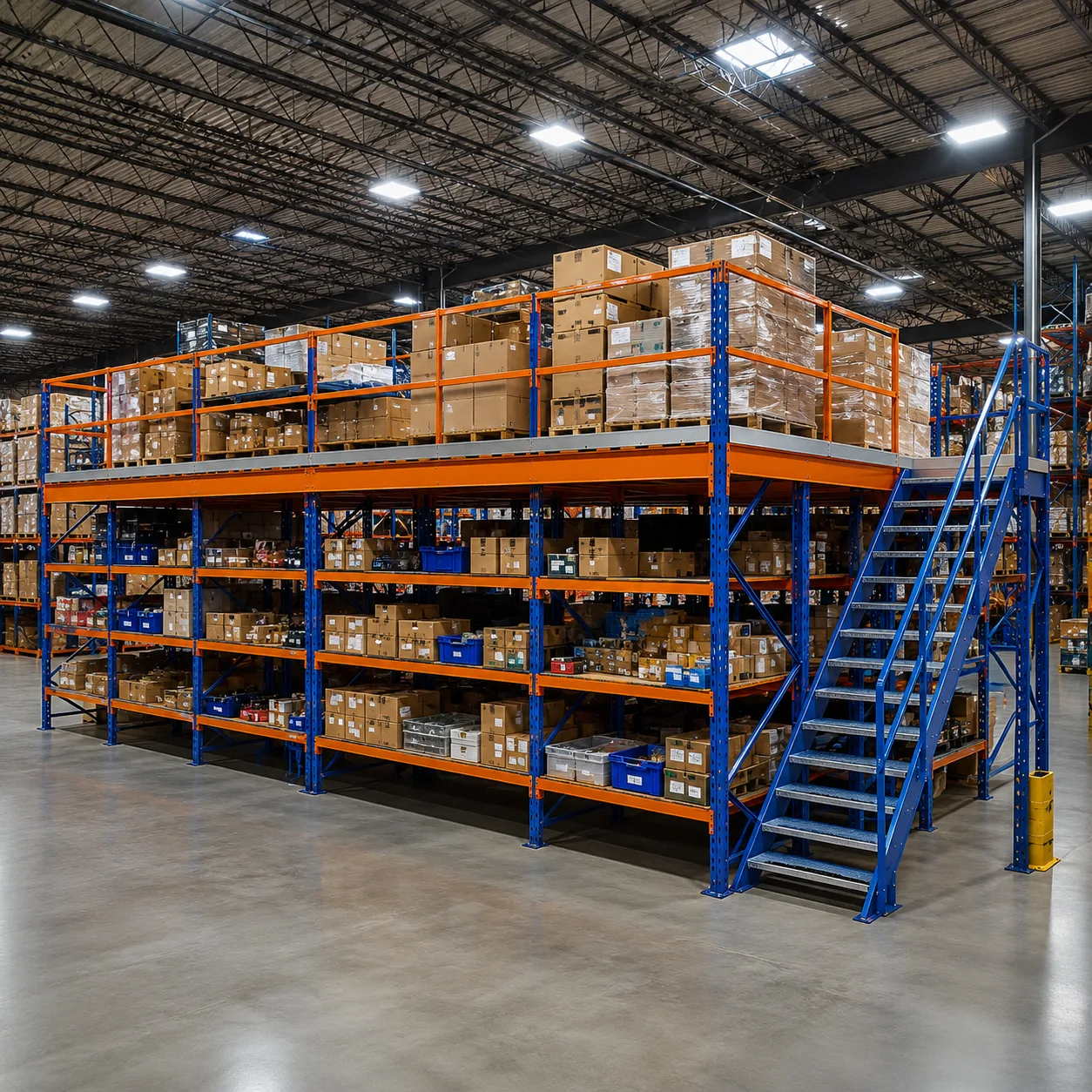
Multi-Tier Mezzanine System

Ultimate vertical space solution to double or triple your facility capacity without expanding the footprint. Ideal for storage, offices, and light manufacturing.


Technical Specifications

Level Design 2 - 3 Tiers (Customized)
Floor Loading 300kg - 1500kg per SQM
Decking Material Chequered Plate / Open Grating / Galvanized Steel / Plywood
Support Medium/Heavy-Duty Columns or Structural Sections
Safety Sliding Pallet Gates, Stairs, Guardrails, Kickplates
Request Project Quote

Global Shipping & Installation Available

Why This Solution?

  • Optimized for high-traffic environments
  • Premium finishes that enhance product value
  • Rapid 24/7 global technical support

Core Technology & Applications

Multi-Tier Mezzanine Systems: Engineering the Third Dimension of Productivity

As global land prices and warehouse rental rates continue to climb, the ability to maximize existing space has become a primary competitive advantage. The Runda Multi-Tier Mezzanine System represents the peak of vertical space engineering. By transforming empty air into usable, high-capacity floor space, we allow businesses to double or even triple their operational footprint without the massive expense and disruption of relocating or embarking on new civil construction. This guide details the structural sophistication and strategic benefits of our building-grade mezzanine solutions.

1. Context: The Economics of Vertical Expansion

In many industrial hubs, the cost of moving a facility—including downtime, labor, and new lease agreements—can be prohibitive. A mezzanine floor offers a solution that is often 50% to 80% cheaper than the cost of a building extension. Furthermore, because these structures are classified as industrial equipment rather than permanent building additions, they often qualify for faster tax depreciation and avoid the complex permitting processes associated with concrete extensions. Runda has designed these systems to be the ultimate ‘space hedge’ for growing businesses.

2. Structural Engineering: The Mechanics of Elevated Floors

A mezzanine is a complex structural assembly that must manage massive static loads while resisting dynamic forces.

Primary and Secondary Joists

The ‘skeleton’ of the mezzanine consists of primary beams (main carriers) and secondary joists. We utilize high-strength C-sections or I-beams depending on the span and load requirements. The spacing of these joists is calculated to prevent floor deflection. For manual picking areas, we target a deflection ratio of L/300, ensuring the floor feels rigid and stable underfoot.

Column Support Strategy

Whether the system is rack-supported or structural, the columns are the foundation of safety. We use oversized base plates to distribute the vertical load over a larger area of the concrete slab, preventing localized floor failure. The columns are precision-leveled using high-tensile shims and secured with chemical or mechanical expansion anchors, ensuring the entire structure is plumb and vibration-resistant.

Lateral Bracing and Stability

To prevent the floor from ‘swaying’—especially during the movement of heavy trolleys or machinery—we incorporate a series of cross-bracing and portal frames. These components act as a lateral stabilization system, absorbing horizontal forces and transferring them safely to the ground.

3. Material Science: Selecting the Right Surface

The performance of a mezzanine is largely determined by its flooring material, which must balance weight, durability, and safety.

  • High-Tensile Chequered Plate: Our most popular option for general warehousing. The raised pattern provides excellent slip resistance for manual labor and is durable enough for heavy trolley traffic.
  • Open Steel Grating: Ideal for facilities that require optimal airflow, lighting, and fire safety. The open mesh allows dust and water to pass through, keeping the upper levels clean and compliant with strict fire sprinkler regulations.
  • Galvanized Steel Decks: These offer superior corrosion resistance and are ideal for ‘clean’ environments or facilities handling chemicals and liquids.
  • Structural Plywood: Often used for office mezzanines, plywood provides a warm, quiet surface that can be finished with carpet or vinyl for a professional look.

4. ROI: Strategic Financial Advantage

The return on investment for a Runda Mezzanine is realized through immediate spatial gains and long-term operational flexibility.

  • Lease Avoidance: By doubling your storage within your current footprint, you effectively cut your rent-per-square-meter in half.
  • Consolidated Operations: Keeping your picking, packing, and office staff under one roof reduces communication lag and internal logistics costs compared to operating across multiple split facilities.
  • Asset Portability: Because our systems are bolt-together, they represent a liquid asset. If you eventually move to a larger facility, the mezzanine moves with you, preserving your capital investment.

5. Safety: Beyond Basic Requirements

Safety on an elevated platform is non-negotiable. Runda integrates a multi-layered safety ecosystem into every design.

Handrails and Kickplates

Every exposed edge is fitted with a triple-rail guard system. This includes a top rail at 1100mm, a mid-rail, and a 100mm kickplate. The kickplate is vital; it prevents tools or small items from being kicked off the edge, protecting staff and equipment on the ground floor.

Non-Slip Access Systems

Our staircases are designed with deep treads and closed risers where necessary. Every step features a high-visibility, non-slip nosing to prevent trips and falls, even in low-light conditions.

Lighting and Visibility

Mezzanines can create dark zones on the ground floor. We provide integrated mounting points for LED under-slung lighting, ensuring the entire facility remains bright, safe, and productive.

6. Installation: Rapid, Clean, and Professional

Runda’s modular approach means that installation is a ‘dry’ process, requiring no welding or cutting on-site.

  • Prefabrication Excellence: Every beam is cut to length and every hole is pre-drilled in our factory using CNC machinery. This ensures that on-site assembly is a simple matter of bolting components together.
  • Minimal Disruption: Because there is no welding or concrete work, we can often install a mezzanine while your business continues to operate. Our teams work in phases to minimize the impact on your daily workflow.
  • Site Survey Accuracy: We use 3D laser scanning for complex sites, ensuring the mezzanine fits perfectly around existing pillars, pipes, and HVAC systems.

By choosing the Runda Multi-Tier Mezzanine System, you are investing in a building-grade asset that unlocks the true potential of your facility. It is a sophisticated, safe, and scalable solution for businesses that are ready to reach the next level of operational excellence.

Core Technology Excellence

3D Space Maximization

Expand vertically to gain 100%-200% additional storage capacity without moving to a new facility, drastically lowering your cost-per-square-foot.

Modular Bolt-Together Build

Factory-prefabricated components ensure site installation is 50% faster than traditional steel structures, with the added benefit of being fully relocatable.

Hybrid Work Environment

Utilize the ground floor for heavy storage while the upper levels serve as picking zones, QC labs, or administrative offices.

Structural Integrity

Built with Q345B grade structural steel and reinforced floor decking to ensure a vibration-free, silent environment for staff and machinery.

Industry Applications

E-commerce Hubs

Separate small-item piece-picking on upper levels from bulk pallet storage on the ground floor.

Automotive Parts Distribution

Efficiently organize massive SKU counts of small components with clear visibility and fast access.

3PL Logistics Centers

Create dedicated, secure storage or assembly zones for multiple clients within a single facility footprint.

Project FAQ

Q: How does a rack-supported mezzanine differ from a structural steel mezzanine?

A: A rack-supported mezzanine utilizes the uprights of the storage system itself as the primary columns for the floor above. This is highly efficient for picking operations because the storage and the floor are integrated. A structural mezzanine uses independent heavy-duty steel columns, leaving the ground floor completely open for machinery, offices, or bulk storage. Runda provides both systems, and the choice depends on whether you need integrated storage or a clear open floor plan.

Q: What are the fire safety requirements for an industrial mezzanine floor?

A: Fire safety is a critical engineering consideration. For large mezzanines, local codes often require fire-rated ceilings, integrated smoke detection, and emergency exit lighting. To help with fire suppression, we often recommend open steel grating for the flooring, which allows water from existing ceiling-mounted sprinklers to pass through all levels. We also design dedicated fire exit staircases to ensure all staff can evacuate within the required time frames.

Q: Can a mezzanine floor support heavy machinery or conveyors?

A: Yes, but this requires specialized structural calculations. Standard storage mezzanines are rated for 300kg to 500kg per square meter. For machinery or automated conveyor systems, we can engineer heavy-duty structures rated for 1500kg per square meter or more. This involves using larger I-beam joists and thicker support columns to handle both the static weight of the equipment and the dynamic vibrations generated during operation.

Q: Is it possible to relocate or expand the mezzanine in the future?

A: One of the greatest advantages of the Runda system is its 100% modular, bolt-together design. Unlike permanent concrete or welded structures, our mezzanines can be dismantled and reassembled at a different location. This makes them a portable asset rather than a building improvement. You can also start with a smaller footprint and add new bays or even additional levels as your business requirements grow.

Q: What is a 'pallet gate' and why is it necessary for mezzanine safety?

A: A pallet gate is a specialized safety barrier located on the edge of the mezzanine floor. It allows a forklift to place a pallet onto the upper level from the ground floor. Our 'up-and-over' or sliding gates ensure that the edge is always protected; when the gate is open for the forklift, it is closed toward the workers on the mezzanine, preventing anyone from accidentally falling through the loading zone.

Q: How does Runda ensure the floor doesn't vibrate when people walk on it?

A: Floor bounce and vibration are managed through the depth and spacing of the primary and secondary floor joists. We use advanced structural analysis software to ensure the natural frequency of the floor is outside the range that causes human discomfort. For office use on mezzanines, we use tighter joist spacing and specific decking combinations (like steel-wood hybrids) to provide a solid, silent, building-grade feel.

Q: What type of floor slab is required to support a mezzanine?

A: Mezzanines concentrate significant loads onto the footings of the support columns. Before installation, we analyze your warehouse floor slab thickness and reinforcement. In most modern warehouses with a 150mm to 200mm reinforced concrete slab, the floor can support a standard mezzanine. If the slab is insufficient, we can design larger base plates to spread the load or provide guidance on localized slab thickening.

Built to Global Industrial Standards

ASTM-A1008 ISO 9001:2015 EN-15512