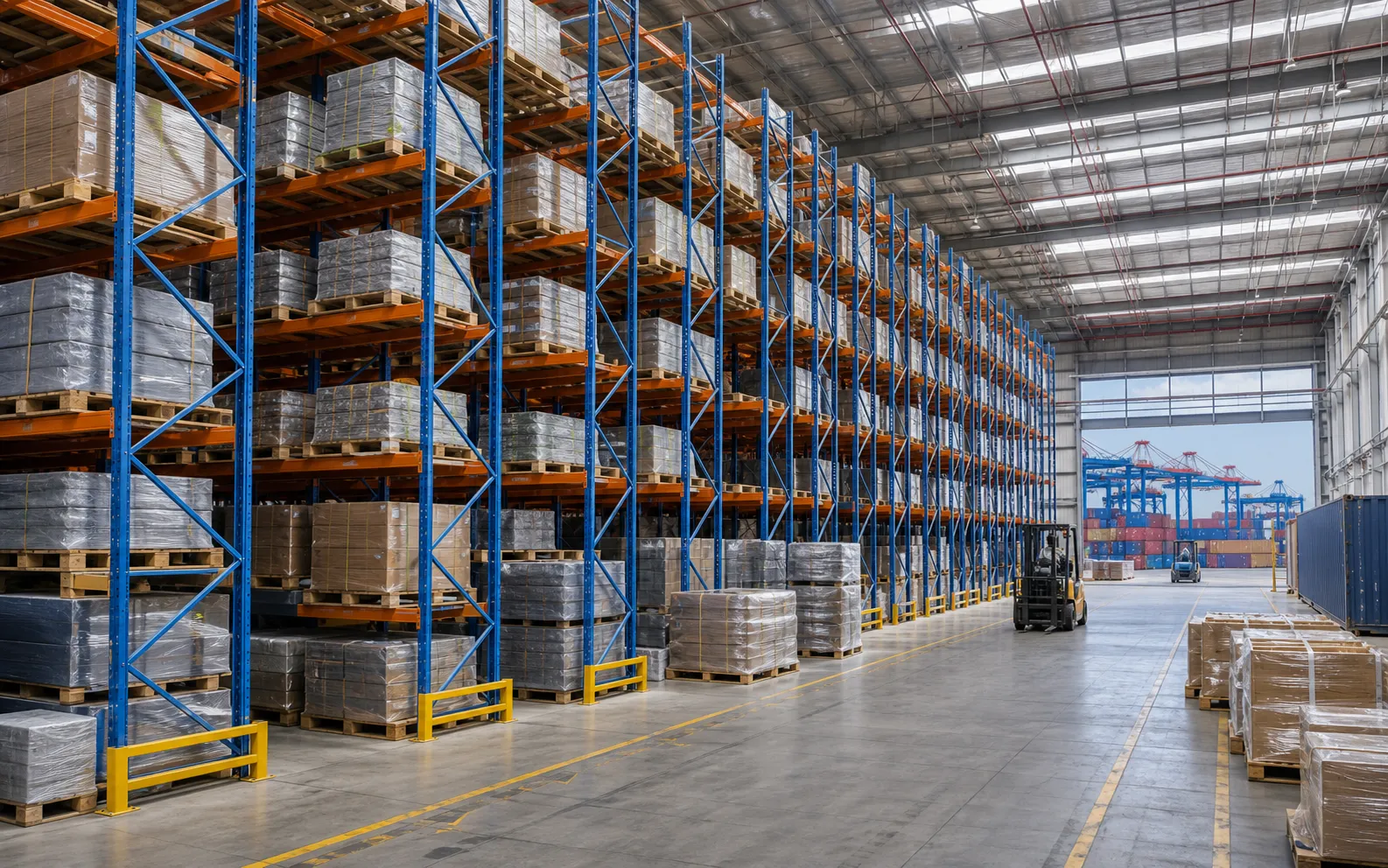
Tianjin Port Logistics Warehouse Racking for BohaiLink Logistics
Project Overview
The Tianjin project for BohaiLink Logistics was not a generic shelving replacement. It was a focused redesign of a port-side logistics warehouse receiving containerized imports, export consolidation cargo, and short-stay pallet inventory. The client needed a system that could carry daily operational pressure while improving how shoppers, operators, or warehouse teams understood the space at a glance.
Runda Rack began by studying the existing movement pattern, receiving rhythm, product mix, and points where staff lost time. The final brief centered on high-bay pallet racking, container unloading buffers, wide forklift circulation, corrosion-resistant finishes, and clear dispatch staging. That meant the rack system had to act as infrastructure, merchandising tool, and workflow guide at the same time.
Client & Market Context
Tianjin is a demanding operating environment. Space is expensive, turnover is fast, and managers cannot solve capacity problems simply by adding more floor area. For BohaiLink Logistics, commercial pressure came from more product variety, tighter operating windows, and the need to keep the site visually controlled even during busy periods.
The market context also shaped the engineering choices. A port logistics warehouse requires fixtures that can be adjusted without calling a contractor for every seasonal or operational change. A successful system had to reduce hidden labour: fewer emergency shelf moves, clearer category ownership, faster cleaning, and more predictable replenishment.
The Challenge
The most important challenge was that container arrivals created sudden pallet surges, salty coastal air accelerated surface wear, and mixed import/export staging caused forklift cross-traffic. This was not only a design issue; it affected daily labour, safety, and sales productivity. When shelving does not match the real workflow, staff compensate with temporary stacks, blocked aisles, handwritten labels, and repeated handling.
A second challenge was continuity. The site could not be treated as an empty new build. Existing inventory, staff routines, customer access, forklifts, deliveries, or production shifts had to be respected. The new system needed to fit into a live business environment and create improvement without unnecessary downtime.
Engineering Solution
Runda Rack specified high-bay selective racking with reinforced frames, anti-corrosion coating, dock-facing buffer lanes, one-way forklift loops, and staging labels tied to vessel schedules. The design team translated the operational brief into specific rack heights, bay widths, shelf depths, protection accessories, finish choices, and label positions. Every decision was tied to the way goods move through the site rather than to a catalogue default.
The layout separated high-frequency and low-frequency zones, clarified the difference between display, reserve, inspection, and dispatch positions, and protected the areas most likely to receive impact or heavy handling. Retail presentation focused on sight lines and premium finishes; factory and warehouse areas focused on load paths, forklift radius, batch control, and safe access.
Installation & Delivery
The project was staged between vessel peaks, with rack rows commissioned progressively so operations could keep receiving and dispatching containers. Before full rollout, the team reviewed dimensions, access paths, and installation order with the client’s operations staff. Components were sorted by zone and labelled so crews could move directly from unloading to assembly without searching for parts on site.
The installation sequence was deliberately practical. Critical operating areas were completed first, then secondary zones were migrated after the team confirmed that replenishment, picking, cleaning, or customer circulation worked as intended. This reduced rework and allowed managers to train staff on the new logic as each section came online.
Business Impact
BohaiLink can absorb arrival peaks, separate import and export flows more clearly, and move pallets from dock to rack to dispatch with fewer conflict points. The measurable result was not only more capacity; it was better control of the space. Teams could see what belonged where, identify exceptions earlier, and move products or materials with fewer unnecessary touches.
The headline metrics for this project were Pallet Positions +48%, Container Turnaround +27%, Cross-traffic Conflicts -34%. These figures reflect the practical value of matching shelving design to the real operating model. Capacity matters, but capacity becomes valuable only when staff can replenish, inspect, pick, clean, and reconfigure the system without slowing the business down.
Long-Term Value
The warehouse now has a durable logistics backbone suited to Tianjin’s port environment and future growth in bonded and cross-border distribution. The project also gives the client a clearer standard for future upgrades. Instead of treating racks as isolated furniture purchases, the business now has a repeatable layout logic that connects space planning, safety, merchandising, and operational discipline.
For Runda Rack, this case shows why project-specific design matters. A supermarket, a convenience chain, an electronics factory, a food plant, and a port warehouse cannot be solved with the same copy-and-paste rack specification. The best result comes from reading the site first, engineering the system around the work, and delivering a structure that remains useful long after installation day.
Need a Similar Solution?
Our experts are ready to design a custom display or racking system tailored to your specific goals.