Runda Rack Logo
View 3D Model
Storage Racking

Very Narrow Aisle Racking (VNA)

The perfect balance of 100% selectivity and ultra-high density through extreme aisle compression. The efficiency core of modern logistics.


Technical Specifications

Aisle Width 1.5m - 1.8m
Max Height Up to 15,000mm (15 meters)
Space Utilization 50%+ Improvement over Selective Racking
Equipment Three-way VNA Stacker Trucks
Guidance Wire (Electromagnetic) or Rail Guidance
Request Project Quote

Global Shipping & Installation Available

Why This Solution?

  • Optimized for high-traffic environments
  • Premium finishes that enhance product value
  • Rapid 24/7 global technical support

Core Technology & Applications

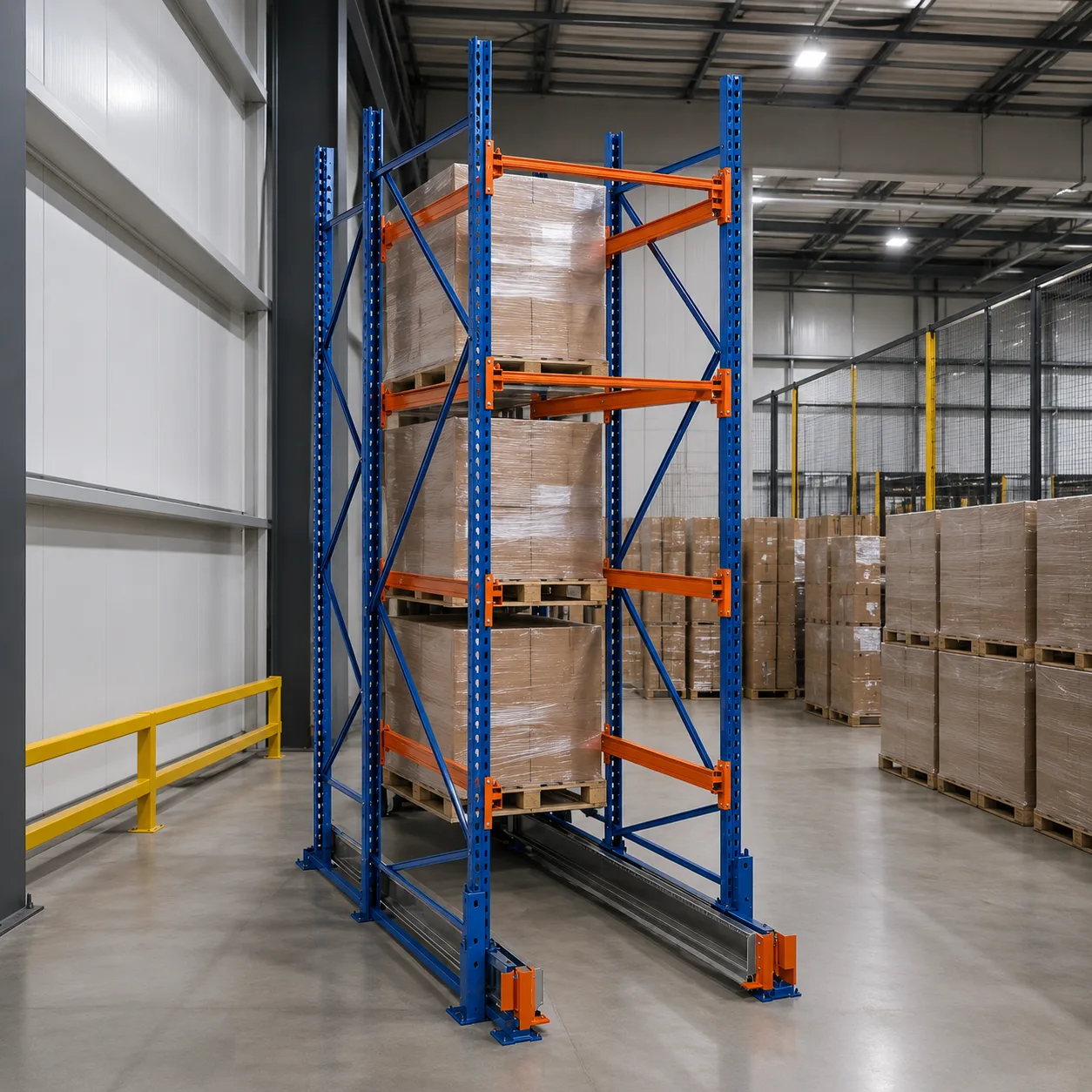
Very Narrow Aisle Racking (VNA): The Precision Engineering of High-Density Logistics

In the modern industrial landscape, where land costs in urban logistics hubs are skyrocketing, the only way to scale is upward. Very Narrow Aisle (VNA) racking represents the pinnacle of selective pallet storage technology. It is a system designed to eliminate the ‘wasted’ space of wide forklift aisles, effectively compressing the warehouse footprint while maintaining 100% accessibility to every single pallet. Runda Rack’s VNA systems are engineered for extreme heights and tight tolerances, providing a rock-solid foundation for high-speed, high-altitude logistics operations. This guide explores the technical rigor and strategic advantages that make VNA the core of the world’s most efficient distribution centers.

1. Context: The Spatial Paradox of Modern Warehousing

The logistics industry faces a constant paradox: the need for maximum storage density versus the requirement for 100% SKU selectivity. Standard selective racking provides accessibility but wastes nearly 60% of floor space on wide forklift aisles. Bulk stacking or drive-in racking provides density but limits access to a First-In, Last-Out (FILO) basis. VNA solves this paradox by narrowing the aisles from the standard 3.5 meters to as little as 1.5 meters. By utilizing specialized ‘man-up’ or ‘man-down’ turret trucks, VNA systems allow for high-density storage that rivals ASRS (Automated Storage and Retrieval Systems) but at a significantly lower capital cost and with greater operational flexibility.

2. Structural Engineering: Designing for the Vertical Frontier

A VNA rack is not simply a taller version of standard racking. The forces at play at 15 meters are exponentially greater than at ground level.

Upright Profile and Torsional Rigidity

Runda VNA uprights are manufactured from high-tensile steel using a complex multi-fold profile. These additional folds are not decorative; they are engineered to maximize the moment of inertia and resist torsional buckling. At extreme heights, the uprights must resist the combined forces of the vertical load, the mast-sway of the truck, and the dynamic forces generated during pallet placement. Our uprights are precision-straightened after manufacturing to ensure a deviation of less than 1/1000th of the height.

Advanced Bracing Systems

To provide the necessary lateral stability, VNA systems utilize a combination of heavy-duty horizontal and diagonal bracing. In ultra-high configurations, we also integrate top-ties (beams that connect the tops of the racks across the aisle) and back-to-back ties. This effectively turns the entire warehouse into a unified, rigid steel matrix that can withstand the vibrations of multiple turret trucks operating simultaneously.

The Guidance Infrastructure

The ‘narrow’ in VNA is made possible by guidance systems. Runda racks are designed to integrate seamlessly with both mechanical rail and electromagnetic wire guidance.

  • Mechanical Rail: High-precision steel angles are anchored to the floor at the base of the uprights. This rail physically guides the truck’s wheels, protecting the racking from impact and allowing the truck to travel at higher speeds.
  • Wire Guidance: A wire embedded in the floor sends a signal to the truck’s steering system. This allows for a clean floor and eliminates the maintenance associated with steel rails.

3. Material Science: Consistency and Strength

The safety of a 15-meter structure depends entirely on the consistency of the materials used.

  • Certified Q355B Steel: For VNA systems, we primarily use Q355B steel, which has a higher yield strength than standard Q235B. This allows for thinner, lighter profiles that maintain the required structural integrity, reducing the dead-load on the building’s floor slab.
  • Robotic Precision Welding: Every beam connector and base plate is welded using automated robotic cells. This ensures 100% weld penetration and eliminates the variability of human welding, which is critical when a single joint failure could cause a catastrophic collapse at height.
  • High-Build Powder Coating: The environment at the top of a 15-meter rack is different from the floor. We use a specialized powder coating that is resistant to the temperature gradients and UV exposure found in high-bay warehouses.

4. ROI: The Economics of Compression

While the specialized trucks required for VNA are more expensive than standard reach trucks, the total cost of the warehouse operation is significantly reduced.

  • Land Cost Savings: By doubling the storage capacity of a given footprint, VNA allows businesses to build smaller facilities on more expensive land closer to urban centers, reducing ‘last-mile’ delivery costs.
  • Operational Speed: Turret trucks can move and lift simultaneously, and their 180-degree rotating forks allow them to serve both sides of an aisle without turning. This reduces cycle times and increases the number of pallets handled per hour.
  • Building Height Optimization: Many modern warehouses have clear heights of 12-18 meters. VNA is the most cost-effective way to utilize that ‘free’ vertical space, transforming it into a high-value storage asset.

5. Safety: Managing Risk at Height

In a VNA environment, the margins for error are measured in millimeters.

The Superflat Floor Requirement

As discussed in our FAQs, the floor is a structural component of a VNA system. Runda provides detailed floor specifications to our clients, including F-number (FF/FL) requirements. A perfectly flat floor ensures that the mast of the VNA truck remains vertical, preventing the forks from striking the rack and ensuring the load remains stable.

Impact Protection

Because the aisles are so narrow, the uprights are at high risk of impact. We provide heavy-duty steel barriers at the entrance to every aisle and ‘sacrificial’ upright guards that can be easily replaced if struck, protecting the primary structural frame from damage.

Integrated Tech

Our VNA racks can be equipped with RFID tags and aisle markers that integrate with the truck’s Warehouse Management System (WMS). This allows for ‘semi-automatic’ operation where the truck automatically slows down at the end of the aisle or stops precisely at the correct pallet location.

6. Installation: A Precision Process

Installing a VNA system is a specialized engineering task that requires high-precision equipment.

  • Laser Alignment: We use industrial-grade lasers to ensure every row is perfectly straight over runs of up to 100 meters. The verticality of the uprights is checked at multiple points to ensure zero lean.
  • Guidance System Setup: Whether installing rails or cutting floor trenches for wire guidance, the process requires extreme accuracy to ensure the truck can travel at full speed without risk of collision.
  • Load Testing: Every installation is finalized with a series of load tests at maximum height to verify the structural rigidity and safety of the system before it is handed over to the client.

By choosing Runda Very Narrow Aisle Racking, you are investing in the most sophisticated form of selective storage available today. It is a system that demands precision but rewards you with unparalleled density, speed, and efficiency.

Core Technology Excellence

Extreme Aisle Compression

Reduces standard 3.5m aisles down to roughly 1.6m, doubling your pallet capacity while maintaining 100% SKU accessibility.

High-Altitude Structural Rigidity

Multi-fold high-load profiles combined with specialized bracing ensure zero lateral sway even at a full 15-meter working height.

Smart Guidance Compatibility

Optimized for both magnetic wire and mechanical rail systems, enabling 'autopilot' safety within the aisles for maximum throughput.

Versatile Load Support

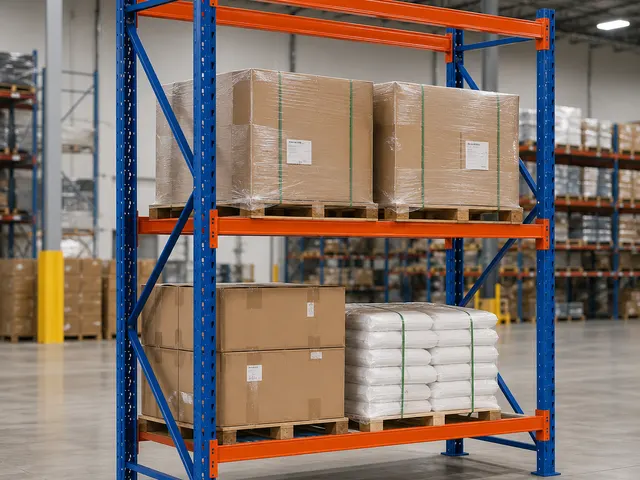
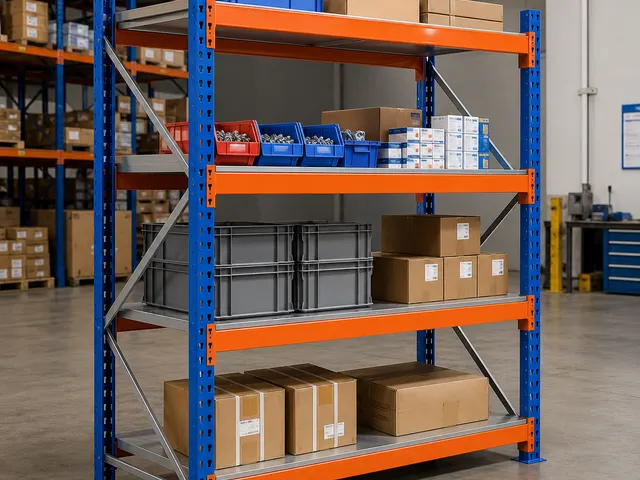
Customizable with cross-beams, wire mesh, or timber decking to safely accommodate various pallet sizes and bulk goods.

Industry Applications

Large-Scale Distribution Centers

Optimized for massive SKU counts with high-frequency picking requirements, maximizing land value.

Pharma & E-commerce Fulfillment

Creating dense pick-faces in limited footprints to support rapid batch management and delivery.

Urban Last-Mile Hubs

Leveraging vertical height to compensate for small urban plots, improving response times in metropolitan areas.

Project FAQ

Q: What is the critical difference between wire guidance and rail guidance for VNA?

A: Rail guidance involves bolting steel angles to the floor along the length of the aisle. This provides a physical barrier and steering assistance for the VNA truck. Wire guidance involves embedding a low-frequency radio wire into a shallow trench in the concrete. The truck's sensors follow the magnetic field. Rail guidance is generally more robust for high-impact environments, while wire guidance offers a 'cleaner' floor and eliminates the tripping hazard of rails, though it requires more sophisticated truck electronics.

Q: Why is floor flatness (Superflat) so critical for VNA systems?

A: In a VNA system, trucks can reach heights of 15 meters. Even a 1mm deviation in floor flatness at the ground level can translate to a 100mm or greater sway at the top of the mast. This makes it impossible for the operator to safely position the pallet. We require floors to meet DIN 15185 or FM1 standards. If the floor is not perfectly flat, we can perform 'aisle grinding' to create level paths for the truck wheels, ensuring the safe operation of the entire system.

Q: Can I convert my existing selective racking into a VNA system?

A: Yes, provided the uprights have the required structural capacity for the increased height and the floor can handle the concentrated loads. Conversion involves moving the existing rows closer together and installing a guidance system. This is a highly effective way to increase warehouse capacity without building an extension, often doubling the number of pallet positions within the same building footprint.

Q: What safety protocols are required for workers on foot in a VNA warehouse?

A: VNA aisles are strictly 'truck-only' zones during operation. Because the trucks move quickly and the operator's visibility is focused upward, pedestrians are at high risk. We install infrared sensors and interlocking gates at the ends of the aisles. If a person enters the aisle, the truck's guidance system can automatically slow or stop the vehicle. We also recommend that all staff wear high-visibility vests equipped with RFID tags that trigger truck-mounted alarm systems.

Q: How does VNA racking impact fire suppression and sprinkler layout?

A: High-bay VNA systems create a challenge for traditional ceiling sprinklers. Because pallets are stacked so tightly and high, the water cannot reach the lower levels. We typically integrate 'in-rack' sprinkler systems, where piping is run along the back-bracing of the racks with sprinkler heads at every second or third level. This ensures that a fire can be suppressed locally before it spreads through the dense storage environment.

Q: What is the maximum height a Runda VNA system can reach?

A: Our standard VNA systems are engineered for heights up to 15 meters. Beyond this height, we move into the territory of Automated Storage and Retrieval Systems (ASRS). Reaching 15 meters requires specialized upright profiles with thicker steel and a larger cross-section to resist the massive vertical compression and potential wind loads if the warehouse is not fully climate-controlled.

Q: Does VNA racking require specialized pallets?

A: While the racking itself can handle any standard pallet size, the pallets must be in excellent condition. In a narrow aisle with only 100mm of clearance on either side, a broken board or a leaning load can snag the uprights. We recommend using high-quality plastic pallets or premium-grade wooden pallets and utilizing stretch-wrapping to ensure the load remains perfectly centered and stable throughout the lifting process.

Built to Global Industrial Standards

ASTM-A1008 ISO 9001:2015 EN-15512