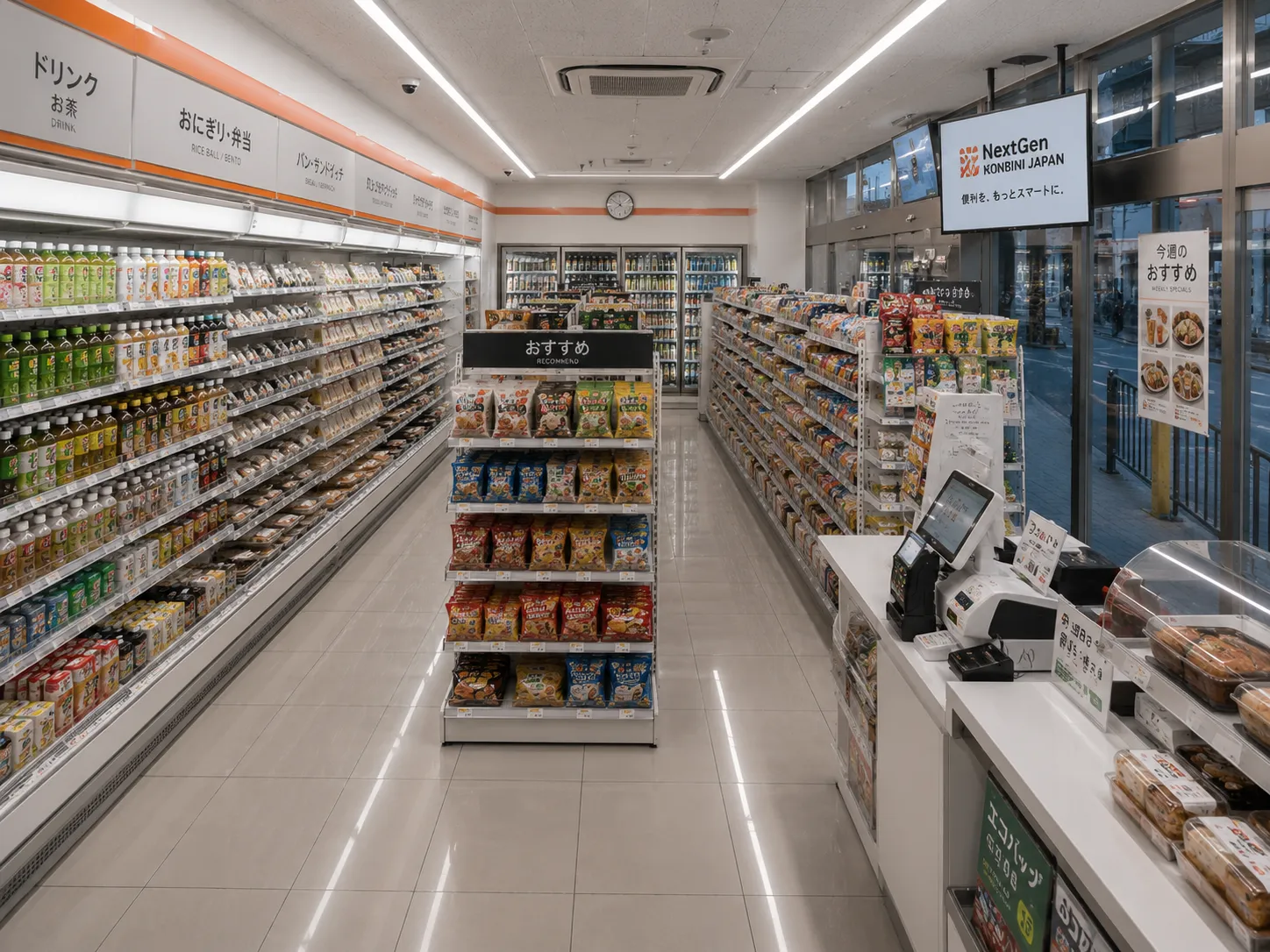
Tokyo Smart Convenience Network
Project Overview
NextGen Konbini Japan initiated a strategic expansion to deploy 50 urban convenience stores across the high-density districts of Tokyo, including Shinjuku, Shibuya, and Chiyoda. This project required a radical departure from traditional retail shelving. In a city where real estate costs per square meter are among the highest globally, the efficiency of the display system directly dictates the profitability of the store. Runda Rack was commissioned to engineer and supply a standardized, high-speed deployment shelving system that maximized product facing density, optimized labor workflows, and supported a rapid 60-day rollout schedule.
The Tokyo Urban Retail Challenge
The Tokyo convenience store (konbini) market is characterized by extreme space constraints and hyper-accelerated consumer behavior. Retailers must manage thousands of SKUs in footprints that often fall below 50 square meters.
Extreme Space Efficiency Requirements
Standard Japanese convenience stores operate on razor-thin margins where every millimeter of floor space must be monetized. The challenge for Runda Rack was to design a shelving system that reduced its own structural footprint while increasing the usable display area. Traditional uprights and brackets often consume significant visual and physical space, creating dead zones in the display.
Dynamic Inventory and Rapid Rotation
Tokyo consumers expect different product mixes throughout the day. A store may transition from a breakfast-heavy layout featuring coffee and pastries at 7:00 AM to a ready-meal and alcohol-focused layout by 6:00 PM. The shelving system needed to be modular enough for store staff to reconfigure categories without specialized tools or professional maintenance teams.
Labor Constraints and Operational Costs
Japan faces a persistent labor shortage, driving up the cost of store operations. High labor costs necessitate retail infrastructure that minimizes manual intervention. Time spent on front-facing products, cleaning, and shelf height adjustments represents a significant operational drain that the new shelving system had to address.
Engineering the Runda K-Series Modular System
The solution provided was the Runda K-Series, a specialized line of shelving engineered specifically for high-velocity urban retail environments.
Ultra-Slim Profile Uprights
Runda engineers utilized high-tensile cold-rolled steel (SPCC) to redesign the vertical uprights. By optimizing the geometry of the post and using advanced welding techniques, we reduced the profile thickness by 15% compared to industry standards. This reduction, while seemingly small, adds up to several additional product facings across a 10-meter shelving run. Despite the thinner profile, the K-Series maintains a structural load capacity exceeding 100kg per shelf level, ensuring safety and durability under full inventory loads.
Gravity-Assist Tilt Shelves
To address the labor-intensive task of product front-facing, Runda implemented a gravity-assist system. These shelves are engineered with a precision 5-degree forward tilt. Combined with low-friction polymer liners and adjustable dividers, products automatically slide to the front of the shelf as the lead item is removed. This ensures that the store always looks fully stocked and organized without constant staff intervention. This mechanical solution eliminates the need for complex electronic pushers, reducing both initial capital expenditure and long-term maintenance needs.
Tool-Free Modular Configuration
The K-Series utilizes a proprietary “Snap-Lock” backpanel and bracket system. This allows store staff to adjust shelf heights in 25mm increments without any tools. The backpanels are multi-functional, supporting pegboard hooks, slat-wall accessories, and integrated LED lighting channels within a single standardized frame. This versatility was critical for NextGen Konbini’s ability to pivot their merchandising strategy based on real-time sales data.
Technical Specifications and Material Science
The durability of the K-Series is rooted in its material composition and manufacturing process.
- Structural Steel: SPHC and SPCC grade steel with a minimum yield strength of 240 MPa.
- Surface Treatment: Automated electrostatic powder coating with a 60-80 micron thickness. The finish is a matte anti-glare white, designed to maximize light reflection within small store footprints.
- Component Precision: All brackets and connectors are manufactured using multi-stage progressive stamping dies to ensure a tolerance of +/- 0.1mm, facilitating the rapid tool-free assembly required for the 60-day rollout.
Strategic ROI Analysis
The implementation of the Runda K-Series delivered measurable financial benefits across the 50-store network.
Display Optimization and Revenue Growth
The reduction in upright profile and optimized shelf spacing led to a 12% increase in total product facings. In the convenience sector, increased facings correlate directly with higher SKU variety and improved impulse purchase rates. For NextGen Konbini, this translated into an estimated 4.5% increase in average transaction value during the first six months of operation.
Labor Cost Mitigation
The combination of gravity-assist shelving and tool-free reconfiguration reduced daily shelf maintenance labor by 30%. In a 24-hour Tokyo store, this labor saving equates to approximately 2.5 man-hours per day. Across 50 stores, the annual labor cost reduction exceeds 45,000 man-hours, providing a rapid payback on the initial shelving investment.
Accelerated Market Entry
The modularity of the Runda system allowed for an installation speed of one store every 1.2 days. This enabled NextGen Konbini to meet their 60-day market entry deadline, a feat that would have been impossible with traditional, customized shelving solutions. Every day a store is open earlier represents additional revenue and market share capture in a competitive landscape.
Operational Workflow Optimization
The K-Series was integrated into the client’s broader logistical framework to ensure seamless restocking.
- Morning Rush Preparation: Gravity-assist shelves prioritize high-turnover items like onigiri and bottled tea, ensuring maximum availability during peak commuting hours.
- Mid-Day Reconfiguration: Staff utilize the tool-free brackets to adjust shelves for larger lunch box (bento) displays, maximizing capacity for the midday surge.
- Evening Transition: Shelving sections are quickly adapted to feature premium snacks and alcohol, utilizing integrated LED lighting to highlight higher-margin items.
Sustainability and Lifecycle Management
Runda Rack prioritizes the long-term environmental impact of its retail systems. The K-Series is designed for a 10-year operational lifecycle. The use of high-quality powder coating prevents rust and degradation, while the modular design allows for individual components to be replaced rather than discarding entire units. At the end of its life, over 98% of the system by weight is fully recyclable steel.
Conclusion
The Tokyo Smart Convenience Network project demonstrates how precision-engineered shelving serves as a critical component of retail profitability. By addressing the specific constraints of the Tokyo market—limited space, high labor costs, and rapid inventory turnover—Runda Rack provided NextGen Konbini with a scalable infrastructure that supports both operational excellence and aggressive financial growth. The K-Series continues to be the benchmark for high-performance urban retail shelving in the Asia-Pacific region.
Need a Similar Solution?
Our experts are ready to design a custom display or racking system tailored to your specific goals.