Large Scale Warehouse Optimization in Kuala Lumpur
Project Overview
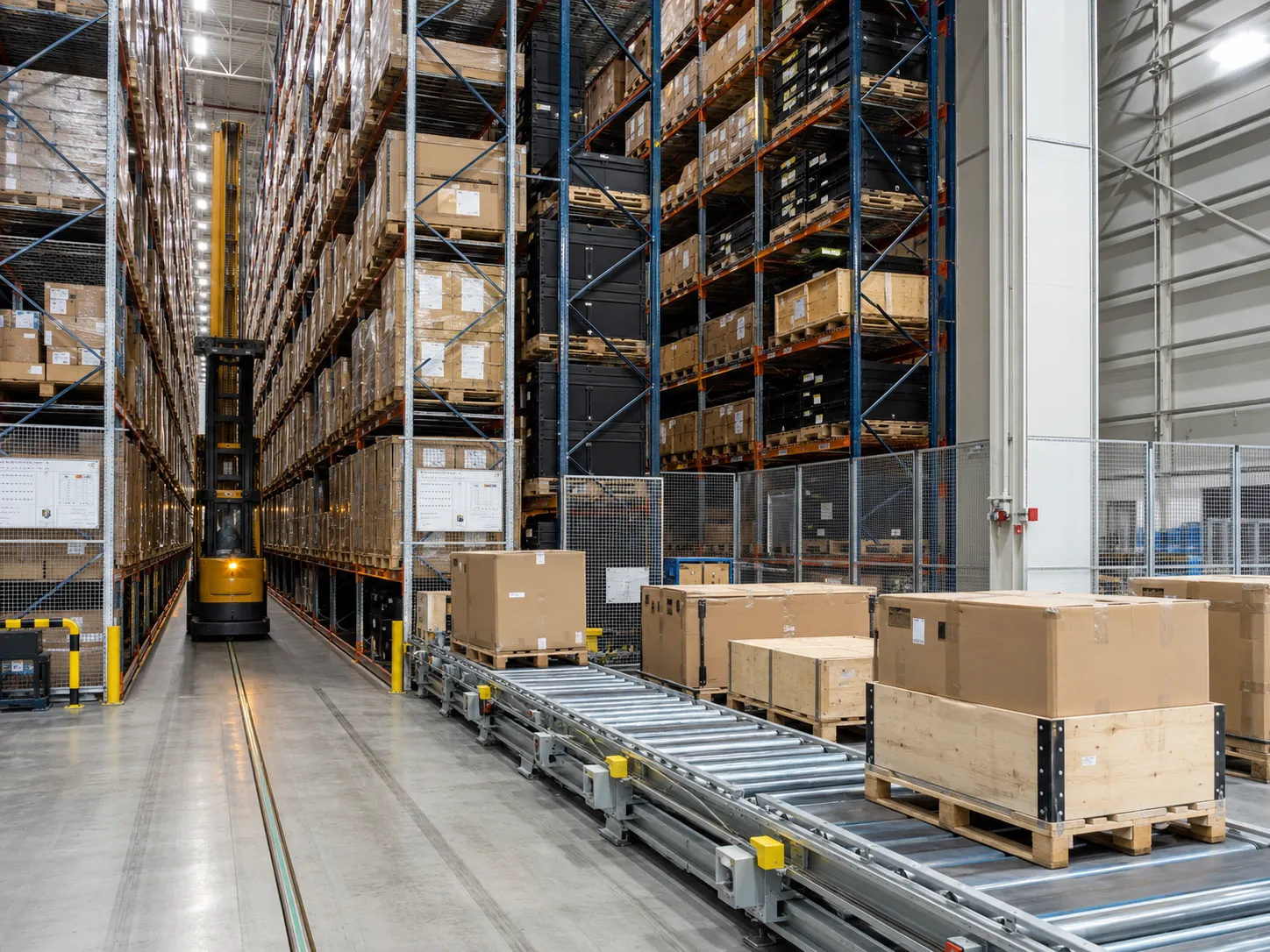
The logistics landscape in Malaysia is currently undergoing a massive transformation, driven by the country’s ambition to become a premier regional distribution hub for Southeast Asia. Kuala Lumpur, with its sophisticated infrastructure and proximity to major shipping lanes, is at the heart of this growth. The Global Logistics Hub project is a high-stakes example of how precision-engineered storage solutions can unlock the hidden potential of existing warehouse assets. Runda Rack was tasked with the comprehensive redesign and optimization of a 50,000 square foot facility that had reached its operational limits. By deploying a sophisticated Narrow Aisle Racking (NAR) system and integrating advanced material handling technology, we enabled the client to increase their storage capacity by 40% while simultaneously reducing picking times by 25%. This case study explores the technical rigor and strategic planning required to execute a large-scale warehouse optimization without disrupting global supply chain flows.
The Client & Market Context
The client, Global Logistics Hub (GLH), is a major international third-party logistics (3PL) provider managing high-volume inventories for multinational electronics and automotive corporations. Their Kuala Lumpur facility is a critical link in their “Just-in-Time” (JIT) delivery network. The Malaysian market is currently facing a shortage of Grade-A warehouse space near urban centers, leading to a sharp rise in industrial rental rates. GLH found themselves in a position where their 50,000 square foot facility was 98% utilized, leaving no room for new client onboarding or seasonal inventory surges. The market context demanded an optimization strategy that maximized vertical cubic volume and minimized aisle space, allowing GLH to scale their business within their current lease boundaries. The project was not just about adding racks; it was about transforming the facility into a high-throughput, data-driven logistics engine.
The Challenge (Technical & Operational)
The Global Logistics Hub project presented a set of complex technical and operational challenges that required a departure from standard storage logic.
First, the Underutilization of Vertical Volume was the primary bottleneck. The facility had clear ceiling heights of 12 meters, but the legacy racking system only utilized the first 6 meters. This “dead space” represented a massive lost opportunity for storage density. However, moving to higher storage heights introduced concerns regarding structural stability, seismic compliance, and the requirements for high-precision floor leveling.
Second, the conflict between Storage Density and Retrieval Velocity was a major operational hurdle. Traditional wide-aisle racking provides easy access for standard forklifts but wastes over 40% of the warehouse’s floor area on aisles. To increase capacity, aisles had to be narrowed, but this typically reduces the speed of material handling if not managed correctly. GLH required a solution that provided “the best of both worlds” — maximum density and high-speed retrieval.
Third, the facility’s Floor Specification was a critical technical constraint. The existing concrete slab was not originally designed for the high-point loads generated by tall, narrow-aisle racks. Our engineering team had to perform extensive core testing and load-bearing analysis to ensure that the new system would not cause floor deflection or structural failure over time.
Finally, the project had a Strict Zero-Accident Mandate. The optimization was being carried out in a live, high-traffic environment where hundreds of workers and dozens of forklifts were operating 24/7. The installation of 12-meter high steel structures had to be managed with surgical precision to ensure the safety of all personnel and the integrity of high-value client inventory.
The Engineering Solution
Runda Rack delivered a comprehensive Narrow Aisle Racking (NAR) and VNA (Very Narrow Aisle) Integration solution, customized for the GLH facility.
High-Precision Structural Engineering: We utilized our high-tensile Q345B steel Nine-fold Upright system to reach the full 12-meter ceiling height. The Nine-fold design provides the necessary torsional rigidity to prevent “rack sway” at extreme heights, which is critical for operator safety and pallet placement precision. To address the floor load concerns, we engineered “Wide-Distribution Baseplates” that spread the weight of the uprights over a larger surface area, ensuring the concrete slab remained within its structural limits.
Very Narrow Aisle (VNA) Strategy: We reduced the aisle widths from the traditional 3.5 meters to just 1.8 meters. This allowed for the addition of six new double-entry racking rows within the same floor area. To maintain retrieval velocity, we integrated an inductive “Wire-Guidance System” into the warehouse floor. This system allows VNA trucks to travel at high speeds within the aisles with automated steering, ensuring millimeter-perfect alignment with the rack faces and reducing the risk of rack impacts.
Integrated Automated Conveyor Systems: To further enhance throughput, we integrated a modular automated conveyor loop at the front of the VNA zones. Pallets retrieved from the high-density racks are placed onto the conveyor, which transports them directly to the staging and dispatch areas. This eliminates the need for long-distance forklift travel, allowing the specialized VNA trucks to stay within the storage aisles where they are most efficient.
Safety and Seismic Anchorage: Given the height of the system, we implemented a dual-anchorage strategy. Each upright was secured using high-strength chemical anchors and cross-aisle “Bridge Bracing” at the top level. This creates a unified, rigid structure that significantly exceeds the local seismic requirements for the Klang Valley region. We also installed “Rack-Back” safety mesh on all aisles facing pedestrian walkways to prevent any accidental item falls from the upper levels.
Business Impact & ROI
The warehouse optimization project delivered transformative results for Global Logistics Hub, both operationally and financially.
Capacity and Revenue Unlock: The 40% increase in pallet positions (from 5,000 to 7,000 pallets) allowed GLH to sign a multi-year contract with a new automotive client, generating an additional $3.5 million in annual recurring revenue. This was achieved without the $8 million capital expenditure that would have been required to build or lease a second facility.
Operational Efficiency: Picking and retrieval times were reduced by 25%. The VNA strategy and conveyor integration allowed GLH to process 200 more pallets per day with the same number of warehouse associates. The “travel-to-pick” ratio was significantly improved, reducing the energy consumption and maintenance costs of their forklift fleet.
Safety and Compliance: The project was completed with zero reported accidents. The high-precision engineering and safety features resulted in a 90% reduction in rack-related inventory damage, and the facility achieved full compliance with the latest international safety standards (EN 15635), enhancing GLH’s reputation with their global corporate clients.
Asset Longevity: The use of high-grade Nine-fold uprights and specialized powder coating ensures that the new racking system has an expected operational life of 25+ years, providing a superior long-term ROI compared to standard commodity racking.
Sustainability & Future Proofing
Sustainability was integrated through the optimization of the facility’s “thermal and lighting footprint.” By concentrating more inventory in a smaller footprint, GLH was able to optimize their lighting and ventilation schedules, resulting in a 12% reduction in facility-wide energy costs. The modular NAR system is also inherently future-proof. The wire-guided aisles are already compatible with fully autonomous VNA robots, allowing GLH to transition to a “lights-out” automated operation in the future without replacing their existing racking infrastructure.
The Runda Rack solution is also designed for “Agile Reconfiguration.” As the dimensions of GLH’s client inventory change — for example, moving from standard pallets to specialized automotive crates — the beam levels can be adjusted with minimal downtime. This inherent flexibility ensures that the Kuala Lumpur Logistics Hub will remain a world-class, high-efficiency asset for the next two decades and beyond.
Need a Similar Solution?
Our experts are ready to design a custom display or racking system tailored to your specific goals.